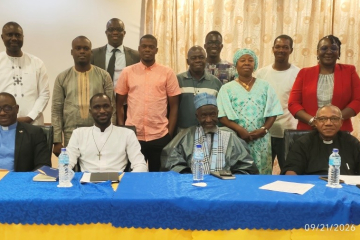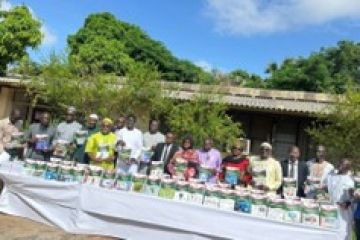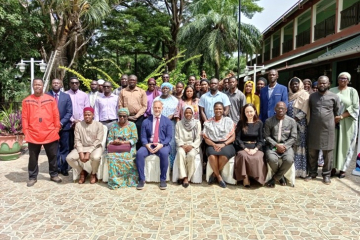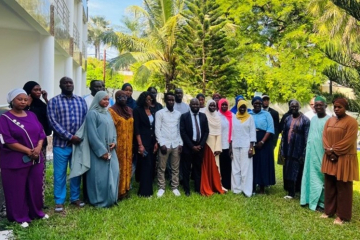
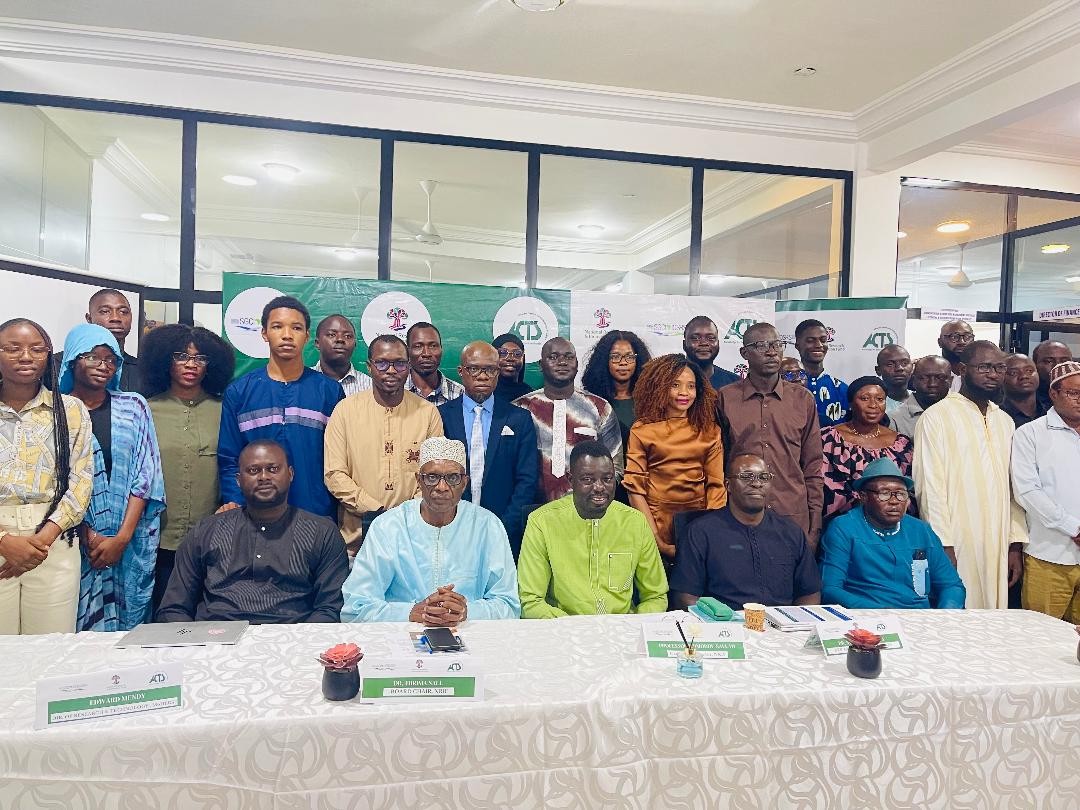
Held under the theme “Promoting Efficiency and Effectiveness in Research and Innovation,” the interface brought together researchers, policymakers, university leaders and development partners to discuss research financing, collaboration, and how to align science with national development priorities.
Discussions focused on building sustainable funding mechanisms and translating research findings into practical solutions in agriculture, health, housing and digital transformation.
NRIF Executive Director Professor Momodou Sallah said research funding must go beyond providing money and prioritise quality, transparency and measurable impact.
“Research funding is not merely a financial process. It is an intellectual enterprise. Every funding decision reflects judgments about quality, relevance, originality, and potential impact,” Professor Sallah said.
He disclosed that NRIF has established a dedicated team of technical and research translation specialists to ensure findings move beyond academic publications and inform policy and community development.
“We want to imbue a culture of research excellence. We want to give based on merit and not based on anything else,” he added.
Representing the Minister for Higher Education, Research, Science and Technology, Edward Mendy said government considers research and innovation central to The Gambia’s long-term development.
Though NRIF is still in its early stages, Mendy said it has made important progress toward establishing a credible national research funding system. He urged participants to use the forum to build partnerships that strengthen institutions and produce practical solutions for Gambians.
Dr. Nicholas Odongo, Research Fellow at ACTS, said the workshop is supported by the Science Granting Councils Initiative, SGCI, which continues to assist The Gambia despite the country not yet being a full member.
He noted that SGCI recently secured a new commitment of 57 million Canadian dollars to support research funding across Africa over the next five years. Priority areas include agriculture, health, ICT, energy and the environment.
“We are not inventing anything. We are just sharing lessons that we have gathered from different parts of the continent,” Dr. Odongo said.
The workshop will also examine grant management, knowledge translation and institutional learning. Organisers say the goal is to strengthen accountability and build a research system capable of supporting The Gambia’s sustainable development.