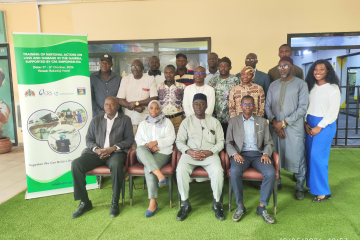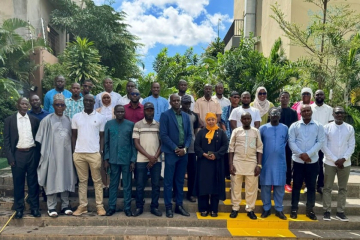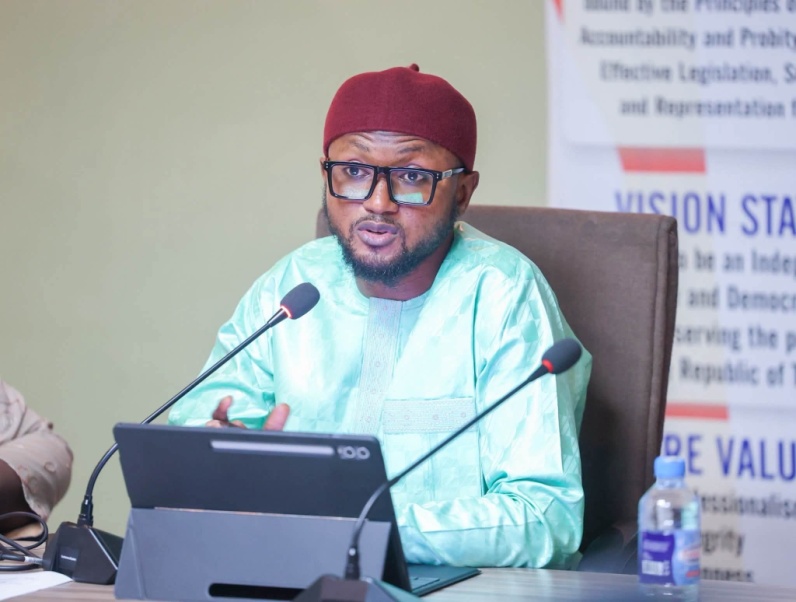
The training, organised by the Table Office, seeks to enhance institutional efficiency, strengthen professional competence and ensure that staff supporting the legislative process operate with accuracy, impartiality and a clear understanding of parliamentary law.
Speaking at the opening of the training, Clerk of the National Assembly, Mr. Kalipha M.M. Mbye, described the Table Office as the technical backbone of parliamentary operations, stressing that the effectiveness of parliamentary proceedings depends heavily on the professionalism and procedural discipline of staff.
He noted that although parliamentary debates and proceedings inside the Chamber often attract public attention, the technical work carried out behind the scenes is equally critical to ensuring that legislative business is conducted in accordance with the law.
According to Mr. Mbye, staff must ensure that parliamentary proceedings remain lawful, orderly and constitutionally sound through strict adherence to established procedures.
“You must remain the embodiment of procedural fairness, impartiality, and professional independence. Your responsibility is to the institution and to the proper functioning of the parliamentary process. It must therefore transcend partisan interests, personal preferences, or individual allegiances,” he stated.
He further reminded participants that integrity, confidentiality, discretion and impartiality are fundamental obligations for staff working within the technical arm of the National Assembly.
Mr. Mbye urged staff to approach their responsibilities with a strong sense of duty, noting that their work directly contributes to the credibility and effectiveness of the country’s legislative institution.
Deputy Clerk for Legal and Procedural Matters, Ms. Aji Sainey Kah, outlined the objectives of the training, emphasising the importance of mastering parliamentary law and procedure.
She explained that a strong understanding of parliamentary rules serves as an important safeguard against administrative and constitutional errors during parliamentary sessions.
Ms. Kah also stressed the need for precision in legislative work, where procedural mistakes can have significant implications for the conduct and integrity of parliamentary business.
Director of the Table Office, Mr. Sainey Konteh, highlighted the wide-ranging responsibilities of his office in supporting the legislative process.
He cited the processing of Bills, handling of Parliamentary Questions, preparation of the Order Paper, recording of Votes and Proceedings, and provision of procedural advice to the Chair among the key responsibilities of the Table Office.
Mr. Konteh encouraged participants to take full advantage of the training to sharpen their knowledge and technical skills while maintaining the highest standards of professionalism.
The three-day programme is expected to strengthen the institutional capacity of the National Assembly and equip parliamentary staff with the knowledge required to effectively support lawmakers.
The initiative also underscores the importance of a competent and impartial parliamentary administration in ensuring that legislative proceedings are conducted transparently, efficiently and in accordance with the Constitution and established parliamentary procedures.