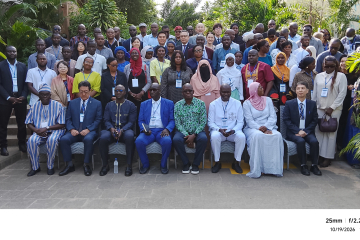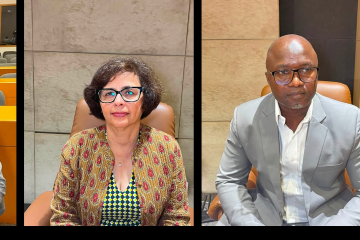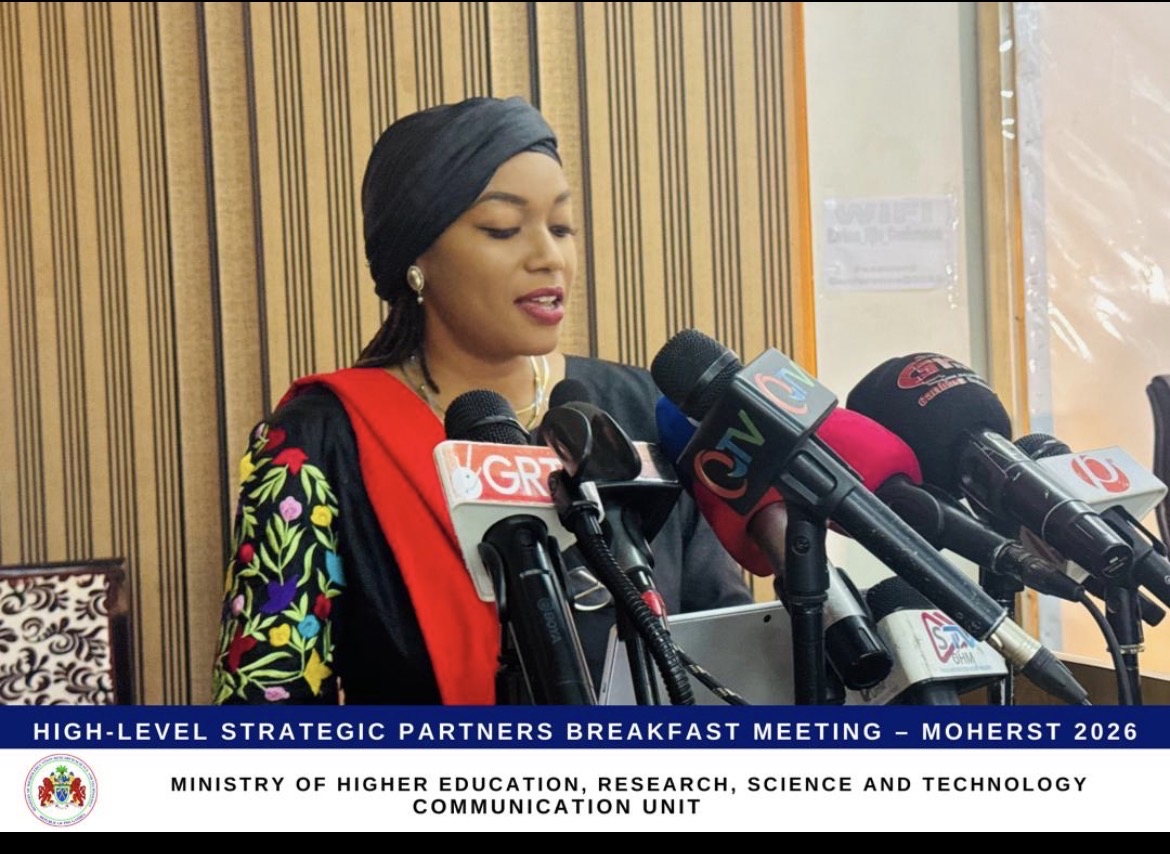
The Permanent Secretary of MoHERST, Ambassador Jainaba Jagne, made these remarks while delivering the welcoming address at a High-Level Strategic Partners Breakfast meeting, held to strengthen collaboration between government and development partners in support of higher education reform.
Speaking on behalf of the Government, Ambassador Jagne warmly welcomed Honourable Ministers, senior government officials, members of the diplomatic corps, representatives of multilateral institutions, development partners, and United Nations agencies. She expressed profound appreciation for their continued partnership and support to The Gambia’s higher education and skills development agenda.
She specifically commended the World Bank for its vital contribution through the Resilience of Organizations for Transformative Higher Education (RISE) Project, describing it as instrumental in strengthening institutional capacity and improving outcomes within the tertiary education system. She also acknowledged the United Nations system for its sustained technical and programmatic assistance to the sector.
Ambassador Jagne underscored the importance of the engagement, noting that it provided a strategic platform to deepen partnerships, promote collaboration, and mobilise targeted investments aimed at transforming higher education in The Gambia.
She highlighted a number of persistent challenges facing the sector, including gender participation disparities in Science, Technology, Engineering and Mathematics (STEM), infrastructure deficits in tertiary institutions, skills mismatches between graduates and labour market needs, and the growing concern of youth irregular migration. She noted however that these challenges also present opportunities for innovation, reform, and strengthened partnerships.
According to her, addressing these issues require coordinated action, increased investment, and innovative solutions driven by strong collaboration between government and its development partners.
Ambassador Jagne informed participants that the meeting was deliberately structured to promote open dialogue, explore concrete partnership modalities, and ensure alignment between development cooperation frameworks and MoHERST’s 2026 programme priorities. She reaffirmed the Ministry’s readiness to engage bilaterally with partners and to provide additional documentation necessary to translate discussions into tangible commitments.
She further emphasised that MoHERST remains committed to evidence-based planning, accountability, and results-oriented partnerships that deliver meaningful impact for students, institutions, and the wider economy.
The Permanent Secretary concluded her remarks by inviting the Honourable Minister for Higher Education, Research, Science and Technology, Professor Pierre Gomez, to deliver his opening address, officially setting the stage for high-level discussions aimed at reshaping the future of higher education in The Gambia.