The initiative, which has reached over 1,500 parents and caregivers benefited from face-to-face parenting training designed to strengthen support for Early Childhood Education within the home.
The pilot followed a comprehensive training of Trainers (TOT) workshop that equipped Early Childhood Development, (ECD), teachers
with knowledge and skills to facilitate parenting sessions and integrate play-based learning into classroom practice.
The initiative is designed to embed parenting support within The Gambia’s ECD system by recognising parents and caregivers as essential partners in children’s early learning and development.
Lively Minds an award-winning organisation that partners with government to deliver quality ECD programmes at scale provided
technical support for the project.
A total of 32 Lower Basic Schools, (LBS) in Jarumeh Koto and Panchang Clusters under the Regional Education Directorate (RED) 5-
North participated in the pilot. More than 100 ECD teachers were trained to facilitate structured eighth-week parenting sessions.
During the weekly session, parents and caregivers learned how to use play as a learning tool, create educational games and material from locally available resources and use storytelling, songs and interactive activities to boost children’s language, cognitive, social-emotional and physical development.
Participants were also introduced to positive parenting, child nutrition,hygiene and positive techniques that support children’s health and holistic development.
“Parents are the first and most important teachers of the child.” says John A. Agandin, Content Specialist at Lively Minds in an interview with the MoBSE Communication unit.
He emphasised that supporting children’s learning does not require expensive toys.
“Parents can use everyday household items and locally available resources to create simple learning material and play activities.” he
added, challenging the notion that financial constraints prevent parents from supporting education.
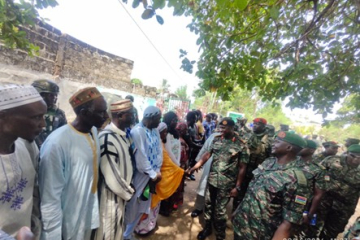
The conclusion of the pilot was marked by end-line classroom observations, parenting session observations, teacher interview and
focus group discussion with parents.
The assessment was jointly conducted by MoBSE’s Early Childhood and Inclusive Education Directorate (ECIED), Lively Minds and the Performance Monitoring and Evaluation Directorate (PMED).
The findings will inform the development of a national scale-up strategy and the refinement of programme materials based on lessons learned.
According to Mr. Aboubacarr Langley, Education Officer and Project Lead, the pilot demonstrates MoBSE’s commitment to putting families at the center of foundational learning.
“During this phase, over 100 teachers were trained to facilitate Parenting Sessions, while more than 1,500 parents and caregivers benefited from face-to-face training to strengthen support for early childhood education at home,” Mr. Langley said.
He expressed gratitude to Mrs. Anna Nancy Mendy, Director of ECIED; the ECIED Taskforce; Lively Minds; RED 5 North staff; PMED; headteachers; teachers; parents; and all stakeholders for their commitment.
Mr. Langley called for the national expansion of the programme to build on the pilot’s success and strengthen early childhood education across The Gambia.
With the successful conclusion of the pilot in Region 5 North, MoBSE isreinforcing the idea that a child’s home is their first school, and parents remain their first and most important teachers.
By strengthening the partnership between schools and families, MoBSE aims to build a solid foundation for better learning outcomes and the holistic development of Gambian children.