Tessema, a power electronics specialist who founded Ethiopia’s first car assembly plant nearly 20 years ago, has spent 15 years cultivating a deep network of suppliers in China. Born in Ethiopia and now a Dutch citizen, he says Kenya is home. This time, his mission is not to import Chinese cars but to transfer Chinese electric vehicle manufacturing expertise to African soil.
Beyond Bolt‑and‑Screw Assembly
Unlike many “bolt‑and‑screw” assembly lines serving global brands across Africa, Tessema’s ambition is to create an original Kenyan brand from the ground up. His flagship project, the TAD compact EV, takes its name from the first three letters of his own name.
Rather than buying ready‑made vehicles, he approached China as a system architect—selecting body suppliers, sourcing electronics through long‑standing contacts, and negotiating with manufacturers of seats, glass, trims, and fibre glass. The strategy mirrors how tech firms assemble smartphones, carefully choosing each component for performance and cost.
At the heart of his plan is affordability. He wants new EVs to cost roughly the same as a used imported car—or only slightly higher—while offering lower running costs and greater reliability.
Building a Kenyan Supply Chain
For Tessema, a Kenyan EV must be more than a badge; it must be built in Kenya, with Kenyan parts and skills. His target is to manufacture up to 90 per cent of each vehicle locally by 2026, starting with body components and eventually batteries—the most expensive and logistically challenging imports.
“Bringing batteries from outside is a huge expense,” he explains. “If you want to be affordable, you have to produce most of the parts here.” Already, a growing number of Kenyan suppliers have joined the experiment, challenging assumptions in a country that still imports even simple goods like toothpicks.
Yet the greatest barrier may not be technical but financial. Tessema argues Africa’s biggest constraint is access to capital. He recalls how a Dutch government grant enabled him to build Ethiopia’s first car plant in 2005, treating innovation as a public good. In contrast, African banks often prefer financing imports rather than ideas, leaving innovators under‑resourced.
Training the EV Workforce
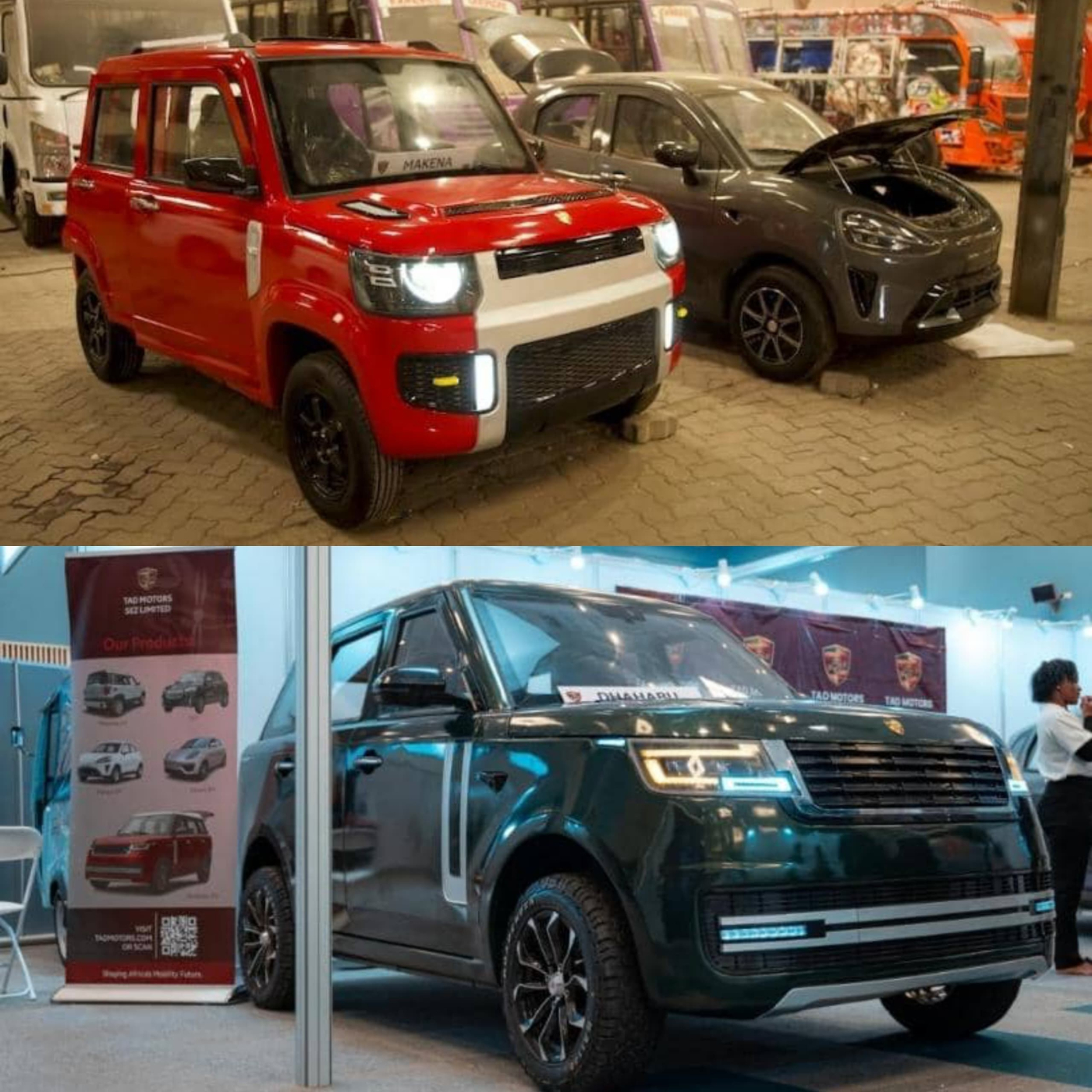
Inside TAD Motors’ workshop, the TAD MAKENA and AMANI models stand among tools and chassis frames as young technicians learn on the job. Beyond informal training, Tessema is laying the groundwork for structured skills development.
Teams of workers have already travelled to China for months‑long training programmes, learning directly from manufacturers at the heart of the EV supply chain. His longer‑term plan is to establish a dedicated EV training school in Kenya, ensuring knowledge transfer and continuity even as workers move on.
Powering a Kenyan EV Ecosystem
Energy costs remain a pressing concern. Electricity in Kenya is expensive, and charging batteries raises questions about affordability. Tessema’s answer is to look beyond the national grid. He plans to build solar‑ and biogas‑powered charging hubs, targeting especially the millions who rely on motorcycle taxis for income.
By reducing dependence on grid electricity, he hopes to cut operating costs and make electric mobility attractive to everyday riders and small businesses. For him, Africa’s EV transition will only succeed if it saves people money as well as reducing emissions.
A Kenyan Brand, Built at Home
Tessema believes Kenya will see its first fully Kenyan electric vehicle—designed, fabricated, and largely manufactured in the country—by 2027. After that, he plans to expand into commercial EVs such as buses, trucks, and vans, where margins are higher and electrification offers stronger business cases.
Ultimately, he envisions taking TAD Motors public through an initial public offering, allowing ordinary Kenyans to own a stake in the brand. His goal is to keep profits and value creation within the country rather than sending them abroad.
In his modest Nairobi office, surrounded by young engineers and prototype chassis, Tessema’s vision is clear: a Kenyan EV industry in which workers, suppliers, investors, and drivers all share in the rewards. The name TAD is more than personal branding—it signals a future where a Kenyan‑made car competes confidently in the global electric mobility market