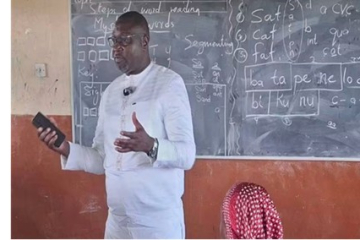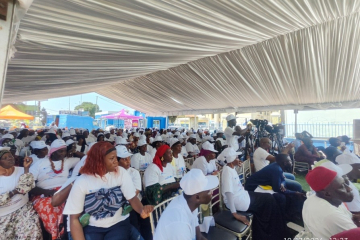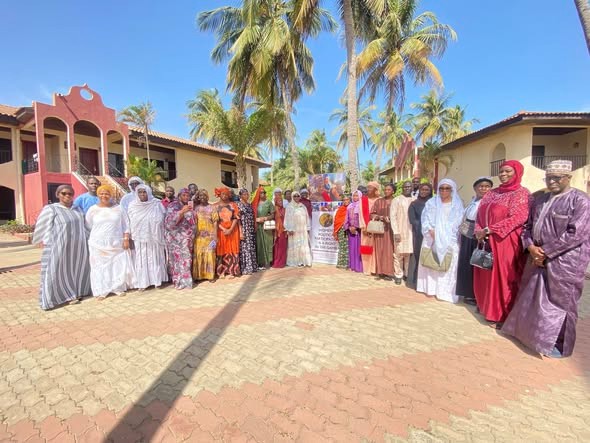
The day’s interface, which attracted party representatives from different political parties in the country, accord participants the opportunity to openly discuss the challenges they face, learn about their legal rights, and understand the importance of communication, leadership, and personal branding in public life.
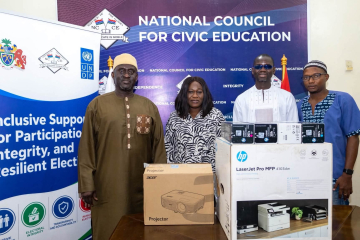
The activity being supported by Canada Fund For Local Initiatives through the Embassy of Canada to Senegal, is part of FLAG’s broader advocacy to help increase women’s participation in politics.
Addressing the gathering, Anna Njie, president - Female Lawyers Association Gambia (FLAG), outlined the importance of the forum, reminding that it matters to the women who have been showing up in communities, in party meetings, in campaign rallies, and whose voices have yet to reach the tables where decisions are made.
‘‘It matters to The Gambia’s democratic future. And I believe, if we are honest with ourselves, it matters to every leader in this room.’’
She described the day as a culmination of a journey that FLAG began several months ago, reaching out to various regions where they engaged women at the grassroots in local communities, in ward councils and party structures.
‘‘And we listened to them. We heard stories of ambition and capability, but also of frustration, exclusion, and barriers that have nothing to do with merit and everything to do with systems that were not designed with women in mind.’’
The FLAG prexy reminded that their task today is to convert that willingness into commitment and that it was time they spoke plainly about what they mean when they say women’s political participation.
‘‘We mean women on local councils not as spectators at community meetings, but as elected councilors making decisions about the land, the schools, the infrastructure, and the futures of their communities. We mean women in the National Assembly not as a token presence in the chambers, but as lawmakers who shape the legislation that governs every Gambian life. We mean women in Cabinet, in the highest offices of government. And yes, we mean a woman as President of this Republic.’’
Njie indicated that that is not a radical statement, but rather it is the logical conclusion of everything the Constitution promises and everything international commitments demand.
She said the question is not whether it is possible but that whether the political parties in this are prepared to be the ones who make it possible.
The Elections Act 2025, she said, represents an important step in our legal framework, but noted that legislation alone does not change culture.
The real transformation, she went on, happens inside political parties in who gets nominated, who gets supported, who gets the resources to run a meaningful campaign, and who gets a seat at the executive table.
She expressed FLAG’s sincere gratitude to the Canada Fund for Local Initiatives for making the project possible likewise the entire FLAG team for their dedication towards the project.
Ebrima Jatta, a representative of the People’s Progressive Party, (PPP) outlined the importance of the engagement, reminding that generally and unfortunately, in many governments, women take the back seat when it comes to politics and that is not because that is how they intend things to be, but society created an essential setting that would allow women to be just there as cheerleaders and cheering men to hold positions of power.
‘‘And this is a narrative that really needs to change. And having this conference is like a foundation upon which the narratives will change, it sets on. So, I think it is very important for us to have these conversations because it broadens our perspective as individuals.’’
For far too long women have been pushed to the backseat due to many reasons among them language barriers, but for Jatta, the nature of the country’s social settings is different to those that ‘we look up to or those countries that we cite in terms of how actively they would be in their rights to argue their parliaments are active in terms of debates’ because they all understand each other because they all speak more or less the same language.
‘‘I do not think language applies to us because our country is saturated with different kinds of ethnic groups and there is no single acceptable language that is generally spoken countrywide. This is an argument that I hold or believe that I hold. So, for me drawing from that backdrop, it will be very difficult to have a second language spoken in language.’’
Another factor, he stated, is the surge in what many call identity politics, calling on women not to campaign on only partisan realities, but the contemporary problems that they face as individual governments.
‘‘They must present themselves as a sellable brand on the country's political counter. And the only way they can present themselves sellable to the government and people is not to argue narrowly. It is to generally argue what we endure as a government; people must be the message that you share with everyone.’’
Isatou Bah, a resident of Mariama Kunda representing Citizen Alliance (CA), expressed similar sentiments.