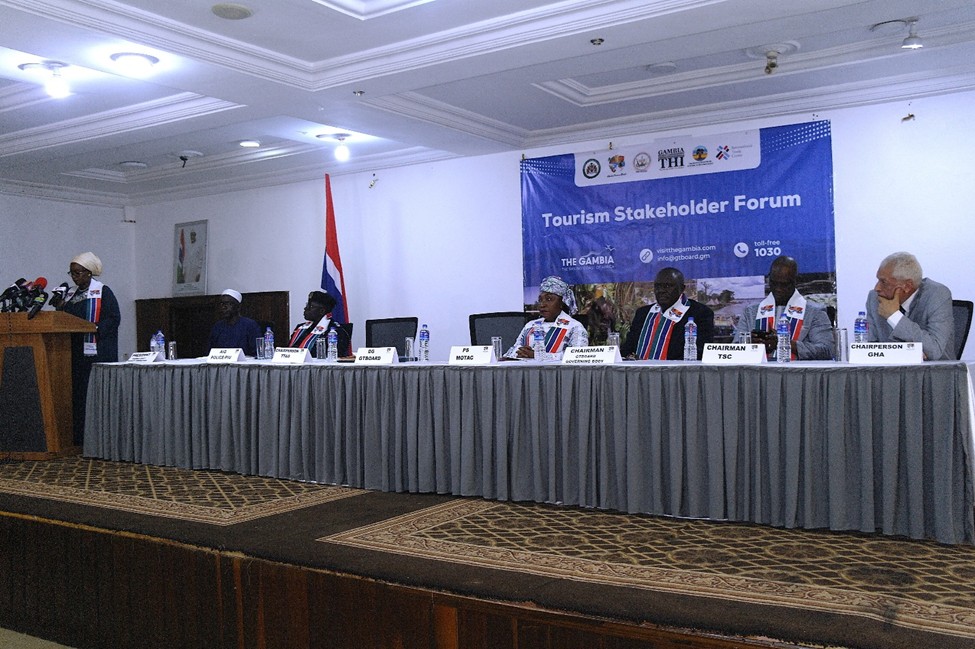
Speaking at the forum, Permanent Secretary at the Ministry of Tourism, Arts and Culture (MOTAC), Amie Njie‑Joof, described the convergence as a milestone in efforts to strengthen collaboration within the tourism family. She recalled that a similar meeting held months earlier had assessed the sector’s performance and identified strategies to enhance growth amid global shocks and geopolitical uncertainties.
“The stakeholder convergence held last year generated a lot of interest, as the stakeholder presence was overwhelming. A range of thematic issues were raised and discussed, and GTBoard was tasked to take note of all the salient points raised and act on them expeditiously,” she said.
Njie‑Joof explained that the latest convergence was convened to update stakeholders on the implementation of recommendations from the previous meeting, as well as developments following Cabinet’s approval of the new Marketing, Branding and Investment Strategy and the country’s new tourism brand. She reaffirmed government’s commitment to creating a conducive environment for GTBoard to play its leadership role in product development and destination marketing, in line with the GTBoard Act 2011.
She highlighted inclusivity, teamwork and sustained stakeholder engagement as key pillars of the National Tourism Policy and Strategy 2023–2033, stressing that tourism is not a standalone sector and requires stronger collaboration between public and private institutions. She also underscored the need for resource efficiency, financial prudence, innovation, resilience and adaptability, urging operators to continually enhance visitor experiences through authentic, environmentally friendly and distinctive products.
“At the institutional level, it is prudent to develop a structure which is government‑led, private sector‑driven and community welfare‑oriented,” she stated, adding that the concept of Team Gambia should be embraced to coordinate tourism marketing and product development efforts.
GTBoard Governing Body Chairman, Bamba Saho, said the convergence was centred on the theme “Strengthening Partnerships for a More Competitive and Sustainable Destination.” He emphasised that partnership, competitiveness and sustainability are essential ingredients for securing the future of Destination Gambia.
“We have not come here to be spoken to, nor to congratulate ourselves. We have come to take an honest stock of the season now behind us and prepare together for the one ahead,” he said.
Saho outlined four key objectives of the forum: assessing the performance of the 2025/2026 tourist season, gathering stakeholder feedback, identifying lessons learned and transforming those lessons into actionable recommendations for the 2026/2027 season. While acknowledging gains such as growth in tourist arrivals, improved receipts and broader source markets, he pointed to persistent challenges including coastal land management issues, encroachment within the Tourism Development Area (TDA), unresolved land matters affecting investor confidence and the need to diversify tourism products beyond the traditional sun‑and‑beach offering.
“If we are to be more competitive, we must offer the world more than a beach,” he said, citing river tourism, birdlife, culture, heritage, wellness tourism and meetings, incentives, conferences and events (MICE) as areas with significant growth potential.
In her welcoming address, GTBoard Director General Ida Jeng‑Njie thanked stakeholders for their continued commitment and called for open and frank discussions. She stressed that sustainable development and effective service delivery require robust multi‑stakeholder partnerships and active participation.
“Our vision is rooted in inclusivity and progressive principles. We view you, our stakeholders, industry leaders and community voices, not just as observers, but as vital development partners,” she said.
Jeng‑Njie revealed that image‑building through enhanced and compelling messaging would form the cornerstone of Destination Gambia’s future marketing efforts. She said GTBoard’s priority is to boost the profile of the tourism sector nationally and internationally through targeted campaigns anchored on the new tourism brand and guided by the recently approved Marketing, Branding and Investment Promotion Strategy.
The strategy seeks to reposition The Gambia as a responsible and hospitable destination offering world‑class tourism products capable of meeting the expectations of modern travellers. GTBoard will intensify evidence‑based marketing through digital platforms, public relations campaigns, study tours, exhibitions, trade shows and targeted advertising, while also prioritising improved air connectivity and stronger public‑private collaboration.
“As we engage in our discussions today, let us remain focused on how we can collectively improve the lives of those we serve and secure a sustainable future,” she urged.
The convergence also featured presentations by Adama Njie, Director of Marketing, on Destination Gambia, and Alagie Laye, Senior Investment Manager and Officer‑in‑Charge of the Product Development and Investment Centre, on tourism product development and investment opportunities.