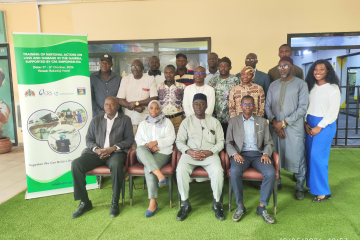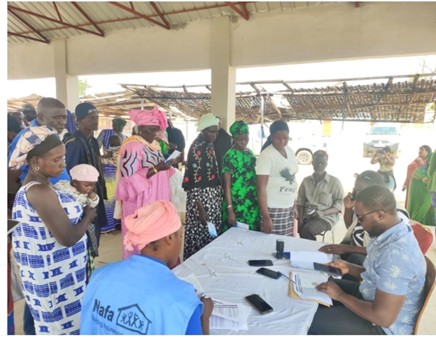
The Regional Social Welfare Officer for LRR, Mr. Hamadi Jobe, disclosed that incidents of GBV have drastically declined since the introduction of the Nafa cash transfer programme more than three years ago. He made the remarks during an interview with journalists on the sidelines of the recently concluded January bi-monthly Nafa cash disbursement to extremely poor households across several districts in the region.
Speaking at a second-time payment point for beneficiaries under the Nafa Expansion Programme in Wellingara-Ba, Jarra East District, Mr. Jobe said communities previously recorded frequent cases of domestic violence, teenage pregnancy and early child marriage. However, sustained sensitisation and social and behaviour change communication (SBCC) under the project have transformed community attitudes.
“Before Nafa, our office constantly received reports of gender-based violence,” he said. “Today, community members are more informed. They know where and how to report cases of early marriage, teenage pregnancy and abuse, and this has contributed greatly to reducing such incidents.”
He urged residents not to remain silent on harmful practices but to report cases promptly to relevant authorities for action.
Beyond social protection, Mr. Jobe said the project has strengthened economic resilience, noting that many beneficiary households have invested cash transfers into small businesses and small ruminant rearing, improving household incomes and food security.
Crucially, he added, the programme has enhanced women’s participation in household decision-making, empowering beneficiary women socially and economically.
The Nafa Project is jointly funded by the World Bank and the Government of The Gambia and implemented by the National Nutrition Agency (NaNA), the Department of Community Development (DCD) and the Directorate of Social Welfare (DSW). It is designed to reduce poverty and vulnerability while laying the foundation for sustainable livelihoods.
Nafa is a sub-component of the RISE Project, initially implemented in the 20 poorest districts of the country, three of which have since graduated. The programme has now expanded to 16 additional rural districts, benefiting over 15,000 households receiving regular bi-monthly cash transfers alongside SBCC sessions.
Meanwhile, Sana Sambou, Regional Community Development Officer for CRR-South, said the project began in four districts: Niamina Dankunku, Niamina West, Niamina East and Lower Fuladu West which received their final payments in January. New districts, including Janjangbureh and Upper Fuladu West, have since been enrolled under the expansion phase.
Despite graduation, Mr. Sambou said implementing partners continue to engage beneficiary communities through entrepreneurship and financial literacy training, ensuring long-term sustainability.