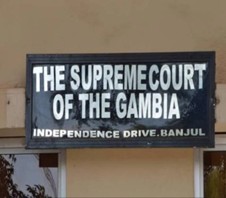
The ongoing Supreme Court proceedings on Female Genital Mutilation (FGM) represent one of the most consequential legal and human rights cases in The Gambia’s recent history. Beyond determining the legality of specific provisions in the Women’s (Amendment) Act, the case has become a defining moment in the country’s efforts to balance cultural traditions, religious beliefs, constitutional rights, and the protection of women and girls.
On Thursday, the Supreme Court, presided over by Justice Cherno Sulayman Jallow and a five-member panel, heard expert evidence from government and medical officials before adjourning proceedings to July 14, 2026.
The testimonies presented before the court reveal that the debate over FGM extends far beyond legal interpretation. It is fundamentally about gender equality, bodily autonomy, public health, child protection, and the state’s obligation to safeguard vulnerable citizens.
A gender equality issue
FGM is internationally recognised as a form of gender-based violence because it is performed almost exclusively on girls and women. The practice reflects deeply rooted inequalities that seek to control female sexuality and reinforce societal expectations surrounding marriage, purity, and womanhood.
Unlike many cultural practices that apply equally to both sexes, FGM disproportionately affects girls, often before they are old enough to give informed consent. This places the issue squarely within the broader struggle for women’s rights and gender justice.
The testimony of Neneh Touray, Deputy Director of Gender Equality at the Ministry of Gender, Children and Social Welfare, illustrates the government’s attempt to engage different stakeholders through consultations and awareness campaigns before the law was enacted. Her evidence that the Supreme Islamic Council requested further consultations demonstrates the sensitivity of the issue and the need for continuous dialogue between policymakers, religious leaders, communities, and women’s rights advocates.
Health evidence strengthens the case
Perhaps the most significant testimony came from Dr. Mustapha Bittaye, Chief Medical Director of the Edward Francis Small Teaching Hospital.
Drawing on survey findings from the Gambia Bureau of Statistics (GBoS) and the Ministry of Health, Dr Bittaye informed the court that FGM is associated with serious medical complications, including infections, childbirth complications, and maternal deaths.
His testimony shifts the debate from opinion to evidence. Medical professionals increasingly view FGM not as a harmless cultural practice but as a public health concern with lifelong physical and psychological consequences.
Global evidence from the World Health Organization has consistently found that women who undergo FGM face higher risks of severe bleeding, infections, chronic pain, obstetric complications, newborn deaths, and long-term mental health challenges.
The intersection of culture, religion and rights
One of the most complex aspects of the Gambian debate is the relationship between culture, religion, and human rights.
Supporters of FGM often argue that it is a religious or cultural obligation. However, many Islamic scholars around the world maintain that FGM is a cultural practice rather than a mandatory religious requirement. This diversity of opinion partly explains why consultations with religious institutions remain central to the national conversation.
The Supreme Court’s eventual ruling could therefore have implications beyond the legal question before it. It may influence future discussions on how constitutional rights interact with customary and religious practices.
Implications for women and girls
For Gambian women and girls, the outcome of this case carries significant implications.
If protections against FGM are upheld, the decision would reinforce the state’s commitment to protecting girls from harmful traditional practices and strengthen efforts to reduce gender-based violence.
Conversely, any weakening of existing legal protections could raise concerns among women’s rights organisations, healthcare professionals, and child protection advocates about the future enforcement of laws designed to safeguard girls.
Beyond the courtroom
Regardless of the court’s final judgment, lasting progress will require more than legislation alone.
Communities need sustained public education, culturally sensitive engagement with religious and traditional leaders, survivor support services, and accessible reproductive healthcare. Empowering girls through education and strengthening women’s decision-making within families are equally essential to reducing the social pressures that sustain the practice.
Conclusion
The Supreme Court case is more than a legal dispute; it is a national conversation about the future of women’s rights in The Gambia.
As proceedings continue on July 14, the evidence presented thus far highlights the need for policies grounded in medical science, constitutional principles, and meaningful community engagement. Whatever the court ultimately decides, the broader challenge remains - ensuring that every Gambian girl can grow up free from practices that threaten her health, dignity, and fundamental human rights.
For many observers, this case will shape not only the interpretation of the law but also the country’s commitment to gender equality for generations to come.