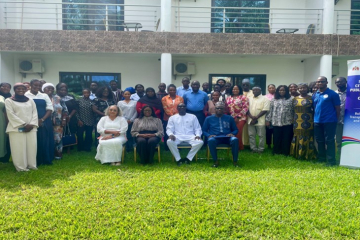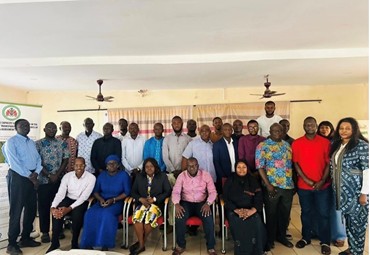
The training is designed to enhance the country’s ability to meet the Enhanced Transparency Framework (ETF) requirements of the Paris Agreement by improving the collection, processing and transmission of greenhouse gas (GHG) emission data. It also seeks to reinforce Measurement, Reporting and Verification (MRV) systems in line with Intergovernmental Panel on Climate Change (IPCC) Guidelines and national transparency obligations.
Participants are engaged in both theoretical and hands-on sessions, developing sector-specific modules on activity data and emission factors, strengthening reporting systems, and gaining practical knowledge on MRV systems and Nationally Determined Contribution (NDC) tracking. Key technical components include software installation, sectoral modelling using country-specific data, key category analysis, quality assurance and quality control (QA/QC), uncertainty evaluation, and inventory improvement planning.
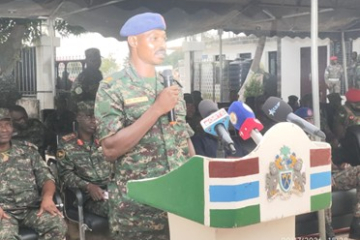
In her opening remarks, Mrs. Mariama Ndow Jarjue, Director of CPCU, underscored the strategic importance of GHG inventories. “GHG inventories are not just reporting tools, but the foundation of evidence-based climate policy, informing national planning, mitigation actions, and international reporting under the UNFCCC and the Paris Agreement,” she stated.
She emphasised that under the Enhanced Transparency Framework, countries like The Gambia are required to produce inventories that are consistent, transparent, accurate, complete and comparable on a regular basis. She further noted that the success of the training depends on the active participation and collaboration of all stakeholders, particularly the waste sector, whose data and technical inputs are critical for high-quality reporting.
Mr. Sambou Kinteh, Project Coordinator of the CBIT Project, highlighted the importance of the extended training period, noting that it allows participants sufficient time to interact with the software and undertake practical exercises.
Waste Sector Lead, Mr. Abdou Sambou Hydara, urged participants to treat the training with utmost seriousness, stressing that accurate data collection is vital for reporting to the Ministry of Environment and other stakeholders. He acknowledged the participation of regional and urban councils, including KMC and BAC, whose contributions are essential to national waste data systems.