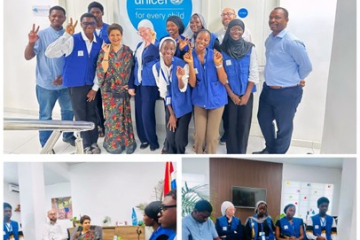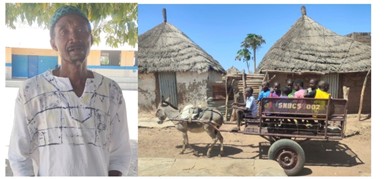
Speaking during ChildFund’s annual media tour of funded projects across rural Gambia on Tuesday, 10 February 2026, Principal Sowe said the lack of transportation has long affected enrollment, punctuality and retention at the school.
He disclosed that the school recently received ten bicycles, a development he described as encouraging, but insufficient to meet the needs of the growing student population. He urged ChildFund and other partners to consider providing more bicycles to ease students’mobility challenges.
“Before the bicycles were provided, many children had to walk long distances, sometimes under harsh weather conditions. After school, they would still trek back home on foot,” he explained.
The principal further highlighted the impact of another ChildFund-supported initiative introduced in the second term of the 2025 academic year, which provided donkeys and a donkey cart to transport Early Childhood Development (ECD) pupils who also commute long distances.
“When the donkeys arrived, the community came out in large numbers. Most of our ECD pupils travel five to six kilometers. The donkey cart has made their journey easier and more comfortable,” he said.
According to him, enrollment at the ECD level increased significantly following the intervention. He added that punctuality has also improved, as children are eager to use the cart, which he described as “constructed just like a vehicle.”
However, he noted that the donkey cart is temporarily out of service because the two donkeys are currently pregnant. The school expects the number of donkeys to increase to four after delivery in the coming months.
Principal Sowe assured that measures are in place to sustain the project, including assigning responsible caretakers for the animals and engaging a mechanic, in consultation with parents, to maintain the bicycles.
Meanwhile, at Jarumekoto Senior Secondary School, Muhammed Sanneh, Teacher Coordinator of the Change Makers’Club, said the club is helping reshape conversations around child rights, female genital mutilation, financial literacy and climate change. He noted that regular trainings and discussions have significantly improved students’awareness and knowledge on critical social issues.