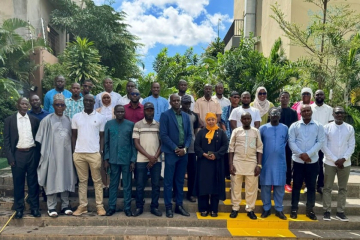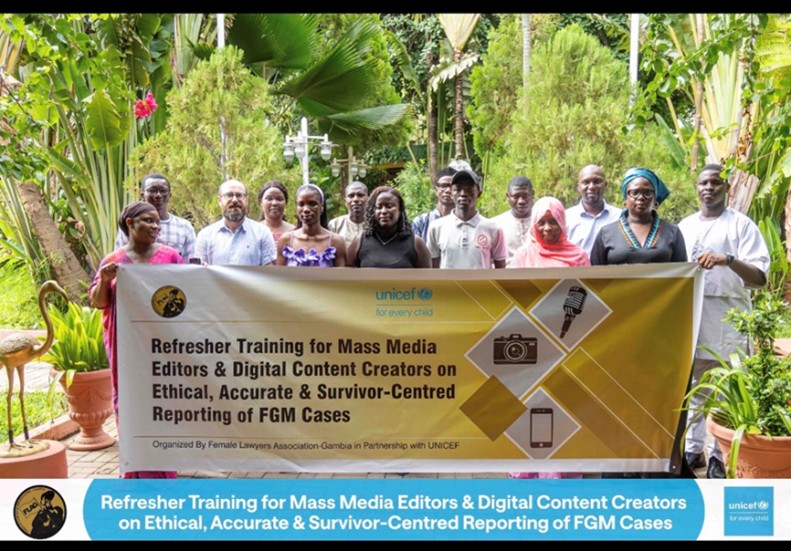
The appeal was made on Friday during a refresher training for editors and senior editorial representatives at the Senegambia Beach Hotel. The session focused on responsible reporting of SGBV cases, emphasising legal and ethical standards in court reporting, survivor protection, child safeguarding, responsible language and practical courtroom skills.
Yassin Senghore, Vice President of FLAG, said the decision to engage editors stemmed from concerns raised during earlier training sessions with journalists about the accuracy of reporting court proceedings.
She explained that legal proceedings often involve technical terminology that can be difficult for both journalists and the public to interpret, creating the risk of inaccurate or misleading reports.
“Sometimes things have been happening that might be misrepresented,” Senghore warned, stressing the need for journalists and editors to become more familiar with legal language and court processes.
She underscored the pivotal role of editors, noting: “At the end of the day, when the journalists submit the stories, you are the guys that are going to edit it and distil the headlines.”
UNICEF Child Protection Manager Emmanuel Michaud said the training formed part of UNICEF’s broader engagement with stakeholders to strengthen media capacity on child protection and related issues.
He highlighted the media’s considerable influence over the public agenda, noting its ability to draw decision‑makers’ attention to pressing social concerns.
“This influence makes accuracy especially important when reporting technical and legal matters,” Michaud said. “The idea is not to influence what you think and what you should report, but it’s important to ensure that accurate information is disseminated.”
Michaud urged journalists to rely on evidence when reporting on FGM, pointing to research that has documented the harmful effects of the practice. He added that the media can play a vital role in countering misinformation by bringing credible research and legal information into public discourse.
A significant component of the training focused on the ethical reporting of violence against women and children. Michaud cautioned journalists and editors against practices that could expose survivors to further harm.
He stressed the importance of protecting survivors’ dignity and privacy, warning that revealing the identity of a survivor of violence—particularly through social media—can have serious and lasting consequences.
“Ethical reporting does not mean avoiding stories about violence or sensitive community issues,” Michaud explained. “It means ensuring that such cases are reported responsibly without causing further harm to survivors.”
The training comes amid heightened public interest in the Supreme Court’s deliberations on FGM, underscoring the need for media houses to ensure that coverage remains legally sound, factual and responsible.