Young people in Banjul have called for improved career guidance, greater employment opportunities, enhanced sporting facilities and stronger support for entrepreneurship, insisting that the National Youth Policy implementation framework must deliver tangible benefits for young Gambians.
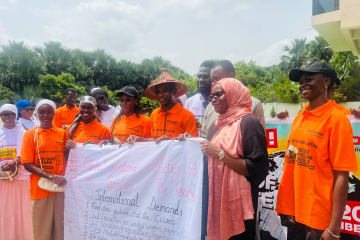
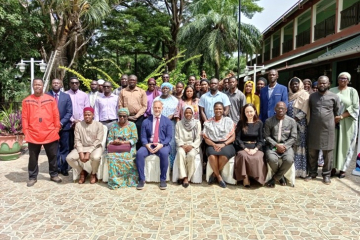
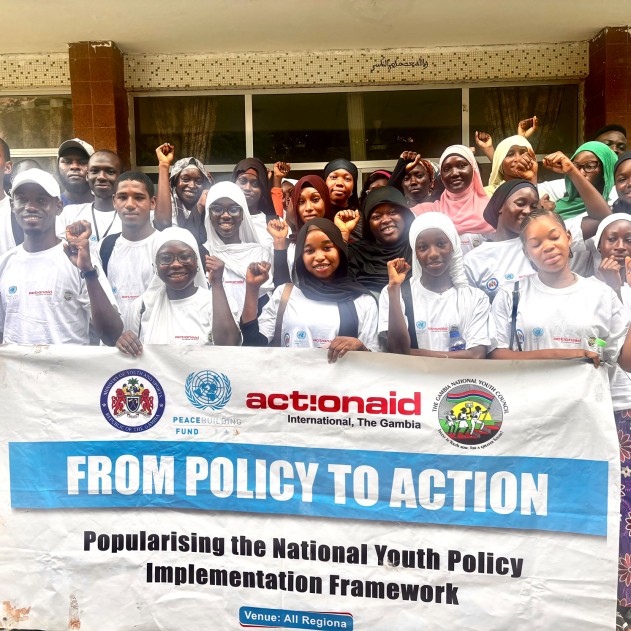
The calls were made during a youth engagement organised by the National Youth Council (NYC) in partnership with ActionAid International The Gambia, which brought together about 90 young people in Banjul to discuss the National Youth Policy and its implementation framework.
Participants also advocated for greater inclusion of persons with disabilities, equitable access to development opportunities and stronger collaboration between policymakers and education stakeholders to ensure young people are equipped with skills relevant to an evolving labour market.
Speaking during the engagement, Edi Sillah raised concerns about inadequate career guidance, noting that many young people pursue courses that do not align with their interests, abilities or long-term career ambitions.
He stressed that poor guidance could negatively affect future employment prospects and questioned how the policy framework would help young people identify career paths that match both their talents and labour market demands.
Similarly, Fatoumatta Beks called for career counselling to be introduced before students transition from junior to senior secondary school, arguing that early guidance would help them make informed educational and career choices.
She also expressed concern over the adequacy of financial support available to young entrepreneurs, noting that start-up grants of D50,000 may no longer be sufficient given current economic realities.
MsBeks further questioned the effectiveness of matching-grant schemes that require beneficiaries to provide counterpart funding, arguing that such conditions often exclude young people with limited financial means.
She urged authorities to provide more practical support for youth-led businesses and create markets for locally produced goods, saying government institutions should prioritise purchasing products made by Gambian entrepreneurs whenever possible.
On sports development, Dodou Janko highlighted the shortage of recreational facilities in Banjul, particularly football fields, describing the situation as a major challenge for young people.
He called on the Banjul City Council to invest in community sporting infrastructure to ensure that young people have access to safe and adequate spaces for recreation.
Mahari Cham also questioned how the National Youth Policy would address decisions affecting access to public parks and sporting grounds, arguing that young people are often the most affected when such facilities become unavailable.
As an educator, Mr Cham further urged the NYC to engage curriculum developers to ensure that learning content reflects contemporary realities, particularly in areas such as digital literacy, music and the creative industries.
Responding to the concerns, EbriamaNdow, Monitoring and Evaluation Officer at the NYC, said the implementation framework was designed to provide a clear mechanism for tracking progress under the National Youth Policy.
He explained that the absence of such a framework had previously made it difficult to effectively measure achievements and identify implementation gaps.
MrNdow acknowledged the need to address disparities between urban and rural communities, improve opportunities for persons with disabilities and strengthen support for young people across the country.
He added that tackling irregular migration requires the creation of jobs, support for entrepreneurship and the development of practical skills that enable young Gambians to build sustainable livelihoods at home.
The engagement forms part of a nationwide initiative by the National Youth Council to popularise the National Youth Policy and encourage greater youth participation in its implementation.