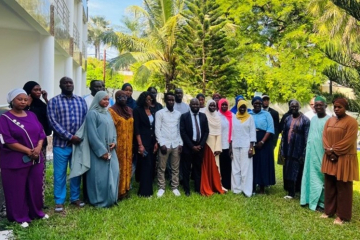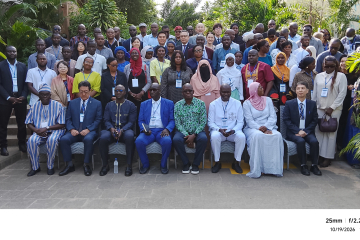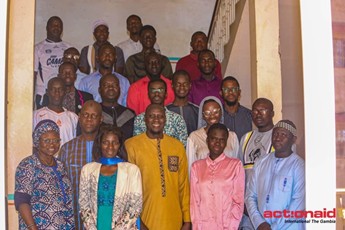
Thus, the training, according to officials, would greatly help to strengthen data management skills and ensure that information collected by the Ministry is accurate, accessible and useful for planning, advocacy and decision-making.
At the training session, Bridget Tabou Correa, Project Manager of the Youth Promotion Initiative (YPI), described the exercise as a critical step toward building a strong and functional data system for the country.
The database, he added, responds to a major national challenge, especially the lack of reliable data on persons with disabilities, whose information has historically been difficult to capture.
Mrs. Correa outlined that database should not be treated as a static record, but rather a living tool that must be actively used.
According to her, the system is expected to support planning, fundraising, advocacy and timely responses to information requests from partners and stakeholders.
She thus thanked the UN Peacebuilding Fund for financing the initiative and creating the opportunity to establish the database.
Also speaking at the event, Fafa O. Cham, head of Programs and Policy at ActionAid International The Gambia, hailed the initiative as another major step toward establishing a comprehensive and functional database for the Ministry of Youth and Sports.
Mr. Cham reminded that access to accurate and well-organised data will strengthen evidence-based decision-making, budget advocacy and policy engagement, especially when dealing with the Ministry of Finance and other key stakeholders.
With a functional database, he said, information such as the number of trained youths, supported entrepreneurs, athletes and their economic contributions can be retrieved instantly.
He also highlighted the importance of documenting contributions from sectors such as sports, including Gambian footballers abroad, whose remittances and wider economic impact are often underestimated due to poor data.
Abas Bah, Director of the Department of Youth and Sports at the Ministry of Youth and Sports, while describing the training as timely and crucial, acknowledged that lack of reliable data has for years affected planning, budgeting and the Ministry’s ability to respond to policy and political inquiries.
Mr. Bah emphasized the importance of collecting primary data, describing it as more reliable and credible for decision-making.
He indicated that accurate data helps demonstrate the economic and social impact of youth programmes, conferences and sporting activities, which is essential when engaging policymakers and development partners.
Drawing from international experience, he explained that proper data collection can quantify economic impact and justify increased investment in youth development. Thus, he also stressed the need for data disaggregation by gender, region, age and disability status to support inclusive planning and accountability.
The project, he went on, strengthens both institutional and individual capacity by providing tools, systems and practical skills for effective data management.