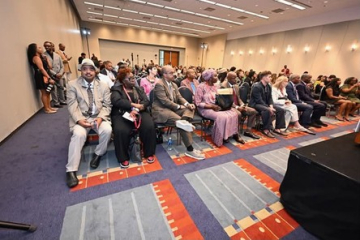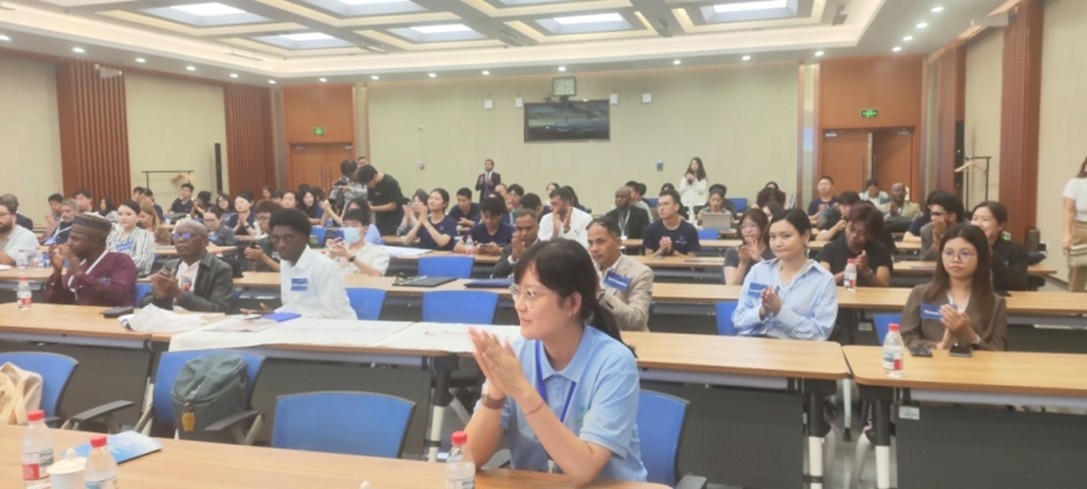
The programme’s theme, 'Understanding Transformation and the Meaning of Our Mutual Development Experiences', focused on practical challenges including housing, water security, and climate change.
Dr. Li Xiangyu, division director of the Global Development Promotion Center, China International Development Cooperation Agency (CIDCA), said China has pursued a “development first, action-oriented” approach in response to global challenges such as unbalanced development, the digital divide, and climate change.
Over the past five years, he noted, China has mobilised more than $23 billion USD to support over 1,800 projects across eight GDI priority areas, including poverty reduction, food security, green development, and the digital economy. Cooperation has been carried out with more than 90 countries and international organisations.
Li described young people as “beneficiaries, contributors, and a vital driving force of global development.” He referenced the Youth Leaders Community for Global Development, launched in July 2023, which provides platforms for exchange between Chinese and foreign youth.
“Today we have media practitioners, scholars, and college students with diverse academic backgrounds and national perspectives,” Li said. “The original intention of organizing this dialogue is to hold equal discussions, exchange ideas, advance shared development, and strengthen people-to-people bonds.” He urged participants to act as “messengers of shared development experience between China and the world, and practitioners of global cooperation.”
Prof. Yang Yadong of China Agricultural University, said the summer school is designed to go “far beyond wonderful lectures.” The goal, he said, is for participants to “see real development with our own eyes and truly understand global development firsthand.”
He described the CAU gathering as both the closing of one phase and “a starting point for our upcoming journey inland,” where participants will engage in field study. Yang said the programme aims to enable a cross-cultural academic exchange that can “explore practical solutions for global sustainable development.”
Guan Kejiang, President and Editor-in-Chief of the Global Times, said the global conversation on development has long been dominated by a few developed countries, while voices from developing countries were often overlooked.
“Today, the situation is changing as the Global South thrives,” Guan said. “More and more people now understand that modernization does not equal Westernization. Global South countries are exploring their own modernization path based on their own national conditions.”
He highlighted CAU as an example of South-South cooperation. The university has partnerships with more than 260 universities, research institutions, and international organisations in over 50 countries. CAU students and scholars have worked in rural communities across Latin America, Africa, and Asia on agricultural technology, food security, and poverty reduction.
Guan said young people who are meeting now as “observers and learners of global development” will in a few years become “practitioners of cross-border collaboration, ambassadors of cultural mutual learning, and leaders in the development of the South.”
“The Global Times is committed to presenting a true, multidimensional, panoramic view of China, and to serving as a bridge for young people from different countries,” he added.
The dialogues and field visits aim to translate the GDI from vision into action by building consensus among the next generation of leaders from the Global South.