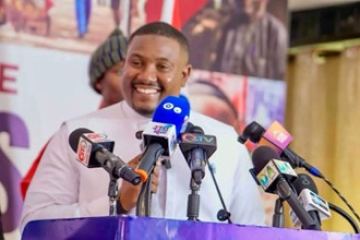
Darboe explained that the talks had revolved around two competing models: a party‑led coalition, favoured by the UDP, and a candidate‑led coalition, which has now been endorsed by most participants.
Under the candidate‑led model, presidential hopefuls would be vetted by a mediation committee and, if selected, would resign from their parties to contest as independents. Darboe warned that such an arrangement would strip coalitions of accountability and repeat the “structural weaknesses” exposed during the 2016 experiment.
“Once a candidate becomes politically independent of the institutions that brought him or her to office, the coalition itself loses its ability to ensure accountability,” he said. “We should learn from our national experience, not repeat it.”
The UDP leader also rejected proposals for a governing council to oversee the presidency, describing it as “fundamentally inconsistent” with the Gambian Constitution.
“No extra‑constitutional body should exercise powers not contemplated by the Constitution,” Darboe stressed. “Our democracy must always be strengthened by constitutional institutions, not parallel structures.”
Another sticking point was the mechanism for selecting the coalition flagbearer. Darboe criticised the system for giving civil society organisations and political movements the same voting power as registered parties with proven electoral support.
“Democracy is built upon representation. Representation is earned through the confidence and votes of the people,” he argued. “Political legitimacy cannot simply be assumed; it must be demonstrated.”
Darboe lamented that discussions had increasingly centred on ministerial positions and power‑sharing formulas rather than solutions to pressing national issues such as unemployment, food security, healthcare, education, and constitutional reform.
“Public office is a responsibility to serve the people. It should never become the principal objective of political cooperation,” he said.
Despite the withdrawal, Darboe insisted the UDP respected the views of other coalition partners and rejected accusations that the party was sabotaging opposition unity.
“Reasonable people can disagree. In a democracy, disagreement is neither hostility nor betrayal,” he said. “Our commitment to democratic change has never wavered. It will not waver today.”
“A coalition that lacks constitutional clarity, political accountability, and democratic legitimacy risks creating tomorrow’s problems instead of solving today’s challenges,” the UDP declared.
The party emphasised that its decision was taken respectfully, without bitterness or hostility toward colleagues involved in the mediation process. It extended gratitude to political parties, civil society organisations, and the Coalition Mediation Committee for their efforts, acknowledging their sincerity despite the lack of agreement.
The UDP announced it will immediately begin working with like‑minded political parties, democratic movements, and patriotic Gambians to build a coalition rooted in constitutional governance, accountability, fairness, and national renewal.
“Time is no longer on our side. The Gambian people deserve clarity. They deserve leadership. They deserve hope,” the statement read.