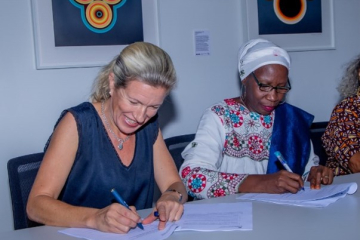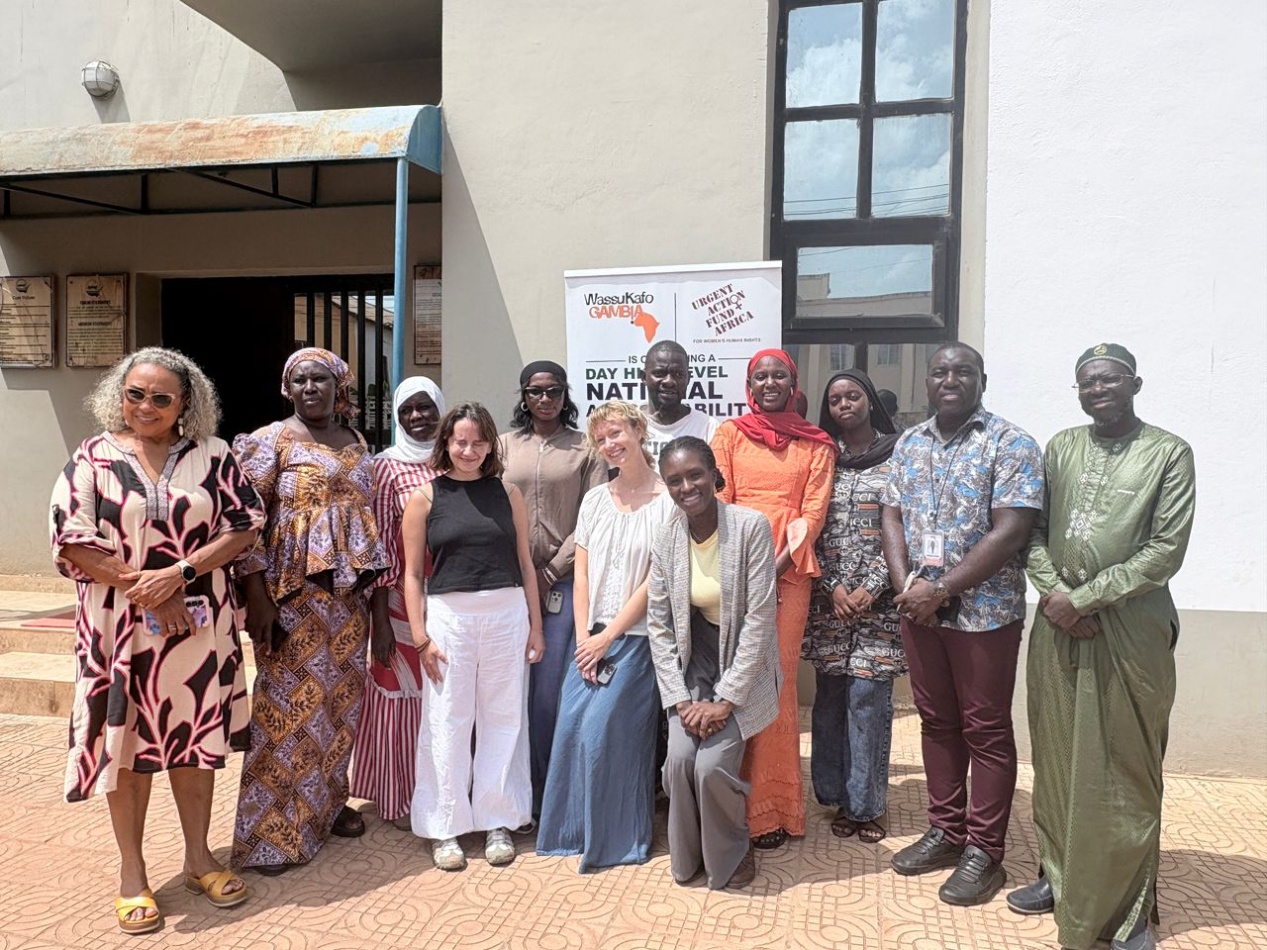
The call was made during a three-day multi-sectoral consultation being held from September 1–3, 2026, at the NAQAA Conference Hall in Kanifing, organized by WGK with support from the Urgent Action Fund for Africa (UAFA).
The consultation brings together stakeholders from the justice, health, law enforcement, child protection, social welfare, human rights and civil society sectors to review existing practices and jointly develop and validate a practical Multi-Sectoral FGM Case Management Protocol.
The initiative comes amid concerns over gaps in case identification and reporting, referrals, medical documentation, investigation, evidence management, prosecution and coordination among institutions responsible for responding to FGM.
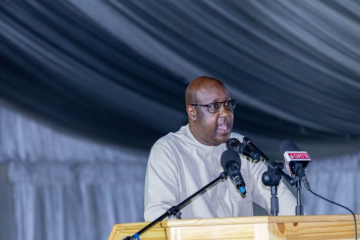
Speaking at the consultation, Hamadi Sowe, Research and Training Coordinator of Wassu Gambia Kafo, said the objective was not merely to produce another policy document, but to establish a practical tool that can guide institutions when an FGM-related case is identified.
“Our objective is not simply to develop another document. Our objective is to develop a practical tool that can guide action,” Sowe said.
He explained that effective management of FGM cases requires different institutions to work together, noting that a health worker could be the first to identify a case, while social workers or child protection officers may handle protection and referral. The police, he added, may be responsible for investigation and evidence preservation, while legal actors handle prosecution and court processes.
According to Sowe, although each institution has its own mandate, those responsibilities must be properly connected to prevent vulnerable women and girls from falling through institutional gaps.
The proposed protocol will establish clearer procedures for identifying and reporting suspected FGM cases, referral and protection of survivors and children at risk, medical assessment and documentation, investigation and evidence collection, prosecution, information sharing and coordination.
It will also clarify the roles and responsibilities of institutions involved in FGM case management.
Sowe urged participants to bring their practical experiences into the consultation and openly identify weaknesses within existing systems.
“Tell us what works. Tell us what does not work. Tell us where the gaps are. Tell us what needs to change,” he urged.
He stressed that the protocol must reflect the realities of The Gambia and be practical enough for police officers, health workers, social workers, child protection officers, prosecutors, lawyers and civil society organizations to use effectively.
The working draft is not intended to replace existing laws, policies or professional standards. Rather, stakeholders are expected to technically review and validate its provisions before formal adoption by the relevant authorities.
The three-day consultation is structured to assess existing case management systems, identify institutional gaps, develop the protocol and agree on recommendations and a pathway towards adoption and implementation.
Sowe expressed appreciation to UAFA for its support, saying the success of the initiative would ultimately depend not on the completion of the document, but on whether it is adopted, owned by relevant institutions and translated into consistent action.
He further emphasized that the protection, dignity, rights and wellbeing of women and girls must remain at the centre of The Gambia’s response to FGM.