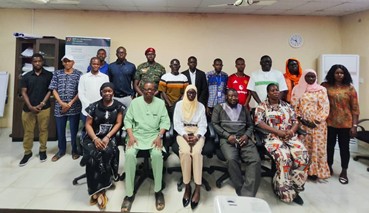
This development was revealed on 17 February 2026 at a one-day stakeholder Information session held at the National Climate Action Center (NCAC)-UTG Campus on the newly approved Diploma in Climate Action programme.
The diploma has been developed to strengthen national capacity in climate change mitigation, adaptation and resilience through practical, skills-based training tailored to the needs of professionals and institutions working in climate related sectors and individuals interested in climate change studies. The forum discussed opportunities for institutional participation and collaboration.
A slide presentation shows how The Gambia faces increasing climate risks, droughts, flooding, coastal erosion, and ecosystem degradation, high dependence on rain-fed agriculture and climate-sensitive livelihoods. The programme emphasises the need for skilled professionals to support evidence-based climate planning and implementation, while it is developed to strengthen national climate literacy and institutional readiness.
The programme, which should run through eight months with eight-courses, is visioned to build a new generation of climate-literate, action-oriented professionals driving inclusive climate solutions to deliver a high-quality, practice-based diploma that equips professionals with tools, knowledge and leadership capacity to mainstream climate action.
Among NCAC’s strategic diploma alignment is to equip mid-career professionals with practical tools and contextual knowledge where graduates become change agents bridging science, policy, and practice while supporting climate justice, inclusion and community-based co-production of solutions.
The programme targets public sector professionals (ministries, agencies, councils), NGOs and civil society actors, private sector and development practitioners, youth, women, and persons with disabilities (PWDs) and community leaders and extension workers.
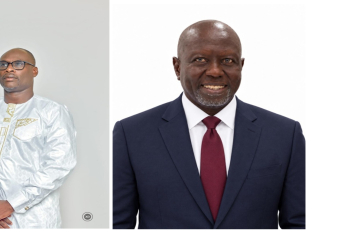
In his welcoming remarks, Professor Sidat Yaffa, director of West African Science Service Center on Climate Change and Adopted Land use (WASCAL) at the UTG, stated that the programme is a step towards strengthening climate capacity development in The Gambia.
He said that across Africa and particularly within the Sahel and coastal West Africa, people are witnessing rising temperatures, increasing rainfall variability, droughts, flooding, land degradation, biodiversity loss, and growing pressure on water and food systems.
Those impacts, he said, are already affecting communities, livelihoods, and national development progress, noting that The Gambia, despite contributing very little to global greenhouse gas emissions, remains among the countries most exposed and vulnerable to climate shocks.
In responding to these challenges, Professor Yaffa said it is significant to understand that infrastructure projects, climate finance, and policies alone are not enough.
He noted that one of the most critical pillars for successful climate action is human capacity, adding that countries that make progress in adaptation, mitigation, climate governance, and resilience are those that invest in skilled professionals who can interpret climate data, design solutions, implement programmes, and monitor impact.
Dr Mamma Sawaneh, head of department for environmental studies under the School of Agriculture and Environmental Sciences at the University of The Gambia, outlined that climate change continues to pose serious threats to the country’s development, affecting key sectors such as agriculture, water resources, forestry, fisheries, health, infrastructure, and livelihoods.
These challenges, he said, require not only policies and strategies, but also a strong pool of trained professionals who possess the knowledge and practical skills to plan, implement, and monitor climate interventions effectively.