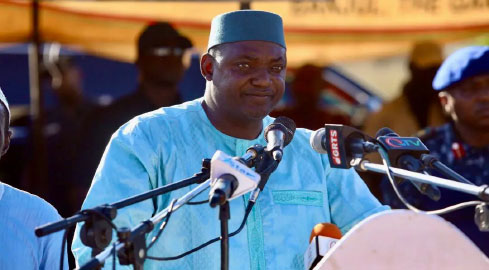
"In response to this situation, working with development partners, African leaders have embraced the Mission 300 (M300) Agenda for implementation. This is a bold continental initiative aimed at accelerating electricity access for three hundred (300) million Africans by 2030," he stated.
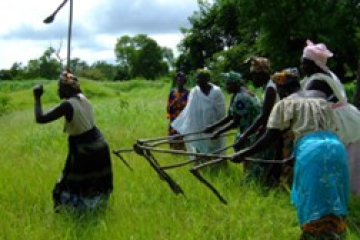
According to him, The Gambia is proud to be associated with this agenda, not as a passive participant, but as a country determined to lead by example. "For too long, many of our rural communities have lived without electricity," he added. “This has resulted in long hours of manual labour by our hard-working womenfolk and limited opportunities for entrepreneurs and businesses.”
For this reason, the Gambian leader stated children struggle to study by using candles, outdated lamps, or other sources of light. "We are changing this narrative," he affirmed.
He mentioned that through sustained efforts and strong partnerships, 719 communities across The Gambia have now been electrified, and 209 of these are from North Bank Region," he mentioned.
This is an unprecedented achievement in The Gambia, he stated: "It reflects my administration’s firm commitment and strides taken to ensuring that electricity is not a privilege for the few, but a basic service accessible to all Gambians and residents of the country.
“This achievement also places us solidly on track to achieving universal electricity access by end of 2026, well ahead of the global 2030 target.”
With the completion of his ongoing tour on the rural electrification project launching, he said, The Gambia is poised to be among the first countries within ECOWAS to attain universal access to electricity. "Our national electrification rate will now rise from seventy-three (73) per cent to about ninety (90) per cent, marking a transformative moment in our development journey."
He assured the remaining communities without electricity that his government had mobilised the necessary resources, both domestically and through donor support, to provide access to the remaining ten (10) per cent of The Gambia’s population by the end of 2026.
He also mentioned that a provision of D400 million has been made in the 2026 national budget to support this effort.
“Additional financing is being mobilised under our National Energy Compact initiative with the World Bank, African Development Bank and other partners to complement this budgetary allocation,” he stated, emphasising that this achievement is more than just infrastructure development.
Electricity is a catalyst for socio-economic transformation, he notes, saying it powers schools and health facilities, drives agro-processing and small businesses, supports industrialisation, and unlocks opportunities for jobs, innovation, and inclusive growth, particularly for rural communities.
President Barrow called for collective commitment to leaving no Gambian behind in the country’s development efforts. "Guided by our national resolve to develop our beloved homeland, and in alignment with our continental initiatives, we are not only lighting homes but also empowering communities and building a brighter and more prosperous Gambia for posterity," he affirmed.
He thanked the World Bank, the European Union, the European Investment Bank, and ECOWAS for their continued support and invaluable partnership.