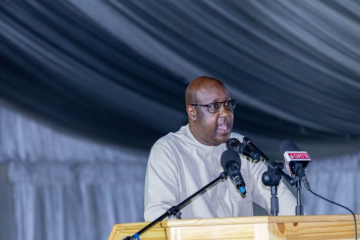
“On that basis I beg to move for the confirmation of these appointments by this august assembly,” the minister said, reading the nominees’ credentials for colleagues.
Sering Mass Jallow, the minister noted, brings two decades of experience in auditing and public finance. He holds a Master’s in auditing and a Bachelor’s in accountancy, with professional training in forensic accounting, public finance and project management, and AAT (UK) certification. Jallow’s rise through audit ranks from assistant manager to director of audits was highlighted as the reason he is suited to lead the new watchdog.
Almameh S. Manga is presented as the legal heavy-weight: LLB, LLM in human rights and criminal justice, a barrister at law and experience in peace and conflict studies. His CV lists prosecutorial work, legal advisory roles and participation in corruption investigations and UN missions.
Isatou J. Nahara, with an LLB from the University of The Gambia, was praised for her judicial experience from law office assistant to first-class magistrate and currently a senior magistrate and lecturer making her a natural fit for the commission.
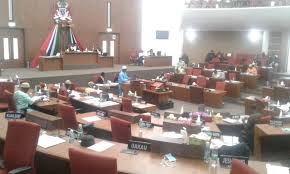
Speaking in support of the motion, Member for Lower Saloum Hon. Sainey Jawara called the approval “one of the biggest achievements” for Parliament, stressing the rigorous process behind establishing the Voting Committee that vetted candidates. The committee, he said, includes representatives from the PMO, the Financial Intelligence Unit, the Gambia Bar Association, civil society and the Chamber of Commerce, a mix intended to secure independence.
“Out of these five people on the Voting Committee…we can confidently say the selections are independent,” Mr. Jawara told colleagues, adding that the slate of nominees: an auditor, a prosecutor and a magistrate “meets the criteria set by Parliament.”
But not everyone was entirely comfortable. Hon. Almammeh Gibba suggested that while Jallow’s audit background is strong, the commission’s leadership might in practice be driven by the legal commissioners, and he urged clarity on roles. More bluntly, several members sounded a persistent alarm: setting up commissions without the necessary funding and support staff risks creating ghost commissions that cannot deliver.
“We’ve seen ATI Commission, SOE Commission funding is a problem. They don’t even have support staff or mobility,” urging the ministry to ensure the new body is resourced to do its work.
The Anti-Corruption Commission’s roles, under Section 6 of the Act, include promoting integrity, standards, receiving and investigating complaints, prosecuting corruption offences, advising on asset recovery and educating the public about bribery and fraud.