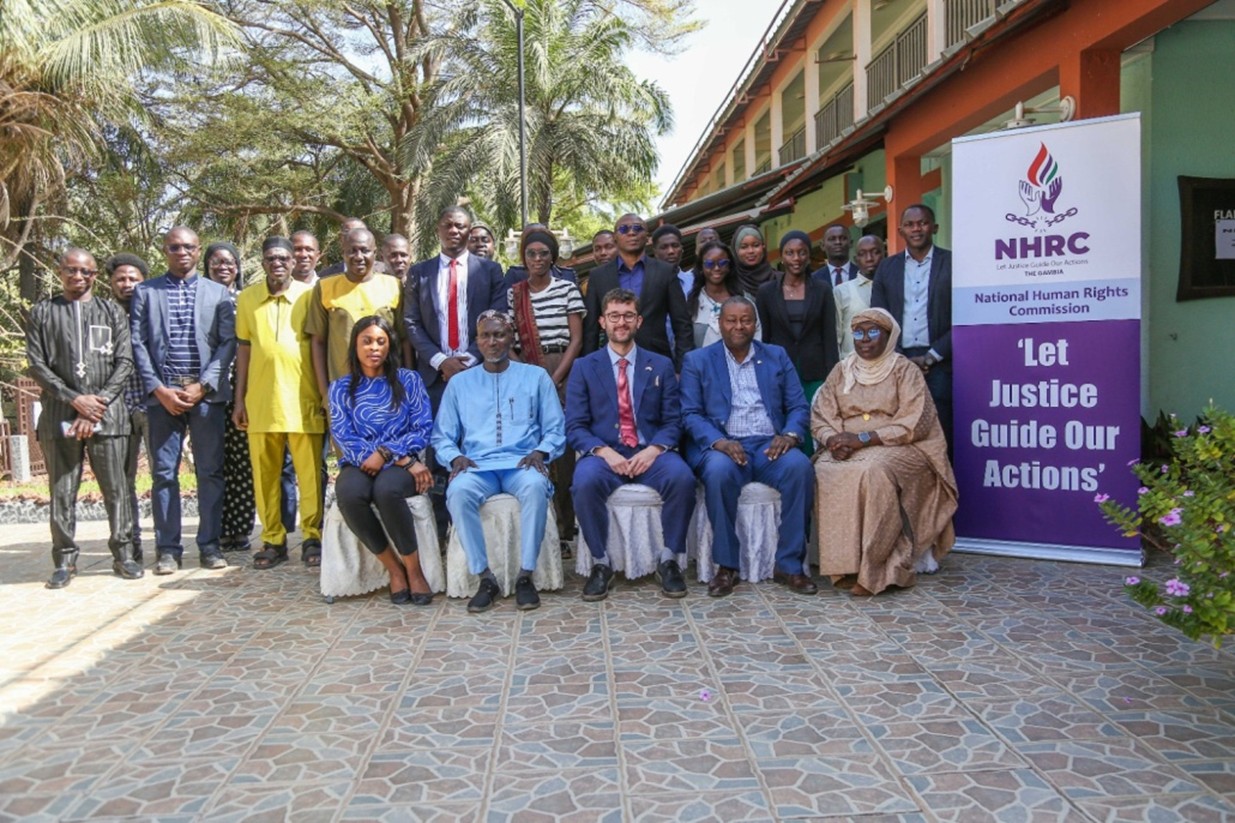
The study, commissioned in February 2026, examined institutions engaged in human rights education and found that at least 38 organisations are actively involved, carrying out hundreds of awareness and training activities across the country. Described as encouraging, the report highlights that those efforts remain largely fragmented and lack a unified national framework.
Speaking at the opening, NHRC Chairperson Emmanuel D. Joof underscored that human rights education is central to the Commission’s constitutional mandate.
“We cannot protect rights if people do not know those rights exist,” an official stated, emphasising the link between awareness and accountability. “Duty bearers must understand their obligations, just as right holders must know their entitlements and responsibilities.” He said.
Mr Joof stated that the assessment identifies several structural weaknesses, including the absence of a national policy on human rights education, weak coordination mechanisms among stakeholders, lack of standardised training materials, and limited capacity in monitoring and evaluation.
“These gaps mean that while important work is happening, it is not always connected or strategically aligned,” the Commission noted, calling for a more coordinated and structured national approach.
The NHRC Chair also highlighted ongoing efforts to decentralise human rights education, with regional offices established in areas such as the Upper River, Central River, and North Bank Regions to ensure outreach extends beyond the Greater Banjul Area.
“Support from the British High Commission has been instrumental in this expansion, including logistical assistance and capacity-building initiatives.”
Delivering the keynote address, Thomas Monks described the assessment as a “timely milestone” that for the first time, provides a comprehensive national picture of human rights education efforts in The Gambia.
“Human rights education is not simply a technical exercise. It is an investment in people’s dignity, safety and future,” he said. “Every informed citizen strengthens their community and their ability to advocate for their rights.”
Monks stressed that the findings should guide the development of a clear roadmap to strengthen systems, improve coordination, and expand impact, particularly at the community level.
He also highlighted the importance of financial independence for the NHRC, noting that a resource mobilisation strategy would be vital to sustaining its work and ensuring institutional credibility.
The validation workshop is expected to refine the report’s recommendations and lay the groundwork for a coordinated national strategy on human rights education.
Stakeholders say the outcome could mark a turning point in how rights awareness is delivered, shifting from scattered initiatives to a cohesive, nationwide system aimed at empowering citizens and strengthening democratic governance.