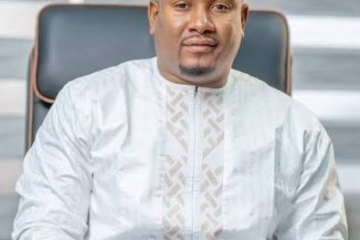
Speaking during a phone interview on Coffee Time with Peter Gomez, Saidy said while he understands public frustration, particularly on the season of Tobaski, efforts should focus on addressing the problem rather than scoring political points.
“I am not a politician. I am a Gambian. I am here to serve The Gambia. This is not desirable. But to politicize it and try to make it look like the world is collapsing, that is not fair.”
The NAWEC boss explained that the interruptions are linked to technical challenges affecting the OMVG regional power network, which supplies electricity to several countries in the sub-region.
According to him, Senegal recently lost close to 100 megawatts after a major plant breakdown, while fuel-related challenges are affecting generation capacity elsewhere in the region.
“This is a technical issue that is beyond NAWEC’s control, Senegal is load-sharing, Guinea is load-sharing, We also have to load-share because the OMVG is a regional line.”
Saidy stressed that The Gambia is not relying entirely on imported electricity, noting that local generation and solar energy are helping to cushion the impact of the regional crisis.
“We are generating locally from our own generation plant, we also have the solar plant. Those are the ones actually helping us,” he said.
“I know people need their freezers to work. It’s just bad timing. It’s happening at the wrong time,” he said.
However, he maintained that the situation is temporary and should improve soon.
“With the information I’m getting from our suppliers, probably another week or two and we should be back to normality,” he said.
Addressing criticism from opposition groups, Saidy argued that no government or political party could immediately solve a breakdown occurring outside the country’s borders.
“Nobody has control over a generator that is breaking down somewhere outside this country, even if they were sitting here today, they would not be able to resolve this problem because it is beyond their control.”
He also accepted criticism of NAWEC’s public communication efforts, agreeing that the utility must do more to keep citizens informed through both traditional and digital media.
Despite the challenges, Saidy expressed confidence in the country’s long-term energy outlook.
“The future is bright, The Gambia is going to be probably one of the best countries when it comes to utility supply in the sub-region.”