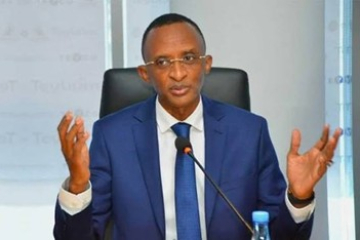
Speaking at the General Government Monthly Press Conference held at the OIC Conference Centre on Wednesday, NAWEC Deputy Managing Director Sampo Ceesay said the current power interruptions should be viewed as a temporary setback rather than a collapse of the energy sector.
"What we are experiencing now is just a glitch. It is not a system failure but rather an unexpected situation that we are trying to address," he said.
According to Mr Ceesay, electricity demand in The Gambia has nearly tripled over the last decade, rising from about 300,000 megawatt hours in 2016 to an expected 970,000 megawatt hours in 2026.
He noted that the annual demand growth currently stands at approximately 12 percent.
He further explained that several generating units have undergone intensive maintenance over the years, with some engines temporarily unavailable due to rehabilitation works.
Mr Ceesay revealed that one of the major challenges has been delays in receiving spare parts ordered for key generators
He cited the case of a 10-megawatt unit at Brikama Power Station whose spare parts were ordered from South Korea in February.
"When the war broke out, the parts had already been shipped and were in Dubai. They were stopped and have since been rerouted. We still have not received them," he said.
Mr Ceesay also pointed to the impact of regional and global fuel market disruptions, saying NAWEC had been forced to increase fuel reserves to safeguard electricity generation.
He disclosed that the utility had spent more than a million dollars on maintenance for the past months and they pay for maintenance when the parts arrived.
He added that NAWEC has also spent D100 million on Heavy Fuel Oil (HFO) purchases, while fuel prices had risen since the outbreak of conflict involving Iran.
"Fuel prices in February were around D67. Today they are around D120. That is the reality of the energy market," he said.
Mr Ceesay noted that thermal power producers across West Africa are reducing fuel consumption because operating diesel and HFO-powered plants has become increasingly expensive.
Separately, Information Minister Dr Ismaila Ceesay called for public patience, arguing that the current disruptions should not overshadow years of progress in expanding electricity access across the country.
"For the past two years, NAWEC has been providing constant electricity to the republic. Now there is a challenge for two weeks and we are calling it a failure. It is not a failure; it is a challenge," the minister said.
Dr Ceesay acknowledged public frustration but insisted that both government officials and ordinary citizens are experiencing the same hardships caused by the outages.
"We are suffering like every other Gambian with this challenge," he said.
The minister said the government remains committed to resolving the situation and expressed confidence that improvements would be seen within the timeframe outlined by NAWEC.