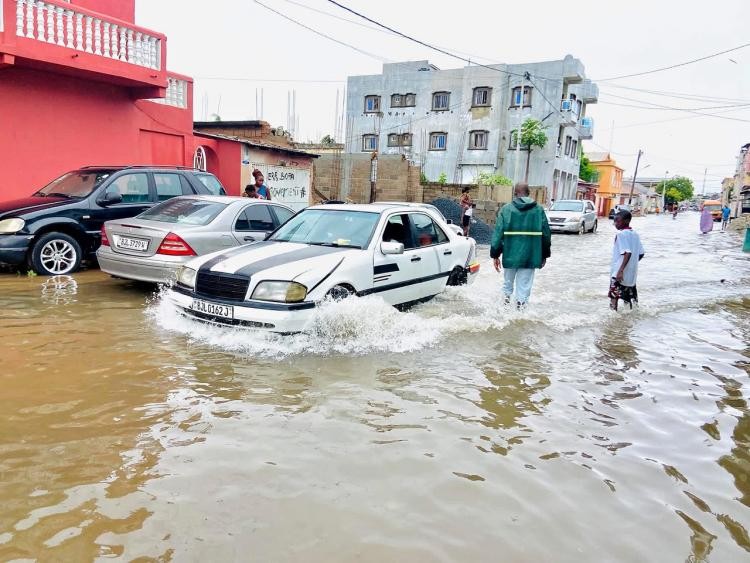
Speaking to The Point on condition of anonymity, the source described the recent rainfall as unprecedented, saying the intensity of the downpour within a short period created what is technically known as “flash flooding”—a phenomenon capable of overwhelming drainage systems.
“I think it is fair to say that the rainfall that recently happened in Banjul is unprecedented, and it has created what we call flash flooding, where there is heavy rainfall over a short period of time that can overwhelm the existing infrastructure,” the source said.
The explanation comes amid concerns over the effectiveness of Banjul’s drainage system following widespread flooding in several parts of the capital.
The source urged the public to assess the situation objectively, noting that works are ongoing to upgrade Banjul’s road, drainage and sewage infrastructure.
According to the source, drainage systems are generally designed using rainfall averages and projections over a given period. However, exceptionally heavy rainfall within a short period can exceed the capacity of the system.
“Flash flooding is a phenomenon that does occur, and sometimes the system, no matter how well it is designed, can be overwhelmed because flash flooding is very unpredictable,” the source said.
The source said an important consideration is whether flooding continues for a prolonged period after the rain has stopped.
The source identified Banjul’s geographical position as another major factor contributing to its vulnerability to flooding.
Banjul is a low-lying area, with sections of the city situated below sea level during the rainy season. This means rainwater cannot easily flow naturally into the sea through gravity.
“The levels on land in Banjul are actually below sea level. They are lower than the level out at sea,” the source explained.
Because of this, the drainage system depends on a retention area known as the Bond Polder, where rainwater is temporarily collected before being pumped into the sea.
“When it rains and the water cannot go out because the system cannot actually discharge through gravity, there is a catchment area in the Bond Polder that is supposed to hold and retain the rainfall water,” the source said.
The water is subsequently removed using lift pumps that transfer it from the lower-lying polder into the sea.
The source stressed that the system’s effectiveness depends heavily on the Bond Polder having sufficient capacity to retain incoming water, while drainage outlets, gullies and manholes must remain free of debris and blockages.
“The Bond Polder has to have enough space and depth to be able to collect any rainfall that is coming through the system,” the source said.
The source also raised concerns about encroachment and sedimentation, which could reduce the polder’s capacity.
According to the source, the capacity of a retention area depends on both its surface area and depth. Therefore, if the area is reduced, the depth would have to increase to maintain the required volume.
“If the area is being reduced, then one of the things that we have to do is increase the depth to get the volume that we need,” the source explained.
Sedimentation, caused by sand and other materials carried into the polder by water, can also reduce its depth and storage capacity.
The source warned that insufficient capacity could result in what is technically known as “surcharging,” where the drainage system becomes overwhelmed and water is pushed back into surrounding areas.
The source said low-lying communities are particularly vulnerable, identifying areas around Half Die among those susceptible to flooding.
The source called for a proactive maintenance programme, including ensuring that pumps remain operational, drainage outlets are regularly cleared and the Bond Polder maintains adequate capacity.
“We need to keep the pumps operating and in good working condition. We need to clear the outlets and the drainage system to make sure that it flows properly,” the source said.
The source added that adequate capacity in the Bond Polder is essential to prevent the system from surcharging and creating further flooding.
The recent flooding has once again placed Banjul’s drainage infrastructure under scrutiny and highlighted the need for sustained maintenance alongside ongoing rehabilitation works.