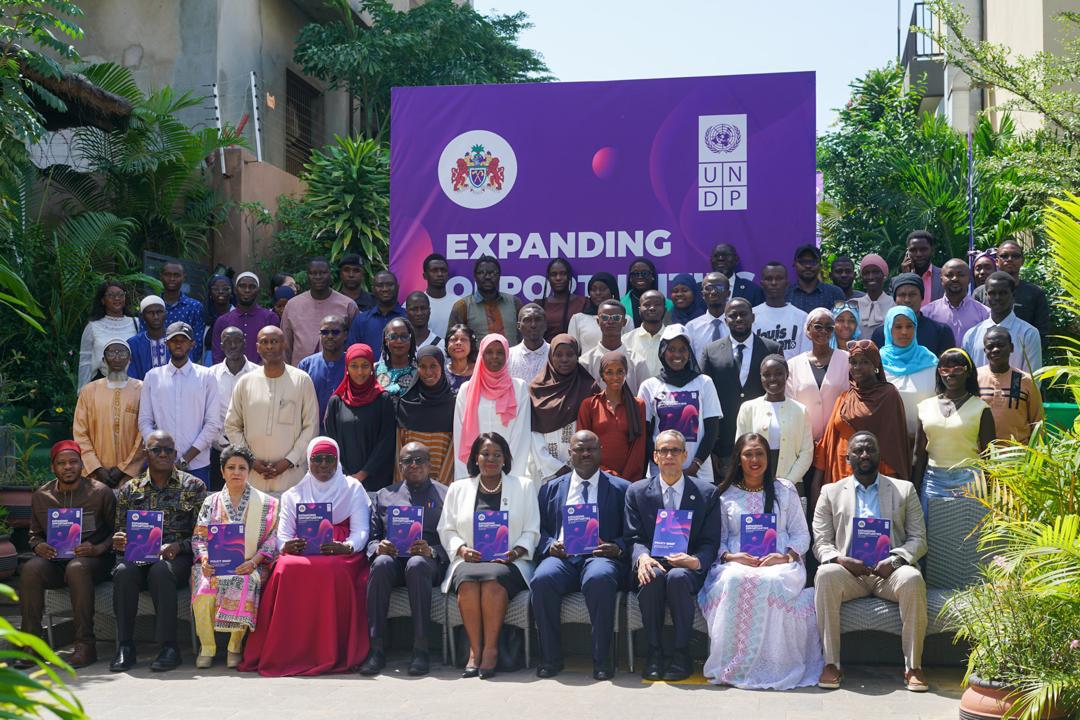
With more than four in ten Gambians aged 15 to 35, the Report presents the country’s youthful population as a major development asset and calls for converting this demographic potential into productive employment, entrepreneurship and meaningful participation in national development.
The Report acknowledges important progress in human development, including near-universal basic education enrolment and increased life expectancy from 56.9 to 62.9 years. It also highlights progress in health, gender equality and decent work, while noting persistent structural barriers that continue to affect young people’s transition from education to employment.
Although youth unemployment is commonly reported at 8.3 percent, the Report notes that this figure does not fully capture the broader realities of labour underutilisation, including underemployment, discouraged workers and skills mismatch. It therefore calls for a more comprehensive approach to understanding and addressing the employment challenges facing young Gambians.
The Report emphasizes the importance of strengthening pathways from learning to earning by improving the quality and relevance of education, expanding technical and vocational training (TVET), strengthening labour market information systems, and investing further in digital, technical and entrepreneurial skills.
It further identifies agriculture and agro-processing, tourism, ICT-enabled services, logistics, the green economy and other emerging industries without smokestacks as sectors with strong potential to expand productive opportunities for young people.
Recognising the significant role of the informal economy and small enterprises in employment, the Report calls for an enabling environment that supports businesses to formalise, expand and create quality jobs, while improving young people’s access to finance, markets, technology and mentoring.
The Report also stresses the need to prepare young Gambians for a changing world of work through stronger investment in digital literacy, connectivity, STEM education and skills linked to emerging opportunities in artificial intelligence, automation and the green transition.
These priorities are aligned with the Government’s 2023–2027 Recovery-Focused National Development Plan – YIRIWAA and complement UNDP’s partnership with The Gambia under the United Nations Sustainable Development Cooperation Framework 2024–2028.
The 2025 Gambia Human Development Report provides an evidence-based platform for Government, development partners, the private sector, civil society and young people to strengthen collective action towards expanding opportunities and ensuring that the country’s demographic potential contributes to inclusive and sustainable development.
Sustained investment in young people’s capabilities, skills and economic opportunities will be critical to advancing The Gambia’s long-term development ambitions.