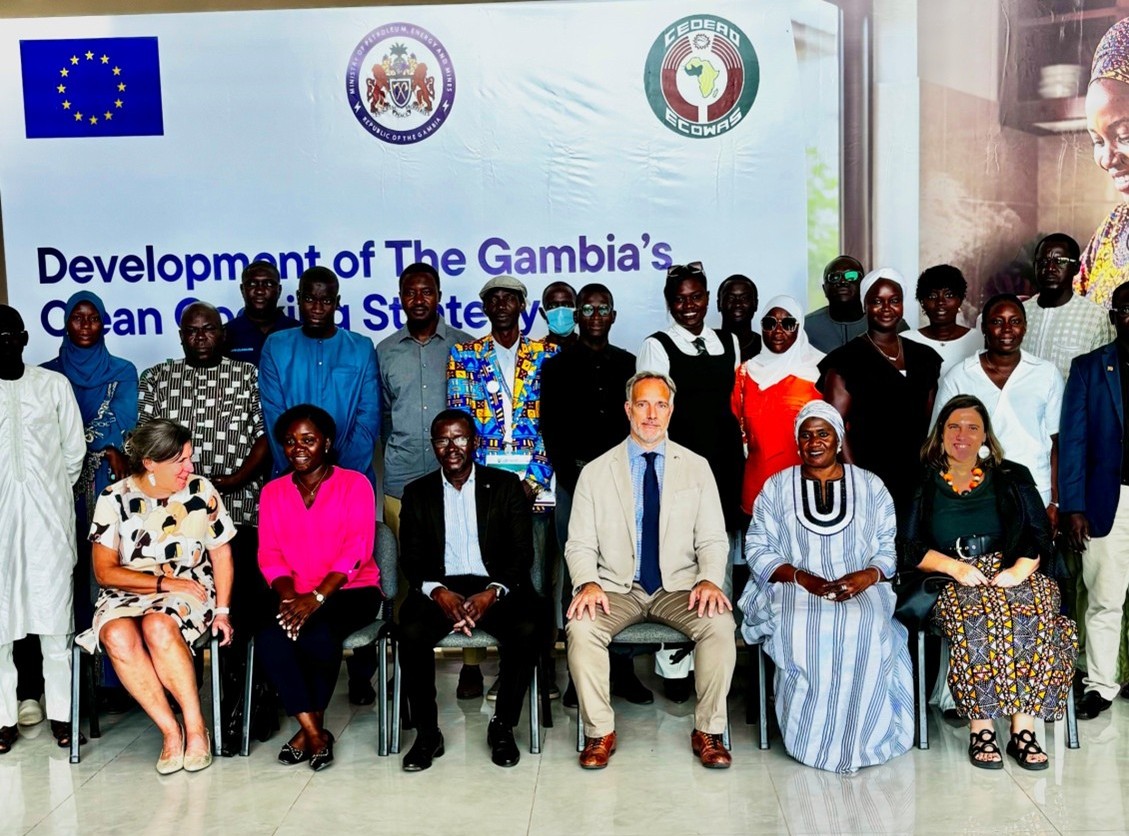
The Gambia is working towards developing a National Clean Cooking Strategy aimed at promoting safer, cleaner and more sustainable cooking solutions, as partners warn of the health and environmental consequences of traditional cooking methods.
The initiative is being pursued under the Regional Clean Cooking Action in West Africa (ReCCAWA) programme, which is supporting efforts to expand access to clean cooking technologies across 12 West African countries.
The Ministry of Petroleum, Energy and Mines, in collaboration with the Economic Community of West African States (ECOWAS) Commission and the European Union (EU), convened a national kick-off workshop on Wednesday at the Sir Dawda Kairaba Jawara International Conference Centre to discuss the development of the strategy.
The programme is financed by the European Union and the Netherlands Ministry of Foreign Affairs through ECOWAS, with the aim of promoting clean cooking through interventions targeting demand, supply and an enabling policy environment.
Speaking at the workshop, Carmen, a representative of the Netherlands Enterprise Agency (RVO), said clean cooking was important for the health of women and children, environmental protection and the creation of business opportunities.
She noted that women and children were particularly vulnerable to the harmful effects of smoke from traditional cooking methods, while the continued use of firewood also contributed to pressure on forests.
“It’s important because of the health for women and children, because they spend hours in the toxic world, and it’s very bad for their health. It’s also bad for nature, because it takes trees,” she said.
Carmen added that the programme could also create opportunities for private sector development by supporting businesses involved in clean cooking solutions.
She emphasised that the strategy must reflect the country’s realities, priorities and needs rather than being developed as a document without meaningful local participation.
“We are in the natural, real Gambian world. So what we’re going to do is to develop this strategy based on Gambian needs and Gambian priorities,” she said.
She called for government institutions, civil society organisations, women’s groups and other stakeholders to contribute their ideas, concerns and experiences to the process.
The Deputy Head of the EU Delegation to The Gambia, Raphaël Brigandi, said clean cooking was linked not only to environmental protection but also to women’s empowerment and private sector development.
He said the EU was supporting regional efforts to address climate change, reduce greenhouse gas emissions and protect communities and the environment.
“Clean cooking is part of the equation,” Brigandi said, expressing hope that the workshop would contribute to a robust national strategy that would guide future policies and actions.
He said the strategy could help improve health, protect the environment, strengthen women’s empowerment and create opportunities for businesses.
Meanwhile, Kemo K. Ceesay, Director of Energy and Mines at the Ministry of Petroleum, Energy and Mines, highlighted the need to promote alternatives to traditional cooking methods that expose households to smoke and depend heavily on biomass fuels.
He recalled previous efforts to introduce alternative cooking technologies, stressing the importance of learning from past initiatives and developing approaches that could deliver lasting results.
Ceesay said collaboration between government and development partners was necessary to advance clean cooking and encourage the adoption of safer household energy solutions.
The workshop is expected to provide a platform for stakeholders to exchange experiences and identify priorities for the proposed national strategy.
Through its focus on demand, supply and the enabling environment, ReCCAWA seeks to strengthen regional cooperation and support the development of sustainable clean cooking markets.
The development of The Gambia’s strategy is expected to provide a framework for future interventions aimed at expanding access to cleaner cooking technologies while addressing public health, environmental sustainability and economic opportunities.