The trio is represented by Counsel L.A. Ceesay, while the State is represented by Counsel M. Mballow.
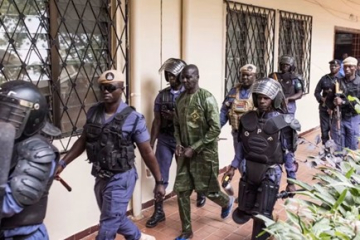
At the Brusubi Magistrates’ Court, the three were convicted of: Unlicensed driving, contrary to Section 36 of the Motor Traffic Act, and Reckless and dangerous driving, contrary to Section 49(1) of the same Act.
For unlicensed driving, the court imposed a fine of D1,000 or three months’ imprisonment with hard labour. For reckless and dangerous driving, the sentence was a fine of D25,000 plus three years’ imprisonment with hard labour.
One of the convicts, Serieng Mass Gaye, has already served the custodial sentence for unlicensed driving and paid the fine of D1,000.
Defence submissions
Making submissions before the High Court, Counsel L.A. Ceesay argued that the Magistrate erred in law by imposing sentences that were manifestly excessive and disproportionate, particularly as the drifters were first-time offenders with no prior criminal records.
He submitted that sentencing principles require restraint when dealing with first-time offenders, and that the early guilty pleas entered at the lower court, which saved judicial time and resources, were not adequately reflected in the sentences.
Counsel further argued that the offence of reckless and dangerous driving allows punishment by fine or imprisonment, or both. Yet the Magistrate imposed both the maximum fine and a lengthy custodial sentence, relying heavily on deterrence while failing to properly exercise discretion under Section 34 of the Criminal Code.
He contended that the sentencing court placed undue emphasis on deterrence, to the exclusion of rehabilitation and other objectives of criminal punishment.
Although the Magistrate acknowledged mitigating factors such as the youthfulness of the offenders and their status as students, Counsel argued these were not reflected in the final sentences, rendering the punishment punitive rather than corrective.
Relying on Sections 34 and 35 of the Criminal Code and Section 268 of the Criminal Procedure Act, 2025, Counsel urged the High Court to set aside the custodial sentences and substitute them with reasonable fines, suspended sentences, or community service.
He warned that imprisoning young first-time traffic offenders exposes them to hardened criminals and undermines rehabilitation.
Counsel Ceesay adopted the same submissions for Muhammed Bah and Samba Ceesay, urging the court to allow their appeals.
State’s response
Responding on behalf of the State, Counsel M. Mballow acknowledged that the High Court has discretion under Section 345(1) of the Criminal Procedure Act to suspend sentences. However, he urged the court to ensure that any leniency granted does not compromise justice or public safety.
He emphasised that reckless and dangerous driving poses serious risks to the public, citing scenarios involving children, pregnant women, and vulnerable persons.
“Our role in this judicial exercise is limited, and I leave the matter in the hands of the Court. Nevertheless, I respectfully urge the Court to consider granting their application. I believe that, if allowed to proceed, they will not reoffend, having learned their lesson.”
While recognising the young age of the appellants, State Counsel urged the court to uphold the findings of the lower court. He stressed that accountability must accompany compassion, adding: “Sympathy should not override the need for justice.”
After hearing submissions from both sides, Justice O. Cham adjourned the matter until 10 March 2026 for ruling.