For years, livestock farmers in Dingiri had to trek with their cattle across the border into Senegal to find water, losing animals along the way. That struggle has now ended.
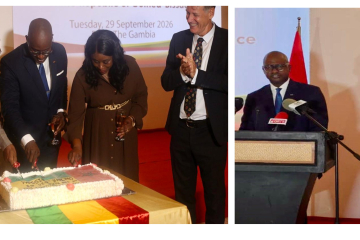
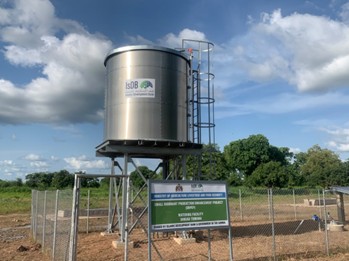
President Adama Barrow on Tuesday inaugurated a 50,000-litre automated livestock drinking water facility in Dingiri, Tumana District, ending years of water scarcity for an estimated 6,000 cattle in the area.
The solar-powered facility, built under the Small Ruminant Production Enhancement Project with funding from the Government and the Islamic Development Bank, pumps up to 49,000 litres per day and automatically refills when empty.
Farmers say the facility has brought relief and hope, especially for pregnant cattle that found the cross-border journey difficult.
"Before the establishment of this facility, we used to take our cattle to Senegal for them to drink. Sometimes, our cattle get lost on the way. Sometimes, they get stuck in the mud," said Famory Samasa, who owns over 100 cattle, speaking on behalf of his fellow herders.
For livestock farmers in Dingiri, water is more than a basic need. It is the foundation of their livelihoods. The facility provides a reliable source of clean water, helping farmers protect their animals, reducing the burden of searching for water across the border, and strengthening families who depend on livestock.
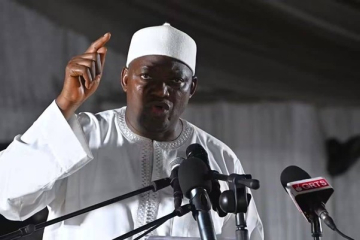
Speaking at the handover, President Barrow said the project was a direct outcome of his Meet the People Tour.
"When I came here on the Meet the People Tour, the community requested an animal drinking point. They used to migrate because of a lack of water. They have almost 6,000 animals around this area," he said.
The President said the project shows why engaging communities directly matters.
"Because of that Meet the People Tour, we were able to engage the people and know what they want, what they need. That's why we noted it, and it was part of our project, so we delivered the project," he said.
He disclosed that an assessment has shown the need for a second facility and an animal market, which he promised to deliver.
"This system can pump about 50,000 liters and it is automated. The moment it is empty, it pumps again," Barrow said.
Minister of Agriculture, Demba Sabally, said Dingiri is a major livestock catchment area that has long suffered from water scarcity.
"This is an area that has suffered so long from water scarcity. They used to move across the border into neighbouring countries just so that the animals could have water," Sabally said.
He said the facility has a capacity of 49,000 litres per day, fully automated and solar-powered with 2.4 kW peak capacity, and can serve about 6,000 cattle, with a pipe extended to the community for domestic use.
Sabally said sustainability will be community-led, with each facility managed by a local committee that charges a minimal user fee for maintenance. He noted there are 29 such facilities nationwide, with seven in the Upper River Region.
Project Director Mamud Njie said committees have been trained and operate savings accounts, with some communities saving over D300,000.
President of the National Livestock Owners Association, Ebrima O. Jallow, welcomed the project, saying it will reduce cross-border migration of Gambian livestock during the dry season.