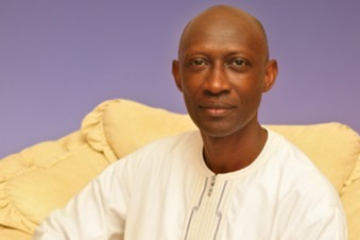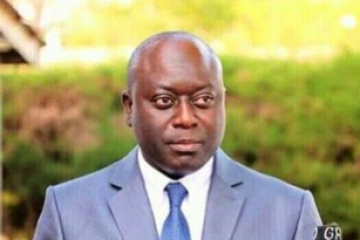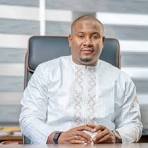
Mr. Bensouda made the pledge on Thursday, August 20, at the Coalition 2026 alliance signing ceremony held at Pencha Mi Hall, Paradise Suites Hotel.
The alliance brings together PASTEF Gambia, Defending the Gambian Interest (GDI), People’s Rights Party (PRP), FORWARD Gambia, National Reform Congress (NRC), Gambia Movement for Progress, UNITE Party, and Save The Gambia under one platform. Coalition 2026 says it represents a shared commitment to national unity, good governance, economic progress, accountable leadership and better opportunities for all Gambians.
Describing the event as more than a political agreement, Bensouda said it is a coming together of different voices around a shared vision.
“The 2026 election is more than changing one government for another,” he said. “It is for a Gambia where economic growth creates opportunity, where electricity powers businesses and homes reliably, where women participate fully in the economy, where young people can build successful lives at home, citizens feel safe, and government is accountable.”
Bensouda promised to confront problems with honesty, set measurable goals, and judge government “not by speeches, but by results.”
“This is why I accept the responsibility of leading Coalition 2026, not for personal glory, not for revenge, but because I believe deeply in the capacity of the Gambian people to build something better,” he said.
Citing official data, Bensouda said inflation was 7.0% in July 2026, national poverty stood at 53.4%, and food insecurity affected about 24% of the population in 2024. The World Bank also estimates the economy grew by 5.9% in 2025.
“Growth alone is not enough if people do not feel its benefits in their homes, businesses and communities,” he said. “Our objective must be growth that creates jobs, raises incomes and expands opportunity.”
He flagged youth unemployment as a national challenge, noting that 57.2% of Gambians aged 15–35 were economically inactive, with only 42.7% in the labour force.
On women’s participation, he cited World Bank figures showing women’s labour-force participation at 41.9% compared to 54.9% for men, and that 78.1% of working women are in informal jobs earning less on average.
“If half of our population cannot participate fully in the economy, The Gambia cannot reach its full economic potential,” he said, calling for greater access to finance, land, markets, skills and childcare for women.
Bensouda also stressed the need to fix the energy sector, saying “a country cannot industrialize, create competitive businesses or attract serious investment without reliable electricity.”