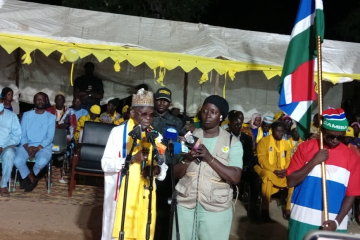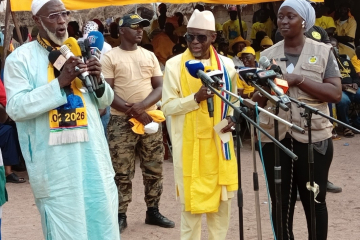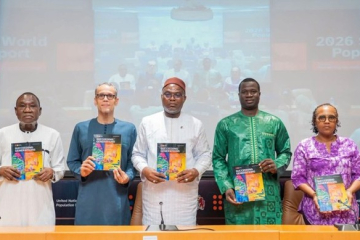
Presidential candidate Talib Ahmed Bensouda has pledged to address years of perceived neglect in rural communities, promising improved healthcare, better roads, agricultural support and economic opportunities for women and young people if elected president.
Addressing residents during his campaign trail in Wuli East, Dasilameh Sandu, Sare Sofie, Bansang and other communities, Bensouda said his proposed development agenda would prioritize rural infrastructure and improve access to essential services.
In Wuli East, residents appealed for the construction of a community garden, football field and improved public transportation for schoolchildren, arguing that children should not have to walk long distances to access education.
Bensouda also outlined plans to support farmers through a structured groundnut production and marketing program that would guarantee markets for their produce, while providing access to machinery and fertilizer.
On healthcare, he promised to improve access to medicines and ensure communities have adequate hospital facilities.
In Dasilameh Sandu, Bensouda highlighted his experience as former Mayor of Kanifing Municipal Council, pointing to his interventions in women’s economic empowerment and youth development.
He pledged to establish a D100 million development fund to support women in business, saying a similar initiative would be extended to women in the community if elected.
He also promised to develop modern markets, construct football fields for young people and establish a library to improve children’s access to educational resources. On youth unemployment, he said his administration would introduce integrated programs to address the challenges facing young people, including those undertaking irregular migration journeys.
In Sare Sofie, residents raised concerns over inadequate healthcare services, the poor condition of roads and the lack of fuel for the community ambulance. They also complained about the neglect of veterinary services and other essential facilities.
Bensouda criticized what he described as the government’s failure to deliver meaningful development, insisting that communities must be able to feel the impact of national development in their daily lives.
He also addressed concerns over national security, promising to review the presence of ECOMIG forces in the country and strengthen Gambian control over national security.
At Bansang in Central River Region South, he highlighted water shortages, economic difficulties and the depreciation of the Dalasi against the CFA franc as challenges requiring urgent attention.
He questioned how rural communities could enjoy meaningful development when even a major town such as Bansang continued to experience water shortages, leaving women to bear much of the burden.
Residents of Galleh Manda also complained about the lack of electricity, employment opportunities and access to clean water, while accusing successive governments of making promises that remained unfulfilled.
Bensouda called on voters, particularly young people, to use the forthcoming election to demand accountability and choose leadership capable of delivering tangible development.
He maintained that his experience in local government and business had prepared him to lead the country, promising to build an economy in which Gambians could create wealth through local enterprise and investment.
He further pledged constitutional reforms, including the introduction of presidential term limits, and said his campaign would prioritize the interests of rural communities.