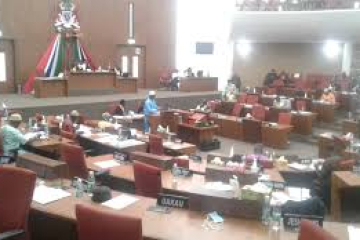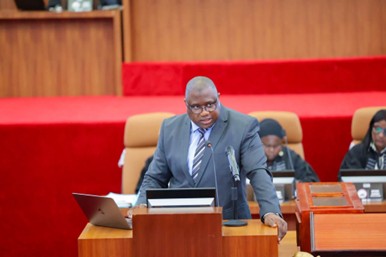
Attorney General and Minister of Justice, Dawda A. Jallow, moved the motion for the ratification of the treaty, saying it would strengthen the protection given to performers whose work is used in films, television programmes and other audiovisual productions.
The Minister said the treaty recognises the economic and moral interests of performers and provides a modern international framework for protecting their rights.
“Ratification will support the development of Gambia’s creative sector, better protect Gambian performers, and demonstrate our continued commitment to international standards in the field of intellectual property,” he said.
He urged Members of the Assembly to support the motion, saying, “I therefore commend the motion to the Honorable Assembly and respectfully urge the Honorable Members to support the adoption.”
The motion was seconded by the Member for Sabach Sanjal, Hon Alhagie Babu Ceesay, who said the treaty would help local content creators and artists make their work economically viable.
He said it could also contribute to creating more jobs for people working in the creative industries.
“Having understood that this would definitely help our local content creators and also local artists to have some of their contents economically viable, and it’s really helping to create also more jobs for those that are working in such industries,” he said.
The Member added that about 34 countries had ratified the treaty and described it as economically viable, saying it could boost the economic growth of people working in the industry.
During the debate, the Member for Josuwang, Hon Sheriff Sarr, also supported the motion, saying performers in The Gambia often do not see their rights protected when their work is used elsewhere.
He said people can prepare a song and later see it in the market without knowing that it is benefiting others.
The Member for Foni Bintang Karanai, Hon Bakary K Badjie, also backed the agreement, saying treaties ratified by The Gambia must be in the country’s interest.
He added ratifying the treaty would create an economy for artists and employment, while stressing the need to protect people’s work and intelligence.