Africa’s richest man, Aliko Dangote, has issued a stark warning to the continent’s leaders: without urgent industrialisation, Africa risks remaining a mere supplier of raw materials to the rest of the world.
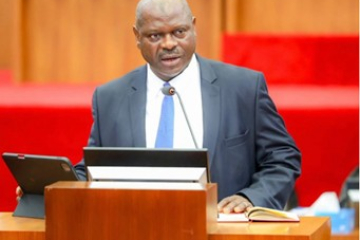
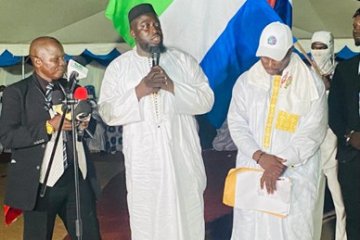
Speaking at the African Caucus meeting in The Gambia, the Nigerian industrialist and CEO of the Dangote Group called on policymakers, government officials and development partners to put manufacturing at the heart of Africa’s development agenda.
“No nation in modern history has achieved sustained prosperity without industrialisation,” Dangote told delegates. “Industrialisation is the most effective anti‑poverty programme ever invented.”
Despite holding around 30% of the world’s mineral reserves, nearly 60% of its uncultivated arable land and a rapidly growing youthful population, Africa remains the least industrialised region globally. The continent contributes less than 2% of global manufacturing value‑added, while losing an estimated US$40–50 billion annually by exporting raw commodities that are processed abroad and sold back at far higher prices.
Dangote urged governments to fully implement the African Continental Free Trade Area (AfCFTA), arguing that deeper regional integration would expand markets, attract investment and strengthen value chains in sectors such as agriculture, pharmaceuticals, fertilisers, steel, automobiles and clean energy.
He also unveiled the Dangote Group’s Vision 2030, which plans to invest US$46 billion across Africa over the next four years. As part of this expansion, the company expects to commission a 700,000‑barrel‑per‑day refinery in East Africa later this year, adding to its growing industrial footprint.
Highlighting his company’s transformation from a trading business into Africa’s largest industrial conglomerate, Dangote pointed to the US$20 billion refinery and petrochemical complex in Lagos as proof that African entrepreneurs can deliver projects on a global scale.
He called for greater investment in infrastructure, energy, education and industrial financing, while criticising barriers to intra‑African trade. “It remains more expensive to transport goods between some African countries than to import products from Europe,” he said, urging the removal of trade restrictions, harmonisation of customs procedures and freer movement of goods and people.
Concluding his address, Dangote challenged African leaders to see industrialisation not merely as an economic policy but as a pathway to dignity, sovereignty and shared prosperity.
“The future of Africa cannot be built on exporting crude oil and importing refined products. It cannot be built on exporting cocoa beans and importing chocolates, or exporting lithium and importing batteries,” he declared. “Africa must increasingly consume what it produces, process what it extracts and trade more extensively with itself.”