The landmark work transformed how millions understood slavery, ancestry, identity, family and the enduring connection between Africa and its global diaspora.
For Gambians, however, this anniversary should be more than a literary commemoration. It should be a moment of national reflection, remembrance and renewed engagement with the African diaspora.
It should also be a moment for The Gambia to reclaim the microphone and tell the fuller story of the people, families and relationships that helped make ROOTS possible.
The Journey to Rediscover the Roots Began Here
The story Alex Haley carried to the world begins, crucially, on Gambian soil.
Haley traced his family’s story to Juffureh, on the banks of the River Gambia, and to the Mandinka lineage of Kunta Kinte. There, an oral historian recited the Kinte family lineage and spoke of Kunta leaving the village and never returning.
That encounter helped transform one man’s search for his family into a global cultural phenomenon.
ROOTS ultimately became much more than the story of one family. It inspired generations of African Americans and other members of the African diaspora to ask fundamental questions:
Who were our ancestors?
Where did they come from?
What were their names?
What languages did they speak?
What cultures, faiths, families and communities existed before enslavement?
In searching for those answers, Haley permanently placed The Gambia, Juffureh and Kunta Kinte within the cultural consciousness of the African diaspora. The television adaptation carried the story into millions of homes and magnified its international impact.
But before ROOTS became the story of a family, it was made possible by families.
The Gambian Families Who Kept History Alive
ROOTS was possible because history survived in human memory.
The elders, griots and families of Juffureh and surrounding communities preserved names, lineages and community histories across generations before Alex Haley arrived. Their contribution demonstrated the extraordinary value of African oral tradition.
This anniversary should therefore honor not only Alex Haley and Kunta Kinte, but also the Gambian families whose parents, grandparents, aunts, uncles and community elders preserved and transmitted this inheritance.
These families were not standing outside history. They were its custodians.
And beyond Juffureh, other Gambian families and nation-builders helped create the circumstances that placed Alex Haley on the path toward ROOTS.
Among them was the Manga family of Manga Kunda.
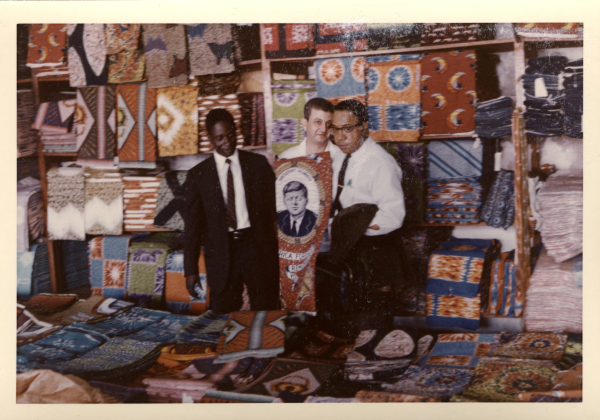
Before ROOTS: The Manga Family and the Building of a Nation
Before Ebou Manga ever met Alex Haley, the Manga family was already participating in the formation of an independent Gambia.
Alhaji Malick Ousman Manga, J.P.—the grandfather for whom I, Malick L. Manga, am named—was among the framers of The Gambia’s original 1965 Constitution. He served as Deputy Chairman of the Public Service Commission, practiced as a pharmacist in Banjul and served as a justice of the peace.
In 1969, he was appointed a Member of the Most Excellent Order of the British Empire for his public service.
Long before ROOTS was written and two generations before The Inherited Roots Project was formed, the Manga family was already in the room and at the table as an independent Gambia took shape.
While my grandfather helped build the nation’s institutions at home, Ambassador Ousman Sallah carried The Gambia’s name abroad. He helped establish the country’s foreign-affairs infrastructure and became its first Ambassador to the United States and first Permanent Representative to the United Nations.
Ambassador Sallah was not an outside patron to our family. He was family. His mother was a first cousin of my paternal grandmother, Jengoy N’Dow—a bond of blood that existed before either man held a public title.
It was Ambassador Sallah who recognized the promise in a young Ebou Manga and selected my father to study in the United States.
That decision opened the door to Hamilton College.
Hamilton College opened the door to Alex Haley.
And the relationship between Alex Haley and Ebou Manga opened another door back to The Gambia.
Without Ambassador Ousman Sallah, there is no Ebou Manga at Hamilton College.
Without Ebou Manga at Hamilton, there is no meeting with Alex Haley. Without that meeting, the path to ROOTS as we know it changes forever.
This is the story before the story: how Gambian nation-building, education, family relationships and acts of vision helped place a young Ebou Manga in the path of Alex Haley.
When Ebou Met Alex
My father, Ebou Manga, arrived in the United States in 1963 on the scholarship Ambassador Sallah helped secure. He carried with him the languages, oral traditions and living culture of West Africa—first to Salisbury School in Connecticut and then to Hamilton College in New York, where he earned a degree in economics.
It was at Hamilton College that he met Alex Haley, who was researching his family’s journey from Africa to America.
My father helped Alex understand the African words and sounds that had survived through generations of the Haley family. He recognized their connection to the Mandinka language and the cultural world of The Gambia.
Their meeting became a close relationship and meaningful collaboration. Alex later described that connection in unforgettable terms:
“To me, Ebou became Kunta, and Kunta to me became Ebou.”
Those words tell us that my father was more than a translator of language. Through Ebou, Alex encountered a living Gambian reflection of the man he had spent years trying to understand.
My father’s connection to The Gambia and to his own father, Alhaji Malick Ousman Manga, helped guide Alex deeper into the country and toward the people who could assist his search.
Read forward, this is part of the story of how ROOTS came to be written.
Read backward, it is the story of a Gambian family—a constitutional framer, a pioneering diplomat and a young student named Ebou Manga—whose choices and relationships helped create the path to one of the most influential works in modern cultural history.
The Baton Passes to a Third Generation
Nearly ten years ago, while my father was still alive and a new ROOTS miniseries was preparing to introduce the story to another generation, I discovered a letter dated June 16, 1988.
Alex Haley had written the letter while advocating for my father’s American citizenship. In it, he documented my father’s instrumental role in the journey behind ROOTS.
At the time, I did not understand that I was holding a baton.
My father and I were preparing to travel to The Gambia together. I imagined returning beside him, hearing the stories in his voice, walking the land through his memories and finally asking questions I had not known to ask as a younger man.
He died one month before our journey.
Instead of traveling beside my father, I carried him home and buried him in The Gambia.
Years later, Ambassador Sallah helped me recover more of our family’s history. We traveled to The Gambia together, but I returned to the United States before he did. When I landed at LAX, I learned that Uncle Ousman had died in The Gambia.
My father was supposed to travel there with me, but I carried him home.
Uncle Ousman traveled there beside me, but he remained there.
In two chapters of this journey, I helped lay two Gambian icons to rest. I returned to America without them—but not without what they had placed inside me.
I returned with their lessons, their relationships, their documents, their unfinished conversations and a responsibility I now understand more clearly.
The baton had been passed.
Today, three generations later, that responsibility is being carried forward through The Inherited Roots Project, co-founded by Bill Haley Jr. and me—sons of the historic relationship between Alex Haley and Ebou Manga.
The symbolism is compelling: succeeding generations on both sides of the Atlantic working together to ensure that the story does not end with the publication of a book.
A Monumental Moment
This is why I respectfully believe the government should mark this historic anniversary with an official statement or recorded reflection.
Its significance would be found in The Gambia saying to the African diaspora and the international community:
We remember.
We honor.
We welcome you home.
Such a reflection could recognize Alex Haley’s contribution, honor Kunta Kinte and all those affected by the transatlantic slave trade, acknowledge the communities and families that preserved this history and reaffirm The Gambia’s commitment to strengthening its relationship with Africans and people of African descent throughout the world.
But the statement should not be the conclusion.
It should be the beginning of The Gambia’s next chapter.
From Roots Tourism to a Roots Economy
The Gambia should transform this anniversary into a sustained national program of heritage diplomacy, cultural preservation and diaspora engagement.
Juffureh, Albreda and Kunta Kinteh Island form an extraordinary historical landscape. The ROOTS legacy has already made these places internationally recognized destinations of memory.
But our ambition must extend beyond conventional tourism.
The next chapter should include:
· The relaunch of the International Roots Homecoming Festival.
· The preservation and digitization of documents, photographs, oral histories and family artifacts.
· Genealogy and ancestry-research programs.
· Museums, libraries and digital archives.
· Academic partnerships and international research initiatives.
· Youth, cultural and educational exchanges.
· Diaspora investment forums.
· Creative partnerships in film, television, publishing, music and the arts.
· Structured opportunities for members of the diaspora to visit, invest, study, build and reconnect in
The Gambia.
We should aspire to make The Gambia one of Africa’s principal gateways for diaspora reconnection.
Imagine descendants of Africans throughout the Americas, the Caribbean, Europe and elsewhere coming to The Gambia—not simply as tourists, but as brothers and sisters returning to reconnect with Africa.
That would be a powerful continuation of Haley’s original journey.
The Table at Manga Kunda
There is another image that captures what this responsibility should mean.
When you visit Manga Kunda, you may be welcomed by some of the finest Benachin—known to much of the world as Jollof rice—prepared by my cousin Ida Manga.
But what matters is not only how wonderful the food tastes.
What matters is that there is enough for everyone to eat.
There is enough to gather around the table, enough to enjoy together and enough for everyone present to leave feeling welcomed, nourished and proud.
That is the spirit with which The Gambia should treat its precious inheritance.
Our Roots should not be hidden away, divided into small portions or remembered only during anniversaries. They should be carefully prepared, preserved and generously shared.
There is enough history for Juffureh to be proud.
There is enough history for Manga Kunda to be proud.
There is enough history for every Gambian family and community that helped preserve this inheritance to be proud.
And there is enough history to welcome millions throughout the African diaspora back to the table.
No other country possesses this exact convergence of living memory, landscape and global cultural meaning. The Gambia is home to Juffureh, the River Gambia and Kunta Kinteh Island—and it occupies a unique place in a story that still sits deeply within the hearts of many African Americans.
We have something extraordinary.
But possessing that inheritance is not enough. We must preserve it, invest in it, tell it truthfully and share it with the world.
The Story Must Continue
Fifty years later, the enduring lesson of ROOTS remains remarkably simple.
People can be forcibly separated from their homeland.
Names can be changed.
Families can be scattered across oceans.
Generations can pass.
But memory can survive.
And when memory survives, identity can be recovered.
The responsibility now belongs to another generation.
The Government of The Gambia, the National Centre for Arts and Culture, our universities, tourism authorities, traditional leaders, diaspora organizations, private sector and families such as those connected to Juffureh and Manga Kunda must accept that responsibility together.
We must preserve the documents.
We must record the elders.
We must digitize the artifacts.
We must restore the International Roots Homecoming Festival.
We must protect and elevate the historic sites.
We must invite the diaspora home—not only to visit, but to participate in the next chapter.
Because ROOTS belongs to the world, but part of its heartbeat will forever remain here—on the banks of the River Gambia, in Juffureh, on Kunta Kinteh Island and within the families and communities that kept its history alive.
On this 50th anniversary, The Gambia should proudly tell the world:
The journey to rediscover the Roots began here.
The story was kept alive here.
And fifty years later, The Gambia stands ready to carry it forward.
The baton is now in our hands.
Let us carry it together—and make the generations before us, Manga Kunda and the entire nation of The Gambia proud.
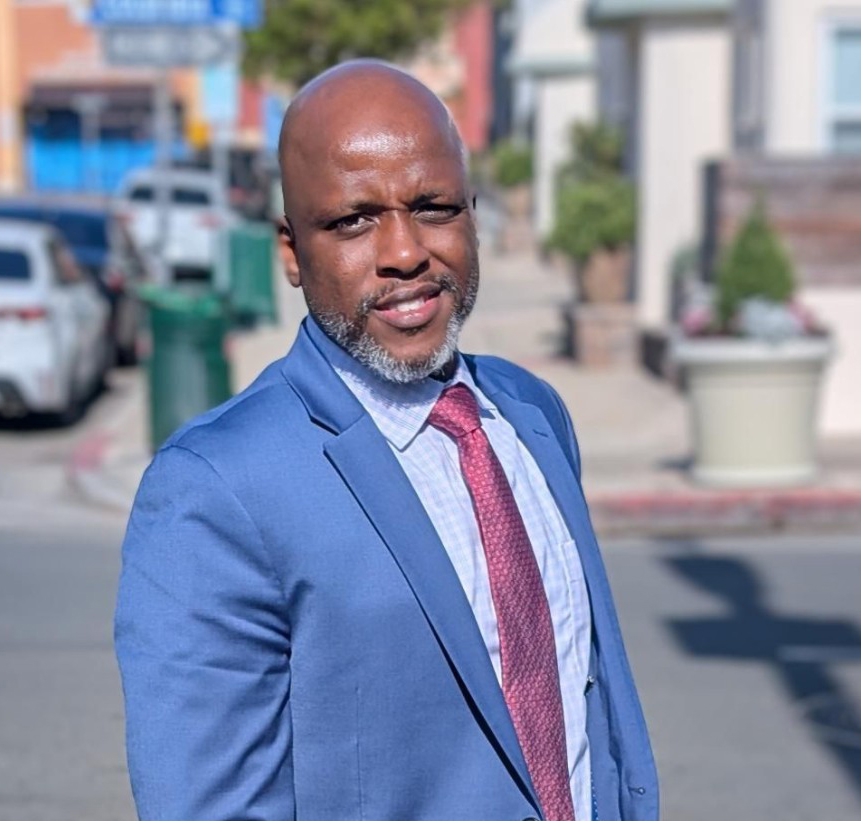
Malick L. Manga
Son of Ebou Manga
Co-Founder, The Inherited Roots Project
Manga Kunda | The Gambia
August 17, 2026