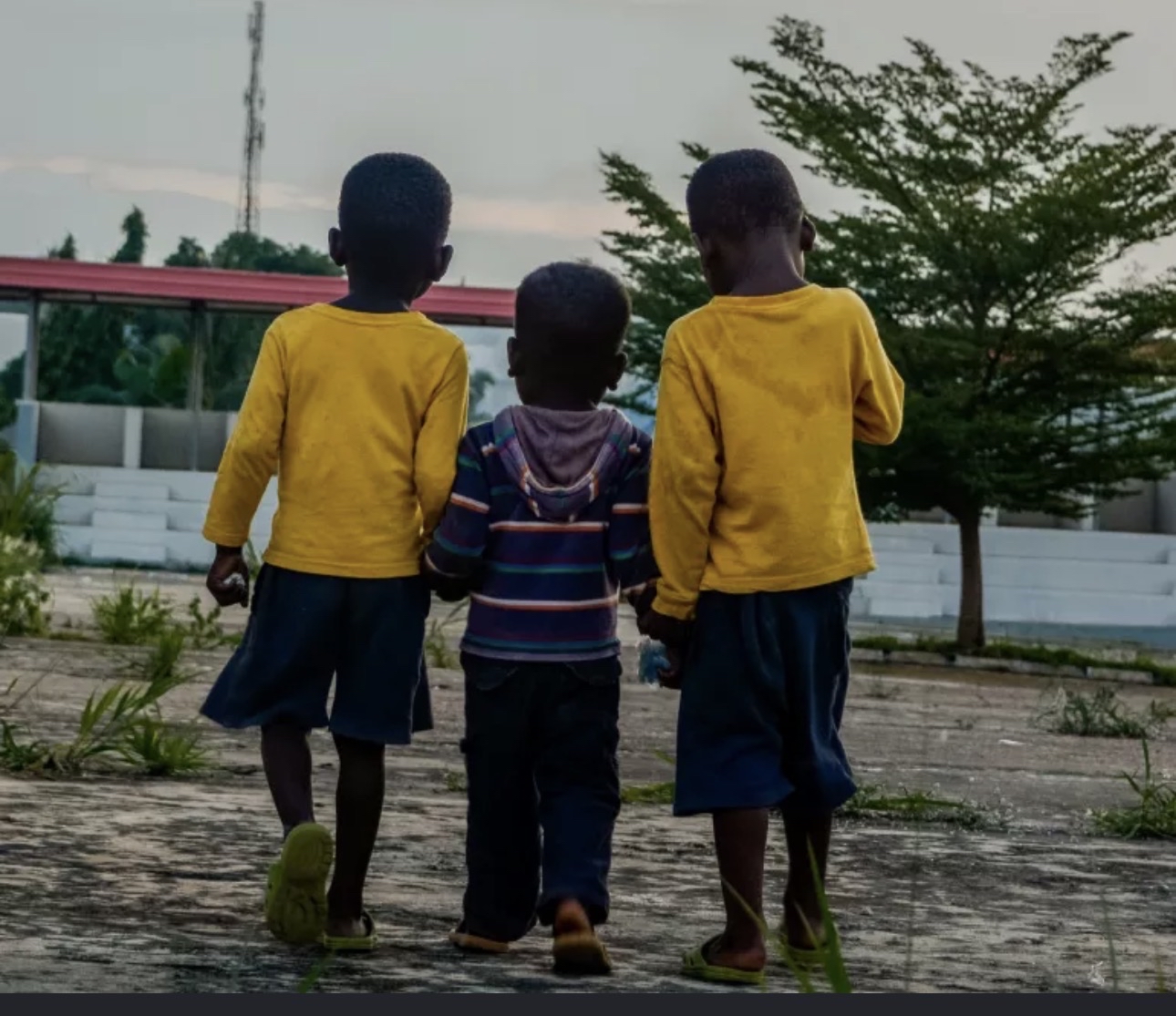
There are wounds that bleed, and there are wounds that remain invisible. A child may never be struck, yet still carry the consequences of violence for years. They may hear the shouting from the next room, witness one parent threatening another, see objects being thrown, or watch a loved one leave the house in tears. The following morning, life may continue as though nothing happened. The child puts on a uniform, goes to school and sits in class, carrying an experience that nobody else can see.
As The Gambia grapples with growing concern over knife attacks and other forms of youth violence, public discussion has understandably centred on policing, criminal responsibility, punishment and the weapons being used. But beneath the headlines lies a deeper question that receives far less attention: what are some of these young people experiencing long before violence becomes visible in the streets?
This is not to suggest that domestic violence causes every act of youth violence, or that every young person who grows up around abuse will become violent. Youth violence is complex and can be influenced by peer pressure, substance misuse, poverty, unemployment, school difficulties, social exclusion and other factors. But international evidence consistently identifies childhood exposure to violence as an important risk factor for emotional, behavioural and developmental difficulties.
For The Gambia, the issue deserves particular attention.
UNICEF data indicate that about 89 per cent of children in The Gambia experience violent discipline, including physical punishment and psychological aggression. The figure comes from national survey data and illustrates the extent to which violence remains part of the childhood experience for many Gambian children.
The 2019–20 Gambia Demographic and Health Survey also found that 39 per cent of ever-married women aged 15–49 had experienced spousal violence, including emotional, physical or sexual violence by their current or most recent husband or partner.
These figures do not mean that 89 per cent of children witness domestic violence between adults. Nor do they establish a direct connection between domestic violence and knife crime. But they reveal a wider problem: many children are growing up in environments where violence, fear or harsh treatment can be part of everyday family life.
And children are often closer to that violence than adults realise.
The child in the next room
Domestic violence is frequently treated as a conflict between two adults. But a child does not need to be the person being beaten to become a victim of its consequences.
Amie Corr, President and Founder of Breast Cancer Warriors Organisation (GMB) and a psychoanalyst, says children exposed to domestic violence can experience fear, anxiety, sleeping difficulties and emotional distress. Some may become withdrawn, while others respond through anger or aggression.
She says prolonged exposure can also affect a child’s sense of self-worth and ability to trust others. Some children may develop difficulties establishing boundaries or forming healthy relationships later in life, while others may deliberately avoid close relationships because intimacy has become associated with conflict and insecurity.
The World Health Organization similarly recognises violence during childhood as a major public-health concern. Its research links childhood exposure to violence with increased risks of mental-health problems, behavioural difficulties, substance misuse, educational challenges and later victimisation or perpetration of violence.
The consequences can therefore extend far beyond the incident itself.
A child who repeatedly hears violence at home may become constantly alert to danger. Another may struggle to sleep. Another may begin to believe that aggression is simply how adults solve disagreements.
The child is learning, even when nobody is teaching.
When home stops feeling safe
Home is supposed to be the first place where a child learns security. But when home becomes unpredictable, the child’s understanding of safety can change.
Babacarr Sowe, Speaker of the Children’s National Assembly, says children growing up around domestic violence may begin to view the wider society as unsafe because the environment that should have protected them has instead become a source of fear. That fear can also silence them.
A child may be afraid that speaking about what happens at home will lead to punishment. They may fear that nobody will believe them or worry that reporting the abuse could make the situation worse.
Sowe believes children must be given safe spaces where they can speak openly and adults must learn to listen without judgement.
For him, however, simply allowing children to speak is not enough. Their views must influence decisions affecting their lives.
The principle is important because children are often the people who understand their circumstances most directly, yet they are frequently excluded from decisions about their own welfare.
The classroom reveals what the home conceals
The effects of violence can sometimes become visible in school. Emmanuel Mendy, a senior teacher at St Therese’s Upper Basic School, says children experiencing conflict or violence at home may show changes in behaviour, participation, academic performance and attendance.
Some become unusually quiet and stop interacting with classmates. Others may become aggressive or defensive. A child who previously participated actively in class may suddenly withdraw.
Academic performance can also suffer
Mendy says emotional distress can make it difficult for a child to concentrate during lessons, continuous assessments and examinations. Attendance may decline as well, particularly where physical violence has caused injuries or other health problems.
This creates a dangerous possibility: the child may be labelled lazy, stubborn or troublesome when the underlying issue is psychological distress.
The question therefore should not always be, “What is wrong with this child?” It should sometimes be, “What has happened to this child?”
International research supports the connection between exposure to violence and educational difficulties. The WHO notes that violence against children can interfere with cognitive, emotional and social development and contribute to poor educational outcomes.
For a country concerned about the future of its young population, this should be more than a child-protection issue. It is an education issue. It is a health issue. And increasingly, it is a public-safety issue.
When anger becomes the only language
Corr says children respond differently to violence. Some become withdrawn. Some become aggressive. Others become extremely accommodating, constantly attempting to keep people happy because they have learned that disagreement can lead to danger.
Boys may face an additional challenge because of social expectations around masculinity. They may be encouraged to suppress fear, sadness and vulnerability and instead present themselves as strong.
But emotions that are suppressed do not necessarily disappear. Sometimes they emerge as anger. This does not mean boys are naturally violent. It means children learn from what they repeatedly see and experience.
If a boy repeatedly witnesses adults resolving disagreements through intimidation or physical force, he may begin to associate dominance with strength. A girl repeatedly witnessing an abusive relationship may also internalise damaging ideas about love, control and what she should tolerate in a relationship. This is how violence can potentially move from one generation to another. But exposure is not destiny.
Many children exposed to violence do not become violent adults. Some reject the behaviour they witnessed entirely. What determines the outcome can include the presence of supportive adults, stable environments, counselling, education and opportunities to develop healthy coping mechanisms.
The health system is seeing only part of the wound
Modou Lamin B. Bah, Member of Parliament for Banjul North, Vice Chairperson of the Health Select Committee and a mental-health advocate, says the effects of domestic violence can manifest physically as well as psychologically.
He points to headaches, stomach problems, disrupted sleep and the effects of prolonged stress, alongside anxiety, withdrawal, anger and difficulties concentrating.
But he believes The Gambia’s health system still has significant gaps in identifying and treating childhood trauma.
Health facilities are generally structured to respond to visible physical injuries. A child who witnesses violence may have no broken bone, no cut and no bruise. Yet the child may still need help.
Bah argues that when health workers encounter domestic-violence cases, they should also consider the children living in that environment.
He wants stronger trauma-informed training for health professionals and clearer referral systems linking health facilities with schools, social welfare, police and community structures.
His argument is straightforward: a child exposed to violence is also affected by the violence, even if that child never enters a clinic.
Hamdi Sowe, a public health expert, said violence against children in The Gambia should not be viewed solely as a family matter or a criminal justice concern, but as a major public health issue with consequences that can extend into adulthood and affect society as a whole.
He noted that the country’s approach should move beyond responding to violence after it has occurred and place greater emphasis on preventing the conditions that contribute to it. This, he said, includes promoting positive parenting and non-violent forms of discipline, strengthening schools’ capacity to recognise children experiencing emotional or psychological distress, and making psychosocial support more accessible to children and families.
Sowe also stressed the importance of stronger coordination among health facilities, schools, social welfare institutions, law enforcement agencies, community leaders and civil society organisations to ensure that vulnerable children receive timely and appropriate support.
He further highlighted the need for reliable, locally generated data on violence against children, arguing that better information would help authorities understand the scale and patterns of the problem and design interventions that respond effectively to the realities faced by Gambian children.
According to Sowe, prioritising prevention today will contribute to healthier families, safer communities and a stronger, more productive generation in the future.
The warning signs adults must not ignore
Corr says adults should pay attention to significant changes in a child’s behaviour. These can include extreme fear of loud voices, sudden mood swings, unexplained aggression, withdrawal, isolation, headaches and stomachaches, declining school performance, difficulty concentrating and increased absenteeism.
A child may also begin displaying an unusual fascination with weapons or repeatedly turn ordinary school objects into weapons during play. None of these signs alone proves that domestic violence is taking place.
But patterns matter. A child who suddenly stops participating in school may be communicating distress without having the words to explain it. A teenager who becomes unusually aggressive may be expressing emotions that have never been properly addressed. The response should not immediately be punishment. It should begin with understanding.
The knife is not necessarily the beginning of the story
This is perhaps where the national conversation about youth violence needs to become more sophisticated. A young person who commits violence must be held accountable. Victims deserve justice and communities deserve protection. But prevention requires society to look further back.
The WHO describes youth violence as a complex problem shaped by individual, family, peer, community and societal factors. Exposure to violence is one risk factor among several, alongside substance use, poor parental supervision, school failure, unemployment, poverty and harmful social norms.
Therefore, The Gambia cannot responsibly say that domestic violence is the explanation for knife crime, neither can it ignore the impact of childhood violence when trying to understand the conditions that can contribute to aggressive behaviour. The answer must involve both accountability and prevention.
The country must intervene earlier
Bah argues that Parliament and government have an important role in strengthening the implementation of child-protection and gender-based-violence laws, while ensuring that funding is available for shelters, counselling, legal assistance and other support services.
He also advocates formal referral pathways between schools, health facilities, police, social welfare and community organisations.
Sowe believes schools should have access to professional counselling services, while teachers should receive basic training to recognise emotional distress and provide children with safe, non-judgmental support.
These interventions are not luxuries. They are investments in prevention. A child who receives psychological support early may avoid years of untreated trauma. A teacher who recognises the signs may prevent a struggling student from being dismissed as simply troublesome. A health worker who asks about children in a violent household may identify a problem before it becomes a crisis.
The WHO’s violence-prevention framework similarly recommends a combination of stronger laws, safer environments, support for parents, education and life-skills programmes, and accessible services for children and families.
Conclusion
The Gambia also needs better data. It needs to know how many children are being exposed to violence, where they are, what support they receive and what happens to them afterwards. Without reliable information, policies cannot adequately respond to the scale of the problem.
A safer street begins with a safer home
The national concern over knife violence has created an opportunity to broaden the conversation.
The country must continue addressing weapons, policing and criminal behaviour. But if prevention begins only after a knife has been drawn, society has already arrived too late.
Prevention must begin much earlier. It begins with parents who understand that discipline does not require violence. It begins with communities refusing to dismiss domestic abuse as merely a private family affair. It begins with schools equipped to recognise trauma. It begins with health workers trained to identify psychological distress. It begins with children knowing that speaking will not make them less safe. And it begins with adults understanding that children are not merely witnesses to violence. They are affected by it.
Not every child exposed to violence will become violent. But every child exposed to violence deserves the opportunity to heal. Because when a child grows up believing that shouting is normal, intimidation is strength and violence is how conflicts are resolved, society may eventually confront the consequences in places far removed from the home in classrooms, relationships, communities and, sometimes, on the streets.
The knife may make the headline. The argument may make the news. The court may deliver the sentence. But somewhere behind the visible violence may be a childhood story that was never heard.
And if The Gambia is serious about preventing the next generation of violence, it must learn to listen to those stories before the wounds become visible.