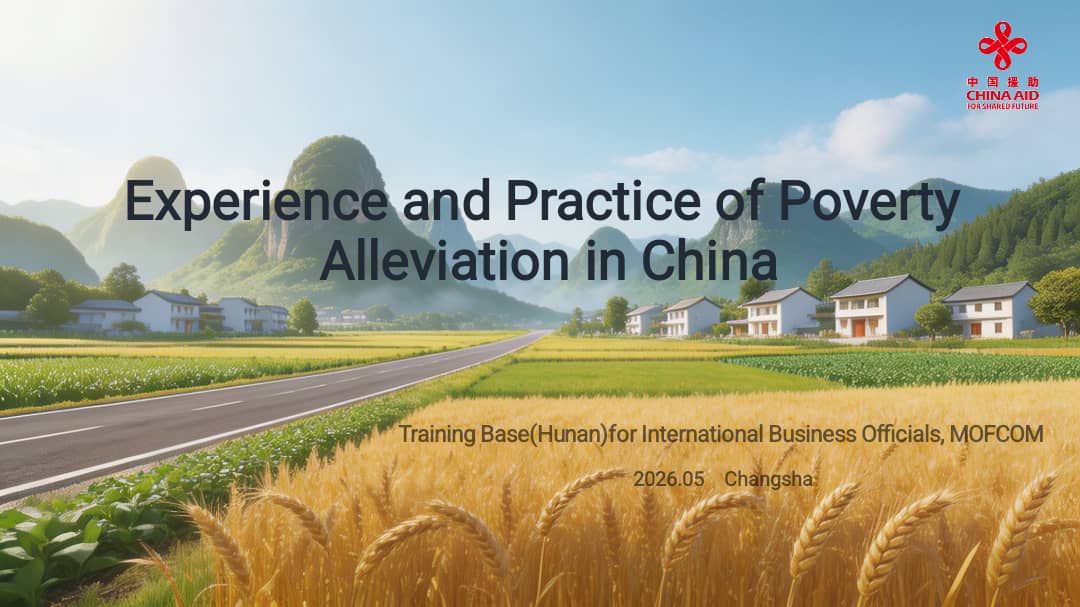
At the Seminar on Green Economy for Development and Cooperation for Belt and Road Countries, China’s poverty alleviation experience was presented as a model for sustainable development and international cooperation. Delivered by Pan Jun, Party Secretary of the Communist Party of Hunan International Business Vocational College, the session outlined how governance innovation and practical measures transformed rural areas and contributed to global poverty reduction.
China’s poverty alleviation campaign produced results unmatched in scale and speed. A total of 98.99 million rural residents were lifted out of poverty, 832 counties were removed from the national poverty list, and 128,000 villages transitioned from extreme deprivation to sustainable development. The national poverty rate dropped from 10.2 percent in 2012 to zero by 2020, a milestone widely recognized by international institutions and development partners.
Central to this achievement was a governance system built on the Six Precisions, which ensured that poverty alleviation was targeted, scientific, and accountable. These included
precise identification of target groups,
precise project arrangement,
precise use of funds,
precise household‑level measures,
precise assignment of personnel to villages, and precise assessment of outcomes. Together, they formed the backbone of China’s targeted poverty alleviation strategy.
China complemented these governance tools with Five Measures of Poverty Eradication, offering diverse pathways out of poverty. These measures included
poverty reduction through development, relocation from inhospitable areas,
ecological compensation,
education‑based poverty alleviation, and social security support.
Each measure addressed a different dimension of poverty, ensuring that no group was left behind.
The core measures were implemented through structured, practical approaches. Industrial poverty alleviation activated local economic potential through specialty agriculture, rural tourism, e‑commerce, and photovoltaic development.
Relocation programs built centralized resettlement communities with improved housing and public services. Ecological compensation created jobs in environmental protection while restoring fragile ecosystems. Education‑based poverty alleviation strengthened compulsory schooling and expanded financial assistance. Social security support ensured basic living standards for individuals unable to work.
Several transformative cases that illustrated the impact of these measures are Shibadong Village, once marked by dilapidated housing and muddy roads, now thrives with Miao embroidery, kiwifruit cultivation, and rural tourism.
Liangshan’s “Cliff Village,” previously accessible only by vine ladders, now receives thousands of tourists daily following relocation and infrastructure upgrades. Guizhou’s Rosa roxburghii industry has grown into a RMB 10‑billion sector, while Yunnan’s coffee industry has evolved into a premium, full‑chain rural revitalization model.
China’s poverty alleviation experience has attracted global attention. Delegations from The Gambia, Sierre Leone, Nigeria, Addis, Madagascar, and other Belt and Road countries have visited some China’s poverty alleviation sites to learn from its practices.
The message shared in Changsha emphasized that China’s approach is not a rigid template but a flexible reference that partner countries can adapt to their own national conditions.
Looking ahead, China aims to achieve basic agricultural and rural modernization by 2035, focusing on stronger rural industries, rural talent development, cultural revitalization, ecological conservation, and modernized rural governance.
The concluded that China’s poverty alleviation experience offers “a new pathway toward shared prosperity and green development” for Belt and Road partners.
1 attachment