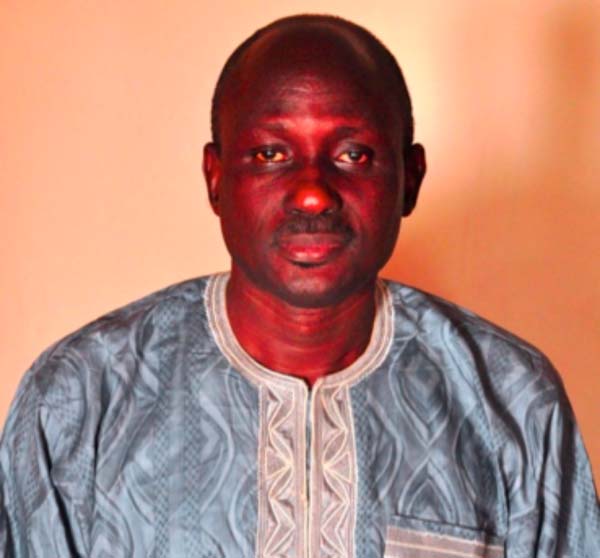
Ousman
Sillah, National Assembly member for Banjul North, has called for the
relocation of the state central prison, Mile 2, from its current location at
the mouth of Banjul.
“Mile
2 prison should be transferred from its current place because that environment
is not habitable, it exposes the inmates to dangers, and their health condition
is being compromised,” Hon. Sillah said in an interview with The Point
newspaper yesterday.
The
premise of his argument was that the central prison is located less than 10
metres from the main dumpsite of Banjul and “the situation of the dumpsite
makes the environment inhabitable for humans”.
“The
dumpsite is less than 10 metres away from the fence of the prison, and
sometimes the rubbishes there are burnt and the smoke that is emitted is toxic
and inhaling that toxic smoke has negative effects on the health of the inmates
who are locked at the prisons and do not have liberty to choose the air they
breathe as they are in a confinement,” said Sillah, who is also the chairperson
of the National Assembly select committee on health, women, children, disaster,
refugees and humanitarian relief.
The
National Assembly member for the People’s Democratic Organisation for
Independence and Socialism (PDOIS) said the environment is not conducive for
prisoners alone but also for the prison staff who works at Mile 2.
“So
I feel that there is a need for this prison to be removed from there and a new
prison be built; a prison that is fit for the purpose, a prison that is
habitable. It can be built anywhere but
not that area in Banjul,” he said.
“Prison
is just a centre to deprive people of their liberty to move about but all their
other rights are retained so they should be treated with some level of human
dignity.”
Meanwhile,
as the prison relocation is being worked out, Hon. Sillah said there is a need
for waste management, for the waste at the main dumpsite to be removed, be
transferred or be managed properly.
“There
is a need for proper waste management at that dumpsite,” he affirmed.
Ongoing
initiatives
Over
and beyond his main parliamentary role of serving as a legislator and as an
oversight to government institutions and processes, Hon. Sillah has not been
relenting in serving his constituency, the people of Banjul North.
He
has already initiated the process of establishing a standard vocational and
skills training centre in Banjul.
Already, the Ministry of Basic Education has given him part of Crab
Island School to use as the centre.
“I
was able to approach the Ministry of Basic Education, and they have become
partners in the initiative; they have given me part of the Crab Island School
to use for the centre; they could not give me the whole school because they
want to transform it to a technical high school,” the Banjul North NAM said.
Crab
Island School, a once renowned junior secondary school, has been in a state of
disrepair for the past five years. Part
of it would be rehabilitated and be used as the skills centre.
“The
target for this skills centre is the school dropouts, those who could not go
beyond grades 6 and 9 and are out in the streets unemployed. The centre generally targets unskilled youths,
most especially those that have been through the irregular migration route, the
‘back-way’, and are now back and also potential irregular migrants,” said Hon.
Sillah, initiator of the centre.
“At
the centre, they would be given skills that they can use to establish small
businesses and be self-employed or seek employment because the skills training
would make them employable.”
Already,
certain institutions that are core to such undertakings are invited and are
part of the initiative from the onset.
These include the Ministry of Youth and Sports, and Ministry of Basic
and Secondary Education.
The
National Accreditation and Quality Assurance Authority (NAQAA) is also onboard
so that they would introduce standards.
The idea is to make sure that even a tailor can have a certificate in
tailoring; hairdresser would have a certificate in hairdressing so that at the
end of the day, they can either use those skills to establish their own
business or use their certificates to seek employment because you would be
recognised as somebody who is trained.
“I
am doing some of these things, and more would come, because for me, even though
National Assembly members’ primary job is legislation and serving as oversight
to government agencies and processes, we are at liberty to also come up with
independent initiatives,” Hon. Sillah said.
“For
me, I believe that as a National Assembly member, I should be helping people to
identify challenges and address them; identify problems and help in solving
them, so I see myself as a problem solver.”
“I
have made myself ready and I have told them [the people of Banjul North] during
the campaign that I am available, I have more time, I have more energy to serve
and they gave me the opportunity to serve them so I have no other cause but to
serve them.”
Beyond
Banjul
But
beyond serving his people and his constituency, Hon. Sillah advocates, at the
National Assembly, for issues and practices that would enhance the country’s
fledgling democracy.
“At
the National Assembly, I raise issues that concern The Gambia, as a whole,
especially the issue of constitutional reforms,” he said.
One
of the things that he advocates for, as far as constitutional reform is
concerned, is the powers given to political party leaders to expel people from
their party and by so doing the person, if he/she is a parliamentarian,
automatically loses his/her seat at the National Assembly.
“This
particular provision in the constitution is not fair and it was one of the
reasons the former dispensation was able to have total control over the ruling
party National Assembly members and they were in the majority then,” Sillah
said, adding that since the new dispensation is tilted towards democracy, this
provision should be revisited.
Hon.
Sillah also advocates for the electorates to have the constitutional right to
recall their National Assembly members when they feel the member is not serving
their interest.
“The
electorates should be given the right to recall their National Assembly members
even before their mandate expires,” he affirmed.
According
to the Gambian constitution, the National Assembly members can remove a sitting
head of state by impeaching him/her, and they can also remove ministers by a
vote of censure.
But
a provision that give electorates an oversight right over National Assembly
members, particularly, the power to be able to recall them is either not in
existence or obscure.
Outside
Gambia
In
less than five months of serving as a National Assembly members, Hon. Sillah is
already gaining recognition beyond confines of the Gambian parliament.
At
the second meeting of the Inter Parliamentary Committee on FGM/C which comprise
eight countries plus the European Union Parliament, recently held in Mali, he
was elected in the executive committee of the IPC.
He
is the only male and the Anglophone country representative in the executive
committee.
As
part of his task at that level, he would be working on setting up a committee
of likeminded people interested in the eradication of female genital mutilation
not by enforcing the current punitive law in the country but by sensitising
even the perpetrators so they would see the need to voluntarily drop the knife.