As the world commemorates International Women’s Day, influential Gambian women from various walks of life including politics, media, business, arts, and justice are raising their voices to celebrate progress while calling for urgent action to address persistent gender inequalities.
Their reflections highlight a common message: while Gambian women are increasingly breaking barriers and shaping national conversations as well as structural challenges, cultural norms and limited representation in leadership continue to slow progress.
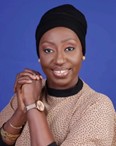 For Fatoumatta Touma Njai, National Assembly Member for Banjul South, International Women’s Day is both a moment of celebration and a reminder of unfinished work.
She noted that The Gambia has made important legal progress, particularly with the enactment of the Women’s Act 2010, later amended in 2015, which domesticated international conventions on women’s rights and strengthened protections against discrimination, harmful practices and gender-based violence.
However, she stresses that passing laws alone is not enough.
“Recognition is important, but enforcement and accountability are even more critical,” she says, noting that women’s political representation remains low despite existing legal frameworks.
Out of the country’s 53 National Assembly seats, only three are held by elected women a statistic she describes as far below expectations.
Njai also points to structural barriers such as limited campaign financing, societal attitudes and unequal access to resources as key factors hindering women’s political participation. She calls for deliberate measures, including temporary special seats for women, to boost representation and create a more inclusive political landscape.
She highlights the gap between legislation and reality, saying that while the constitution and women’s laws clearly prohibit discrimination and criminalise harmful practices, enforcement and social change continue to lag behind.
“Bridging the implementation gap should be one of the country’s most urgent responsibilities,” she said, adding that greater investment in girls’ education and women’s economic empowerment is essential for sustainable progress.
Despite the challenges, Njai encourages young girls to remain confident in their potential.
“My journey was not easy,” she admits, recalling moments when she faced exclusion, bullying and attempts to silence her voice.
“But those struggles taught me that confidence is forged in adversity and that leadership is earned through perseverance, courage and integrity.”
She urges young women to seek education, stand by their principles and never allow societal limitations to define their ambitions.
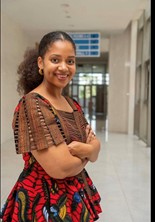 Across the justice sector, the Head of the Post-TRRC Unit and Special Adviser to the Attorney General on Transitional Justice echoes similar sentiments, describing International Women’s Day as a moment for reflection on the often-overlooked contributions of women to national development.
While acknowledging progress, she warns that many of the challenges women face remain deeply entrenched.
“Barriers in society and the workplace remain too many,” she said, pointing to global issues such as unequal pay, limited political representation, violence against women and restricted access to employment opportunities and healthcare.
She added that leadership should be understood not merely as a position but as a responsibility rooted in purpose.
“Anyone aspiring to become a leader should already know that they are one,” she said, emphasising that meaningful leadership is driven by purpose and service.
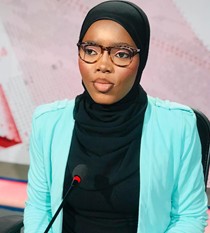 In the media sector, Isatou Keita, President of the Gambia Press Union, describes International Women’s Day as a time for both celebration and accountability.
She noted that more women journalists in The Gambia are now reporting on politics, security and investigative issues - areas traditionally dominated by men.
“There is a shift now, and it is very impressive given the quality of work being produced,” she said.
However, women journalists still face challenges including online harassment, safety concerns in the field and unequal opportunities in newsroom leadership.
She also highlights the pressure many women face in balancing professional growth with societal expectations.
Looking ahead, Keita says she hopes to see a Gambia where the competence of women is respected without prejudice.
“I want to see a country where a woman does not have to shrink to be accepted, where her confidence is not mistaken for arrogance and her success is not treated as a surprise,” she said.
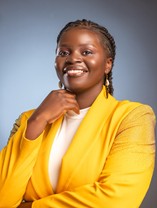 In the cultural sector, Ndey Fatou Jabang, founder of Flex Fuzion Dance Group, emphasises the growing influence of women in the creative industry.
She says women are increasingly moving beyond performance roles to become founders, producers, creative directors and cultural policymakers.
“Women in the arts are redefining professionalism and excellence,” she said.
However, she acknowledged that greater structural support, access to finance and stronger policy recognition are still needed for women in the creative economy.
According to Jabang, the challenges women face today often stem not from a lack of ability but from systems historically designed without women in mind.
She calls for greater investment in mentorship, civic education and financial support to prepare more women for leadership roles.
“Representation matters,” she says. “When Gambian women lead, our democracy becomes stronger and our nation moves forward more equitably.”
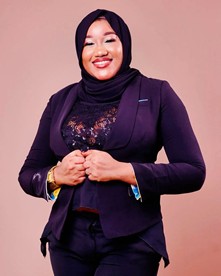 Entrepreneur Aminata Coker, founder of Hasmina Import and Export Company, also highlights the importance of empowering women economically.
She noted that many Gambian women possess enormous potential but lack access to resources, mentorship and platforms needed to thrive.
“I would like to see more women confidently taking up space and pursuing leadership opportunities,” she said.
Coker particularly emphasises the need to create opportunities for women in underserved communities, where limited access to education, finance and professional networks often prevents talented women from reaching their full potential.
She believes true national progress will only be achieved when women participate in development not merely as contributors but as decision makers, innovators and leaders.
“My message to young girls is simple,” she says. “You can become anything you put your mind to.”
She encouraged young women to invest in personal development through education, skills training and self-awareness, noting that empowered women ultimately strengthen families, communities and nations.
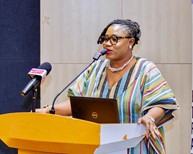 Also speaking on the role of women in shaping the country’s future, Annette Anta Camara, President of the Women Journalists Association, calls for greater representation of women in decision-making spaces across politics, media and business.
“Gambian women are talented, resilient and capable, yet they remain underrepresented where key decisions are made,” she said.
According to her, societies become more just and inclusive when women participate fully in leadership.
Camara urges young girls to believe in their voices and pursue their ambitions without fear.
“Leadership is not about perfection,” she says. “It is about courage, resilience and the willingness to stand up for what is right.”
She believes that achieving gender equality requires more than policies on paper.
“Gender equality cannot be treated as a side issue,” she emphasises. “It must be integrated into national development priorities.”
As these women leaders reflect on progress and ongoing challenges, their collective message is clear: empowering women is not only a matter of justice but also a prerequisite for national development.
Their voices serve as a powerful reminder that when women are given equal opportunities to lead, innovate and participate fully in society, the entire nation benefits.
And as The Gambia joins the rest of the world in marking International Women’s Day, the call from these trailblazers is unmistakable as the time has come not only to celebrate women’s achievements, but to accelerate action towards genuine equality.