The Gambia stands at a decisive moment. Our people are ambitious, our location is strategic, and our potential is considerable. Yet potential alone does not create jobs, raise incomes or improve living standards. Those gains come when national priorities are clear, public institutions work effectively, investment is encouraged and development plans are carried through.
That is why The Gambia must press the reset button—not to discard everything achieved, but to renew our focus, correct what is not working and accelerate the reforms and investments that can deliver broad-based economic growth.
Put implementation at the centre
The country has no shortage of strategies, plans and policy announcements. The challenge is turning them into visible results. Every major programme should have clear targets, responsible institutions, realistic budgets and public reporting on progress. Projects that are delayed should be reviewed promptly. Successful programmes should be expanded, and initiatives that are not delivering should be redesigned.
A reset must therefore begin with disciplined implementation. Government ministries and agencies need to coordinate around a small set of national priorities and report regularly on what has been achieved, what remains outstanding and what corrective action is being taken.
Make the private sector a partner in growth
Sustainable economic growth cannot be driven by government spending alone. Gambian businesses—from small traders and farmers to manufacturers, service providers and major investors—must be able to grow, invest and create jobs.
This requires a more predictable business environment: simpler procedures, timely government decisions, fair competition, reliable infrastructure and access to finance. Public-private partnerships should be developed transparently, with proper feasibility studies, clear allocation of risks and measurable benefits for the public.
Investors need confidence that agreements will be honoured, policies will be consistent and public institutions will act fairly. Local businesses, in turn, must be supported to build capacity, meet standards and take part in larger value chains.
Move from exporting potential to producing value
Agriculture remains central to livelihoods and national development. Yet farmers need more than encouragement: they need dependable access to inputs, irrigation, storage, mechanisation, transport, technical advice and markets. Expanding agro-processing can help The Gambia retain more value at home, reduce avoidable imports and create employment, especially for young people.
The same principle applies across the economy. The Gambia should develop competitive opportunities in tourism, fisheries, light manufacturing, renewable energy, logistics, digital services and the creative industries. A diversified economy is better able to withstand external shocks and provide a wider range of jobs.
Invest in people and essential infrastructure
Growth must be felt in households and communities. That means investing in quality education, technical and vocational training, healthcare, water, energy, roads and digital connectivity. Training programmes should be linked to the skills employers need, while young entrepreneurs should have access to mentoring, finance and markets.
Infrastructure decisions should be guided by economic value and public need. Reliable electricity, efficient ports and transport links can lower the cost of doing business and connect Gambian producers to regional and international markets. These investments must be planned carefully so that they are affordable, properly maintained and completed to standard.
Protect public resources and strengthen trust
No growth agenda can succeed without public confidence. Transparent procurement, responsible management of public debt, effective oversight of state-owned enterprises and firm action against corruption are essential. Public money must be directed towards services and investments that produce clear benefits.
Citizens also need opportunities to participate in development decisions and assess progress. Publishing understandable information on budgets, projects and outcomes can help build trust and make institutions more accountable.
A national reset for shared prosperity
Pressing the reset button is not a slogan or a rejection of the past. It is a call for renewed urgency, practical leadership and collective responsibility. Government must set direction and deliver public services. The private sector must invest and create opportunity. Communities, professional bodies and citizens must contribute ideas, skills and oversight.
The Gambia can fast-track its economic growth agenda by focusing on what works: stronger implementation, productive investment, modern infrastructure, skilled people, accountable institutions and a competitive private sector.
The time has come to turn plans into progress and potential into prosperity. The reset should begin now—and its success should be measured by better livelihoods, more productive businesses and a wider share of opportunity for the people of The Gambia.
Respectfully Submitted
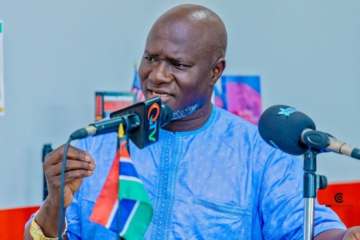
Ambassador Abdoulie M Touray
President
SaHel Knowledge Campus Think Tank.
(SKCTT)
1 October, 2026