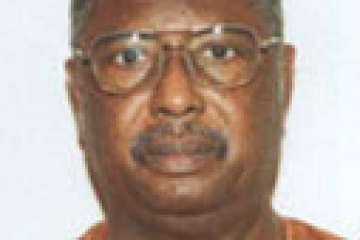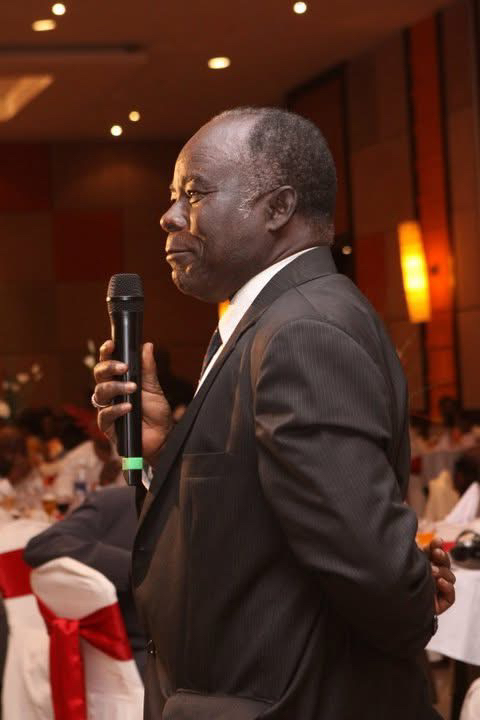
“The measure of a man’s life is not found in the offices he occupies, nor in the honours he receives, but in the principles by which he lives and the lives he transforms. By that measure, Thomas Gregory George Senghore lived an extraordinary life.”
Thomas Gregory George Senghore belonged to that remarkable generation of Gambians who regarded public service not as a profession but as a sacred trust. Born in Bathurst on 21 December 1936 and called to eternal rest on 14 January 2021, he lived through the defining moments of our nation’s history, helping to shape its institutions while remaining steadfastly faithful to the values that shaped his own character.
To speak of Tom merely as a former Commissioner, Permanent Secretary, or Governor of the Central Bank is to tell only a small part of his story. Those appointments reflected the confidence others placed in him; they did not define him. He was, above all else, a man of principle—a gentleman whose integrity was never compromised, whose judgement was widely respected, and whose quiet authority commanded admiration across generations.
His reputation rested not upon power, but upon character.
He understood that authority is meaningful only when exercised with humility, justice and compassion. Whether in public office, within the Church, or among family and friends, he treated every individual with courtesy and dignity, believing that respect is earned through conduct rather than demanded by position.
What distinguished Tom from many of his contemporaries was his unwavering commitment to truth. He possessed the rare courage to speak honestly, even when honesty carried a personal cost. Integrity, to him, was never negotiable. It was this conviction that ultimately led him to relinquish one of the highest offices in the Republic rather than surrender the principles by which he had always lived. In doing so, he left behind a lesson far greater than any speech could have conveyed—that honour is worth more than office, and conscience more valuable than power.
Yet if public service revealed the statesman, history revealed the man.
Tom was a historian in the purest sense of the word. He believed that history was not merely a record of the past, but the foundation upon which identity is built. Long before genealogy became fashionable, he was meticulously preserving family histories, tracing ancestral lineages, recording oral traditions, and travelling throughout The Gambia and Senegal to reconnect scattered branches of our people. He understood that those who lose their history eventually lose themselves.
He often reminded me that one must never become a stranger to one’s own ancestry. Through him I learnt not merely the names of those who came before me, but the responsibilities that accompany their legacy. He transformed genealogy into something far more profound: an inheritance of identity, dignity and belonging.
Knowledge, however, was never something he guarded; it was something he gave away freely.
He mentored quietly, never seeking recognition for the countless lives he influenced. His wisdom was offered without arrogance, his advice without judgement, and his generosity without expectation. He believed that knowledge achieves its highest purpose only when shared with others.
His generosity extended far beyond material kindness. He gave people his time, his patience, his counsel and, perhaps most importantly, his confidence. Many who sought his guidance left believing more deeply in themselves than when they first arrived.
His Christian faith was the quiet foundation upon which every aspect of his life rested. He served the Roman Catholic Church with the same devotion that characterised his public service—not for honour or recognition, but because service itself was an expression of faith. His humility was authentic because it was rooted in conviction rather than appearance.
For Tom, success was never measured by wealth, influence or status. He often reminded those around him that no earthly possession accompanies us beyond the grave. Character, faith, kindness and service—these alone endure. He lived exactly as he taught.
Today, his physical presence is absent, but his influence remains unmistakably alive. It lives within the institutions he strengthened, the Church he faithfully served, the history he preserved, the family he united, the young people he mentored, and the countless men and women whose lives were quietly transformed by his wisdom.
His legacy is not simply that he served The Gambia with distinction.
His legacy is that he taught others what it means to serve with honour.
His legacy is that he reminded us that identity is rooted in history, leadership begins with integrity, and greatness is measured not by what we accumulate, but by what we leave behind in the lives of others.
Thomas Gregory George Senghore belonged to that rare class of men whose absence is felt long after their departure because their lives became part of the moral fabric of the nation itself.
Such men do not truly die.
They become history.
And history remembers them kindly.
May Almighty God grant him eternal rest, and may his example continue to inspire generations of Gambians yet unborn.
Tom’s understanding of history was profoundly personal because he himself formed part of one of Senegambia’s most distinguished family lineages. He belonged to the historic Senghore family, whose roots span both The Gambia and Senegal. Through that lineage, he shared a direct blood relationship with Léopold Sédar Senghor, the first President of Senegal, the celebrated poet, philosopher, and statesman.
The connection was not one of folklore or family legend; it was a matter of documented family history, carefully preserved within the Senghor family archives and museum in Senegal. Léopold Sédar Senghor’s father, Basile Jogoy Senghor, a distinguished Serer patriarch and prosperous peanut merchant, belonged to the same ancestral family from which Tom descended. Their shared ancestry reflected the enduring bonds that have united the Senghor family across Senegambia for generations.
Yet Tom never regarded this illustrious lineage as a badge of privilege. Rather, he saw it as a solemn inheritance and a responsibility. He believed that ancestry confers not status but obligation: an obligation to preserve history, to honour those who came before us, and to leave our descendants a legacy worthy of remembrance.
He would patiently recite our genealogy, generation by generation, not as an exercise in nostalgia but as an act of historical preservation:
George Mundorr Senghore, Mundorr Mbisin, Salan Mbisin, Juma Mbisin, Semou Mbisin, Fapwally Mbisin, Jogoy Mbisin.
To Tom, these were never merely names committed to memory. They were the living threads of our identity, binding past, present, and future into one continuous story. He often reminded me that a people who forget their ancestry soon forget themselves. History, he believed, was not simply about remembering the past; it was about understanding who we are and preserving the values that define us.
Thomas Gregory George Senghore belonged to that rare generation of African statesmen whose authority rested not upon office, but upon character; not upon wealth, but upon wisdom; not upon influence, but upon integrity. He leaves behind no monuments of stone, for his true monument lives in the institutions he strengthened, the history he preserved, the family he united, the Church he faithfully served, and the countless lives he shaped by the quiet force of his example. Such men do not simply pass into history—they become part of it.”
J.B.T SENGHORE, Manchester U.K. 23.7.2026