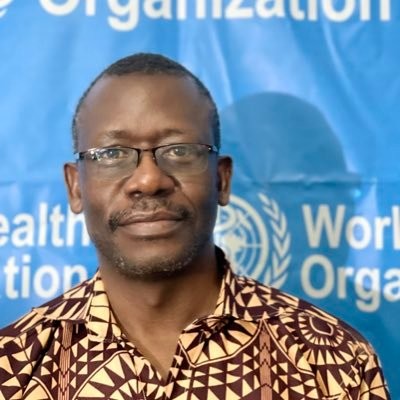
“We live in a time defined by interconnected threats,” he said, stressing that modern health risks ranging from disease outbreaks to food safety concerns no longer respect borders. “They move across people, animals and the environment, demanding responses that are multi-sectoral, multidisciplinary and multidimensional.”
This year’s theme, “Together for Health: Stand with Science,” underscores an urgent global call to anchor decisions in evidence, particularly in fragile and developing health systems like The Gambia’s.
Dr. Bakyaita emphasised that “standing with science is not a slogan but a commitment,” noting that real progress lies in using evidence to guide everything from emergency responses to long-term investments in healthcare infrastructure.
He painted a vivid picture of science at work: from midwives saving mothers during childbirth, to vaccines protecting children, and surveillance systems detecting outbreaks before they spiral into crises. “Science is not abstract it is present in every life-saving intervention,” he added.
The WHO chief pointed to tangible gains in The Gambia’s health sector, attributing them to sustained investments in science-based systems. Surveillance mechanisms, he said, have significantly improved, enabling authorities to detect and respond swiftly to at least eight priority diseases and public health events in recent years preventing wider outbreaks.
Immunisation coverage has also seen steady progress; 83.7 percent of children receiving BCG vaccines, 76.8 percent covered under Penta 3, and 74 percent vaccinated against measles figures he described as “the power of science in action.”
Despite these gains, he cautioned that the country must not relent. The burden of non-communicable diseases, mental health conditions, injuries, drowning and cancer continues to rise, requiring a more robust, inclusive and forward-looking health system.
He further highlighted the importance of the “One Health” approach an integrated strategy that recognises the link between human, animal and environmental health as critical to tackling today’s complex health challenges.
As the world reflects on progress and gaps in global health, Dr. Bakyaita’s message resonates clearly: the path to a healthier future lies in unity, sustained investment and an unwavering commitment to science.
For The Gambia, the call is both timely and urgent - build a health system that not only responds to crises, but anticipates them, protects the most vulnerable, and leaves no one behind.