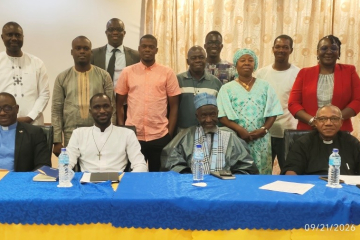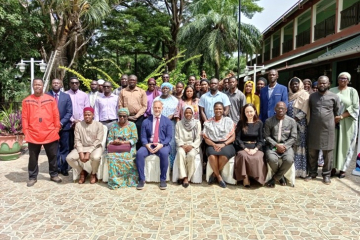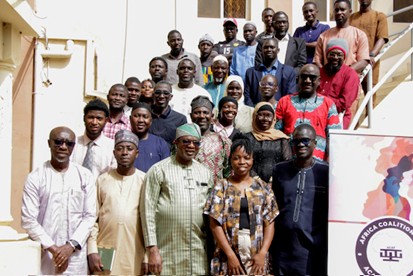
The forum focused on the development of the African Principles on Academic Freedom (APAF), bringing together academia and stakeholders to examine challenges facing higher education and to propose recommendations for protecting scholars, students, and intellectual independence on the continent.
Opening the workshop, UTGFSA President Yorro Njie said the initiative was born out of earlier regional engagements, including a conference in Ghana on academic freedom laws attended by a former association president, which laid the groundwork for The Gambia’s participation in the continental process.
Njie expressed pride that The Gambia is among a select group of African countries involved in the initiative, describing it as a reflection of the country’s relative academic stability and the degree of freedom enjoyed within its higher education system.
Representing the Vice Chancellor, Deputy Vice Chancellor Professor Kayode Adekeye described academic freedom as a fundamental human right rather than a privilege, stressing that universities must remain independent spaces for critical inquiry, teaching, and research without undue interference.
He stated that the workshop is part of a broader continental effort involving countries such as Ghana, Morocco, Uganda, Angola, and Botswana, all working together to develop African-owned principles on academic freedom that reflect the continent’s realities and experiences.
“Today’s workshop is not an isolated event,” Adekeye said. “It is part of a wider regional initiative across several African countries to develop principles that are rooted in African contexts and realities.”
He further pledged the commitment of university management to support the outcomes of the process, adding that UTG would explore ways of aligning its governance structures and statutes with the emerging principles.
Speaking on behalf of the Chairperson of the UTG Governing Council, Vice Chairperson Nahla Tambadou reiterated that academic freedom is central to democratic governance, social progress, and the advancement of higher education.
She emphasised that universities must remain spaces of free thought, innovation, and inquiry, where teaching, research, and expression are protected. However, she also stressed that academic freedom must be exercised responsibly, with ethical conduct, professionalism, and respect for institutional laws and values.
Tambadou called for stronger continental cooperation to safeguard academic freedom across African universities, while ensuring that any emerging framework reflects Africa’s unique realities while drawing on global best practices.
The workshop is expected to contribute to the ongoing development of the African Principles on Academic Freedom, which aim to guide universities across the continent in protecting intellectual independence and institutional integrity