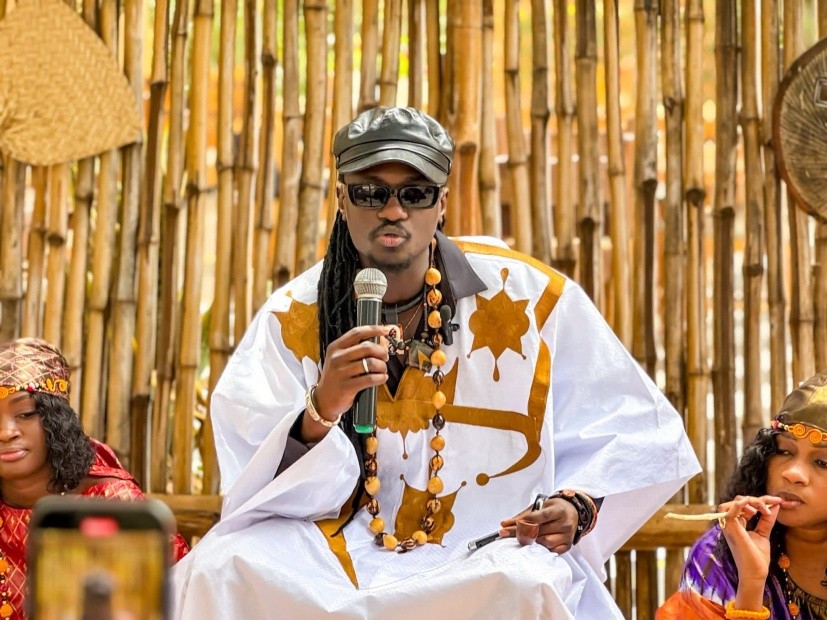
The unveiling took place during a press conference and media engagement session at Akazza Garden, under the Lya Gaye cultural project spearheaded by Griot Music Management. The event also marked the launch of a new artistic direction blending traditional Senegambian sounds with contemporary music.
Royal Messenger, previously celebrated for his reggae and dancehall influence through projects such as his 2014 mixtape Zion Period Phase One and his 2016 album Vigiriat, said the transition was not a rejection of his past but a return to his roots.
“No matter how much we imitate foreign music, we cannot dominate their culture. Our strength is in who we are,” he stated.
He explained that embracing the Wolof language and traditional rhythms has helped him reconnect with his identity and artistic purpose.
“When I sing in Wolof, I feel at home,” he added.
The Lya Gaye project, he said, seeks to elevate the role of griots in modern entertainment while preserving the values and traditions they represent in Gambian society.
Hassoum Ceesay, Director General of the National Centre for Arts and Culture, described the move as a timely cultural rediscovery and praised the artist for embracing his heritage.
“We cannot allow our culture and traditions to disappear while our young people search for identity elsewhere. Artists must use their platforms to preserve our heritage and pass these values to the younger generation,” Ceesay said.
He further urged Gambian artists to take pride in their roots, stressing that local culture should serve as a source of inspiration and strength.
“Our stories, languages, and traditions are rich enough to compete anywhere in the world. When artists embrace their culture, they help build national pride and protect our identity for future generations,” he concluded.