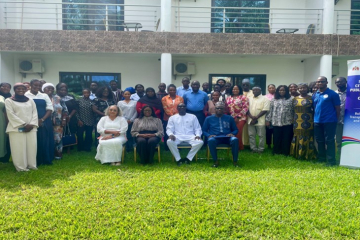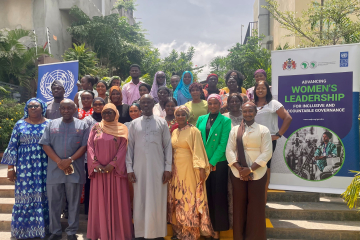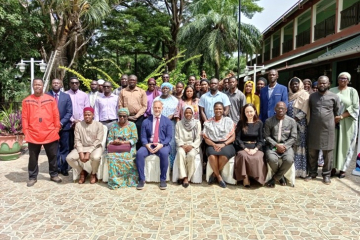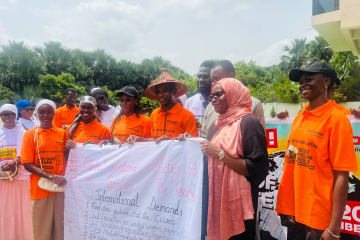
Held under its Baobab Initiative titled “Women Leading Health and Climate Action”, the initiative is a women-led campaign by PF Initiative that links climate change, health and gender by empowering communities to respond to extreme heat and environmental risks.
Moreover, the programme combines community outreach, health services and advocacy to promote women’s leadership, climate resilience and sustainable practices across The Gambia.
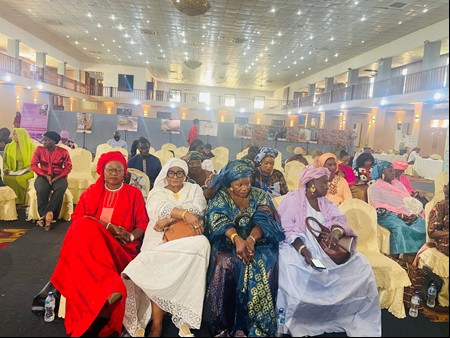
The launch, held at Penchamin Hall was attended by government officials, civil society actors, and researchers, and marks the start of a six-month programme to be implemented in the West Coast, Central River and Upper River Regions.
At the event, Aisha Baldeh, Executive Director of PF Initiative, reminded that climate change particularly extreme heat is already affecting daily life in The Gambia, with women and adolescents bearing the heaviest burden.
“We all complain about the heat, but what are we doing about it? As humans, we are changing our environment, and the impact is greatest on women, especially pregnant women and those working outdoors,” she affirmed.
The project, she added, builds on research conducted by the Medical Research Council (MRC) The Gambia, translating evidence into community-level action and advocacy.
Baldeh also highlighted concerns about the declining state of baobab trees; an important cultural and nutritional resource and the loss of traditional practices linked to them, such as basket weaving and the use of baobab leaves for food.
“These are part of our heritage. If we don’t act, we risk losing them,” she said, calling on the media to help amplify advocacy efforts.
She made reference to the fact that field assessments in URR and CRR revealed that pregnant women work long hours under the sun, often drink unsafe water from plastic buckets while lacking adequate nutrition and rest.
“These are simple issues: hydration, clean water containers, shade but they can change lives,” she noted, advocating for the revival and modernisation of traditional clay pots as a safer and more hygienic alternative.
Providing scientific context, Dorothy Watters, a PhD student with the Planetary Health Group at MRC The Gambia, presented findings from ongoing heat and pregnancy research.
She noted that heat stress is currently the leading cause of weather-related deaths globally, with Africa expected to experience faster increases in surface temperatures than other regions.
Watters explained that pregnant women, particularly those engaged in subsistence farming, face increased risks including hypertension, gestational diabetes, preterm birth, low birth weight and stillbirth due to prolonged heat exposure.
The Gambia Heat and Pregnancy Study (GAPS), she added, has recruited over 760 pregnant women in Brikama and Basse to assess how heat affects maternal and neonatal health, with the aim of developing evidence-based adaptations to protect vulnerable women.
Isatou Dea Sawaneh of Ask Bajen, described climate change as an unavoidable reality that is already reshaping daily life in The Gambia,
“Climate change is here. It is inevitable and part of our lives, but the real question is how we manage it so that we can live through its challenges without surrendering to it,” she said.
Dea Sawaneh noted that climate change cuts across all sectors, including health, agriculture, energy and economic development, with women remaining the most vulnerable.
She cited the rising cost of charcoal and firewood, warning that continued reliance on them is accelerating deforestation and worsening household hardship.
Thus, she called for a shift towards renewable and cleaner energy sources, arguing that cooking gas is now more cost-effective than charcoal for many households.
Drawing from her experience as a farmer, she also spoke about the impact of unpredictable rainfall patterns on agricultural productivity and livelihoods.
Dea Sawaneh further emphasised the link between climate stress, mental health and gender-based violence, urging continued advocacy, innovation and community education.