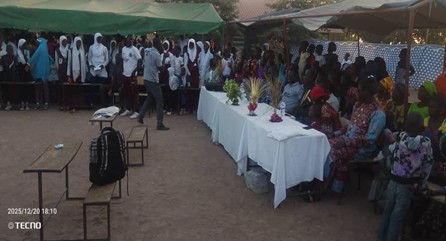
Speaking on behalf of the association’s president, the Vice President, Mot Gai, highlighted the importance of the talent show in nurturing creativity, self-expression and cultural tolerance among students. He stressed that learning goes beyond the four walls of the classroom and is greatly enhanced when students interact, exchange ideas and learn from one another.
“Education is not confined to textbooks alone. When students come together to share opinions and suggestions, learning becomes easier and more meaningful,” he said.
Mr Gai called on teachers within the cluster and beyond to initiate similar educational and extracurricular activities, noting that such platforms help shape well-rounded future leaders. He emphasised that no nation can achieve meaningful development if its education sector remains stagnant.
The guest speaker at the event, Sering Tunkara, Youth Representative at the Kuntaur Area Council, used the platform to caution students against the dangers of tribalism and disunity, describing them as major obstacles to community and national development.
He explained that tribalism weakens social cohesion by creating divisions, eroding trust and making cooperation difficult. “When people see each other first as members of different tribes rather than as one community, unity disappears, suspicion grows, and development suffers,” he said.
Mr Tunkara added that tribalism often leads to unfairness, slow economic growth, conflict, instability and exclusion from decision-making processes. He urged students to become ambassadors of peace and unity by sensitising their peers and communities on the harmful effects of tribalism and disunity.