The Phase II campaign, conducted under the theme “Informed Citizens: The Pillar of Credible Elections and Resilient Democracy,” is aimed at ensuring that citizens are adequately informed about their rights and responsibilities while promoting peaceful, tolerant and inclusive participation in the electoral process.
The initiative comes at a time of heightened political activity across the country, with political parties and supporters increasingly engaging communities ahead of the presidential polls.
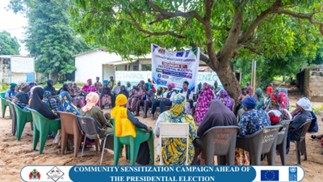
Through face-to-face community engagements, the NCCE is taking civic and electoral education directly to the people, creating platforms where citizens can discuss concerns surrounding elections, political participation and peaceful coexistence.
Community leaders and residents have welcomed the initiative, describing the engagements as an opportunity for citizens to receive information and clarification on electoral and constitutional matters within their own communities.
The dialogues have also provided residents with the opportunity to openly discuss political tensions and the potential impact of partisan divisions on communities.
In Kerr Ardo, Fatou Touray called for increased participation of women in national political programmes, urging women to translate their numerical strength into meaningful political participation.
She encouraged women to support female candidates and become more actively involved in political and national decision-making processes.
Her call comes against the backdrop of continued discussions about the representation and participation of women in Gambian politics, particularly as the country approaches another major electoral contest.
Meanwhile, in Kantora, Bakary Sanyang emphasised the importance of political tolerance and peaceful coexistence, warning against using politics as a means of creating conflict within communities.
“If we use politics as a weapon to fight each other, we will not achieve our goals,” he said, while urging citizens to freely support the political party of their choice without allowing political differences to destroy relationships.
He further called on Gambians to reject tribal divisions and embrace tolerance, stressing that no individual or group should claim ownership of a tribe.
The NCCE has also expanded its voter education efforts beyond physical community meetings through interactive radio programmes, allowing citizens who may not attend the face-to-face sessions to participate and access civic and electoral information.
The combination of community dialogues and radio programmes is intended to bridge information gaps, particularly among citizens in rural communities, while encouraging constructive conversations across political and social divides.
As the December 2026 presidential election approaches, the NCCE is stressing that credible elections depend not only on electoral institutions and political actors, but also on an informed and responsible citizenry.
The Council’s continued grassroots engagement is therefore aimed at ensuring that Gambians understand the importance of exercising their democratic rights peacefully, respecting differing political views and participating responsibly in the electoral process.
With political activity expected to intensify in the months ahead, the NCCE maintains that informed citizens, political tolerance and peaceful participation remain critical to protecting the country’s democratic gains and ensuring credible elections.