
It provides a comprehensive framework for dementia awareness, prevention and risk reduction, early detection and diagnosis, treatment, care and support, as well as workforce development, data, research and community-based services.
The development comes after The Gambia delivered a strong message on dementia during the 78th World Health Assembly, placing the country firmly among nations committed to act. Following that, The Gambia was recognised as one of only three countries in the world — and the only one in Africa — selected for intensified support to strengthen its national dementia response.
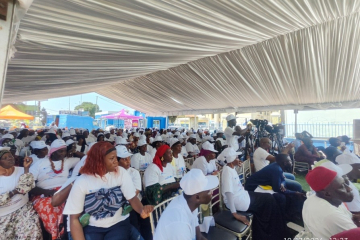
At the opening ceremony, Director of Health Services at the Ministry of Health, Momodou T. Nyassi, described the day as another significant milestone in the collective journey towards strengthening mental health and neurological care.
“Dementia is a growing public health concern globally, and The Gambia is not immune to its impact. It affects not only people living with these conditions, but their families, caregivers, and the entire community,” he said.
Nyassi noted that the development of the plan reflects the Ministry’s commitment to ensuring that no Gambian is left behind when it comes to health and well-being.
“This is a testament to what we can achieve when we work together — government, partners, civil society, and community,” he said, thanking the WHO and development partners for their technical and financial support.
He added that the forum was not merely a formality but an opportunity to collectively review, reflect, refine, and endorse a document that will guide actions for many years to come.
Caregiver and President of the Foundation for Epilepsy and Stigma Support - Gambia (FESS-Gam), Adama Janneh, said many families choose to remain silent about the condition.
“But I have decided to speak openly, because speaking up saves lives. And I firmly believe there is no better person to speak about dementia care than those living with the condition and those caring for them every day,” she said.
She noted that the validation was more than endorsement of a document.
“It represents an opportunity to shape a better future for people living with dementia, their families, and their caregivers. This journey has taught me that dementia is not simply about memory loss. It’s more about people. It is about preserving dignity, maintaining relationships, and supporting individuals to live meaningful lives despite the challenges they face.”
Programme Manager of the National Mental Health Programme, Mam Jarra Marega, acknowledged that dementia is a growing public health problem.
“Dementia is already in our homes,” she said, revealing that globally 57 million people are living with dementia and about 10 million new cases are diagnosed annually.
Marega said more than 60 per cent of those diagnosed live in low- and middle-income countries like The Gambia, adding that in The Gambia dementia was first noticed not in a clinic but in a home. Current estimates suggest more than 3,000 to 4,000 people are living with the condition in the country — a figure expected to rise as the population ages.
She noted that for many years, dementia has been largely overlooked and invisible in health systems, despite progress made in the health sector.
Advocate and veteran mental health expert Professor Lamin Sidibeh described dementia as a very severe disorder.
“Dementia is a very severe psychosomatic disorder, because it affects the brain. It's a neurological problem. At the same time, it has some psychological implications, not only on the individual,” he said.
He lamented that the disease is under-recognised and under-diagnosed in The Gambia and the sub-region, fuelled by cultural misconceptions.
“Quite often, people associate mental health problems or mental disorders with witchcraft, or a curse, or whatever you may call it,” he said.
Unit Head of Non-communicable Diseases and Mental Health at WHO Headquarters, Dr. Tarun Dua, disclosed that globally, dementia is among the top 10 leading causes of death, with 60 per cent of the burden in low- and middle-income countries undergoing demographic transition.
She stressed the need to address stigma and focus on health system strengthening.
Speaking on behalf of the WHO Country Representative, Dr. Selassi D’Almeida acknowledged that dementia has been widely recognised as a major growing public health challenge affecting livelihoods across the globe.
He commended the Ministry of Health for its leadership in advancing the initiative at a critical moment when cases are increasing globally.
“The validation therefore represents a significant milestone, while demonstrating national leadership and commitment to addressing dementia not only as a medical or health problem, but also as a socio-economic and development concern that requires multi-sector efforts,” he said.
Dr. Chido Rwafa-Madzvamutse from the WHO Regional Office also delivered a statement online.
Permanent Secretary at the Ministry of Health, Lamin Dampha, deputising for the minister, described the plan as the first of its kind in the country’s history.
He said government exists to protect and care for citizens across every stage of life, noting that dementia is not a private family misfortune to be managed quietly behind closed doors.
“It is a public health matter and increasingly, it is a matter of national development. Around the globe and here in Africa, our populations are ageing,” he said.
“This is not unique to The Gambia. Across the region, health ministries are grappling with the same demographic shift. But I believe that a nation’s greatness is measured not only by how it cares for the young and the productive, but by how it honours those who built the foundation upon which we now stand.