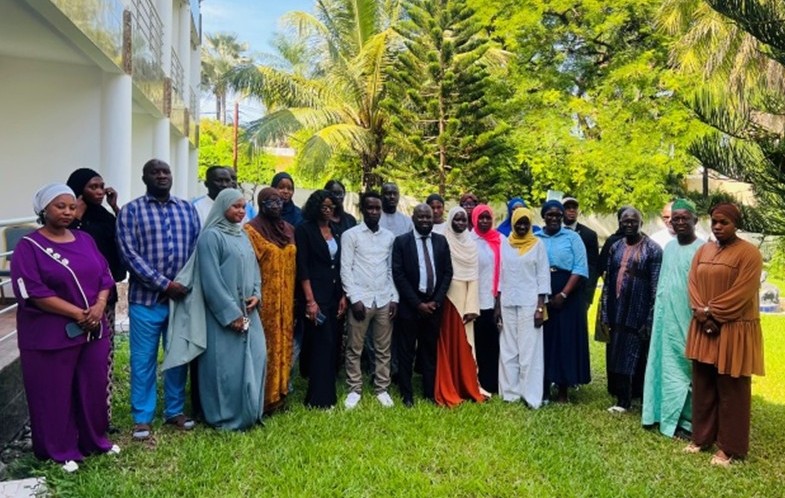
The Gambia Public Procurement Authority (GPPA) has commenced a three-day intensive training programme for members of its procurement cadre on the new legal framework and operational instruments governing public procurement in The Gambia.
The training, running from 8 to 10 October 2026, targets procurement officers responsible for managing a significant portfolio of government and development partner-funded projects. It is the second phase of the exercise following the successful completion of the first cohort last week.
The programme focuses on the Public Procurement Act 2022, the Public Procurement Regulations 2024, revised standard bidding documents, and new procurement planning and reporting templates, including the rollout of the Electronic Government Procurement (E-GP) system.
Speaking at the opening ceremony, Director of the Procurement Cadre, Dr Solomon John Jaffa, described the training as a critical opportunity to further professionalise the procurement profession.
He said his vision is to build a well-resourced and highly professional procurement cadre capable of strengthening confidence in The Gambia's public procurement system.
Dr Jaffa encouraged participants to actively engage in the discussions and make full use of the learning opportunity.
"There is no wrong question here; the only wrong question is the one that is not asked," he told participants.
Delivering a statement on behalf of the Director General of GPPA, Director of Procurement Policy and Operations Ebrima Sanyang said the programme forms part of the Authority's broader public procurement reform agenda.
He emphasised that inefficiencies in procurement processes carry significant costs for taxpayers and project beneficiaries, noting that a strong understanding of the national procurement system is essential for sound financial management and maintaining the confidence of development partners.
Sanyang explained that the new Act and Regulations provide greater clarity on the roles and responsibilities of procuring organisations, contract committees and procurement units, while strengthening compliance and the complaints review mechanism.
He noted that open competitive tendering remains the preferred procurement method, while request-for-quotation and single-source procurement procedures may only be used under specific conditions and with the necessary approvals.
According to him, the new evaluation, contract award and implementation reporting templates will improve compliance monitoring and performance measurement across the public sector.
Sanyang further disclosed that government has invested heavily in developing the new procurement instruments and that their use will become mandatory from January 2027.
Giving the keynote address, GPPA Board Vice Chairperson Momodou Drammeh described public procurement as one of the most important channels through which public resources are transformed into services for citizens.
He said effective procurement systems facilitate the timely delivery of development projects, while weak systems often result in delays, inefficiencies and increased costs.
Drammeh added that the reforms are designed to enhance fairness, transparency and efficiency throughout the procurement process.
He also highlighted the transformative potential of the Electronic Government Procurement system, saying it will digitise the procurement cycle, reduce opportunities for discretion, lower transaction costs and improve access to real-time data.
The Board Vice Chairperson further stressed the importance of promoting green procurement practices and creating opportunities for women- and youth-owned micro, small and medium-sized enterprises (MSMEs) to participate in public contracting.
The training is expected to enhance the capacity of procurement professionals and support the effective implementation of ongoing procurement reforms across government institutions.