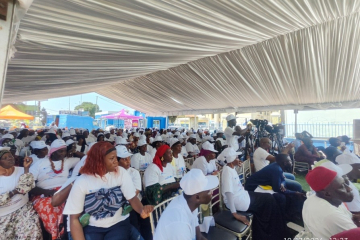
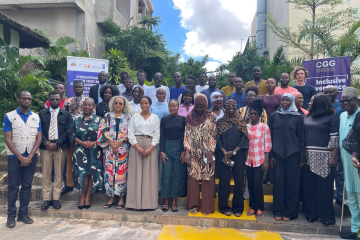
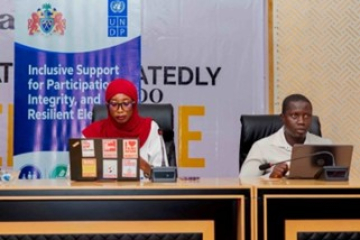
The event, hosted by TANGO, marked a significant step in strengthening inclusive migration governance and ensuring that grassroots perspectives are reflected in national and global policy frameworks. The shadow report was designed to complement the government’s official submission by incorporating civil society perspectives. It also provides an independent and constructive assessment of national progress while highlighting critical gaps that require urgent attention.
In her keynote address, Ndey Sireng Bakurin, the Executive Director of TANGO, described the meeting as a “critical moment” for both the country and the global migration agenda.
She emphasised that migration continues to shape The Gambia’s development trajectory, labour markets, and social fabric, highlighting the growing global expectations for accountability under international frameworks, particularly as countries prepare for the upcoming International Migration Review Forum.
“This is a moment to take stock. A moment to ask whether our policies are delivering real protection, real opportunities, and real dignity for migrants and returnees.”
The report, she added, underscores the need to better align migration policies with national development priorities, particularly in areas such as employment, skills development, and social protection.
‘‘It also stresses the urgency of moving beyond policy commitments toward measurable impact by strengthening systems that protect migrant rights, improving data for decision-making, and expanding sustainable reintegration programs.
In addition, she said the report highlights the importance of institutionalising inclusive governance by ensuring that civil society engagement is structured, resourced, and recognised as a core pillar of migration management.
“Civil society is not here to tick boxes. We are the bridge between communities and policy. Our role is essential.”
Bakurin also challenged narrow perceptions of migration, urging stakeholders to view it as a broader development issue rather than simply the movement of people across borders.
She highlighted the impact of irregular migration on rural communities, where the absence of young people especially men has weakened agricultural productivity and local economies.
“We are losing the bedrock of our communities,” she said. “Migration must be safe, orderly, and regular. Anything else exposes our people to risks, including trafficking and loss of life.”
Representing the International Organization for Migration (IOM), Officer-in-Charge Sibgha Ajaz commended Civil Society actors for their commitment and timely delivery of the report.
She noted that The Gambia has gained recognition as a “champion country” in implementing the Global Compact but emphasised that real success must be measured by tangible improvements in people’s lives.
“Policies only become meaningful when they translate into real impact,” Ajaz said. “Civil society plays a vital role as first responders, advocates, and a bridge between communities and national policy.”
Ajaz further explained that the report reflects key priorities centered on protecting the dignity and rights of migrants, harnessing the positive contribution of migration to national development, and strengthening partnerships across institutions and sectors.
She emphasised that collaboration must go beyond dialogue to create lasting mechanisms where civil society has a permanent voice in decision-making processes.
She reaffirmed IOM’s commitment to supporting civil society and ensuring that grassroots voices are reflected in The Gambia’s submission at the global level.
Both speakers underscored that the validation process goes beyond documentation. Instead, it marks the beginning of sustained advocacy, collaboration, and implementation.