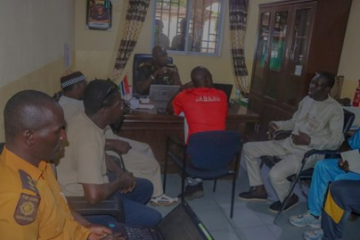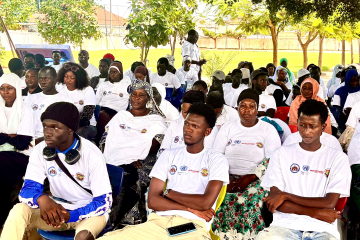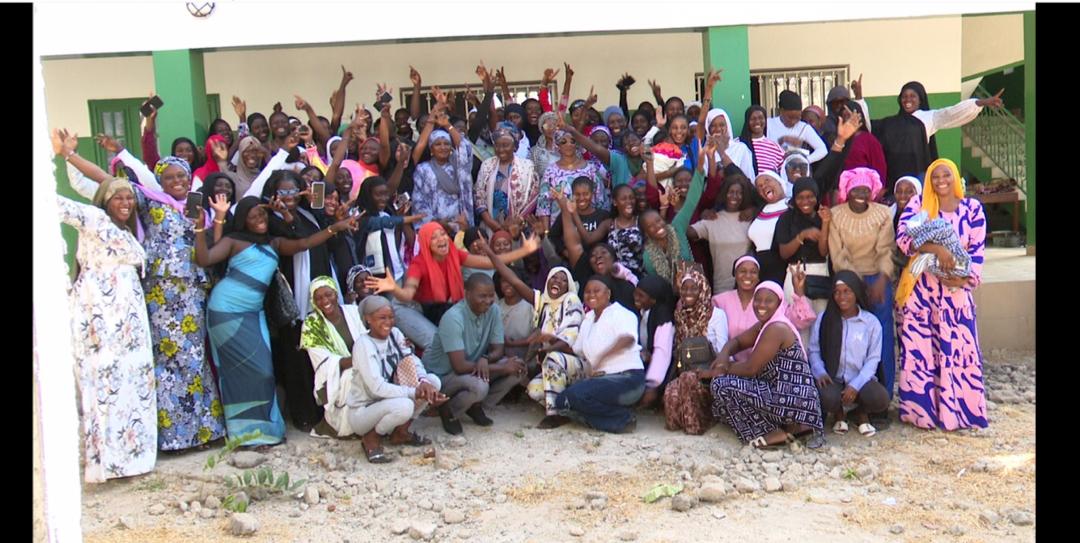
The centre operates under the Sahel Women’s Empowerment and Demographic Dividend Plus (SWEDD+) Project, which provides intensive training in entrepreneurship, financial literacy, and vocational skills for girls and young women aged 15 to 24 years.
The 12-week programme is designed to equip participants with practical knowledge in agriculture, trade, and business management, fostering economic independence and reducing vulnerabilities. The minister’s visit aimed to engage directly with beneficiaries and assess the impact of the training.
Speaking at the centre, the minister highlighted that one of the project’s key components is financial literacy; enabling young women to start and manage profitable businesses. She revealed that 1,700 girls across the country have already completed training, each identifying a business area to be supported through government grants.
“I want to thank the government of President Barrow for introducing this initiative for the first time in The Gambia,” she said.
Jack Ceesay, Vice Chairperson of the National Women’s Council, expressed gratitude to both the president and the minister, noting that initial scepticism surrounding the project has given way to tangible success. “We now thank God for the successful completion of training for 1,700 adolescent girls and young women, who can now run their own businesses and be independent. Not everyone can succeed in formal education, but this gives them another path,” she remarked.
Participants shared their experiences, underscoring the transformative impact of the programme. Adama Ceesay from Sanyang said the training sharpened her entrepreneurial skills and would help her operate a business. Fatou Loum from Kerr Serigne expressed her ambition to establish a beauty salon, emphasising sustainability and growth. She advised her peers to exercise patience and make good use of the funds provided.
Rohey Jobe from Nema Kungku admitted she initially doubted the project’s legitimacy. “They were saying it was a scam. Honestly, I wanted to give up, but I told myself that even if it was, as long as I was learning something, it was worth it. In the end, I realised it was real and valuable,” she said.
Facilitator Saikou Jallow explained that the curriculum covered entrepreneurship fundamentals, including business idea generation, profit and loss analysis, and the entity concept.
The SWEDD+ Project, operating across the region, seeks to bridge gender gaps, promote financial autonomy, and break cycles of poverty by providing start-up materials, mentorship, and training opportunities.