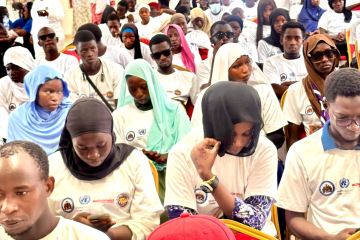
The expansion is intended to extend nationwide coverage of the Nafa Cash Transfer and strengthen Social and Behavioural Change Communication (SBCC) interventions aimed at improving livelihoods among vulnerable households.
The programme is being implemented by the National Nutrition Agency (NaNA), the Department of Community Development (DCD), and the Directorate of Social Welfare (DSW), which are currently registering new beneficiaries across selected urban communities.
The RISE project is a Government of The Gambia initiative supported by the World Bank, designed to lay the foundation for sustainable livelihoods for extremely poor and vulnerable households. It comprises five components involving multiple institutions working in coordination.
Under its Nafa sub-component, the programme currently covers 36 districts nationwide. While 20 districts have graduated from the support cycle, beneficiaries in the remaining 16 districts continue to receive a bi-monthly cash transfer of D3,000 alongside SBCC activities.
However, during an enrolment session held on Wednesday, 6th May 2026 at Talinding Farokono, field officers disclosed that reaching targeted beneficiaries remains a major challenge.
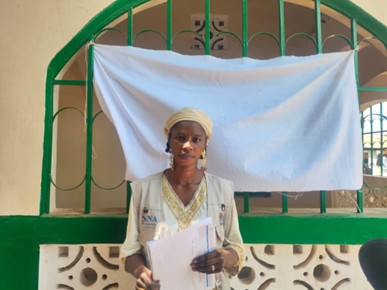
Fatou Cham, a nutrition field officer at NaNA for West Coast Region 1, said the team is targeting 220 households in the Kanifing Municipality and Banjul, with Talinding alone accounting for 16 beneficiaries.
She explained that difficulties in contacting beneficiaries through telephone have significantly slowed the process.
“We have faced a series of challenges. The issue of telephone numbers is very critical because most beneficiaries do not maintain the same numbers. Some change numbers after losing their phones,” she said.
“So, when we call the registered numbers, we cannot reach them, and some even say the number is wrong,” she added.
Similarly, Ndey Botorr Ceesay, Acting Community Development Officer for Banjul under the Department of Community Development, noted that several beneficiaries remain unreachable, though efforts are ongoing to ensure all eligible households are captured before the exercise concludes.
At another enrolment point in Bundung, Malang Janneh, Human Resource Officer at NaNA, acknowledged the challenges but assured that teams are working to ensure no eligible beneficiary is left out.
“We are facing challenges, but we are committed to ensuring that all listed beneficiaries are successfully enrolled,” he assured.
He added that Bundung alone is targeting 11 beneficiaries under the current phase of the exercise.
Despite logistical and communication setbacks, implementing partners say the enrolment process continues as planned, with efforts being intensified to reach all intended households before the closure of the exercise.